Published : 31 Aug 2023, 05:33 PM
Updated : 31 Aug 2023, 05:33 PM


US businesses are keen to invest in Bangladesh’s agriculture, power, gas and automobile sectors, and have asked authorities to cut taxes in these sectors.
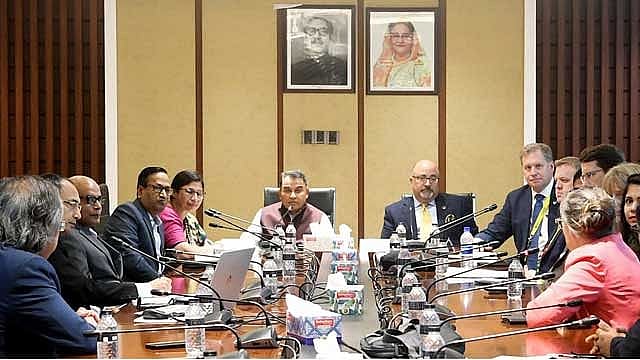
After a courtesy meeting between the US-Bangladesh Business Council on Thursday, Finance Minister AHM Mustafa Kamal said American businessmen were keen to invest in these sectors as investing in any sector in Bangladesh was profitable.
“You tell me when has investment in Bangladesh failed?” he said, adding that Bangladesh was a good place for foreign investment.
Speaking about the meeting on Thursday, Kamal said those who attended the meeting were from different industrial and investment sectors. Some of them were from the electronics sector, some from power and others from the insurance sector.
“They’re all willing to expand their trade in Bangladesh further. We’ve told them about the opportunities. There are a lot of opportunities here,” he added.
Masud Sadiq, a member of the National Board of Revenue, delivered a presentation on what kind of tax cuts Bangladesh can provide during the meeting.
Asked whether the US trade representatives sought a 12-year tax holiday, the minister said the tax holidays would be different for different sectors. “We’ve presented the necessities before.”
However, Kamal did not mention anything about what sort of income tax facilities the US traders want.
“If they can expand the ‘Made In Bangladesh’ idea, both Bangladesh and investors will benefit from it. We want to swiftly improve employment in the country through this idea.”
Sharifa Khan, secretary of the Economic Relations Division, said the US representative team wants to invest in agriculture, the production of soybeans in particular, and exports.
Apart from that, cashless transaction company VISA asked for incentives in several areas, and they want digital payments and merchant payments in particular.
On the rising costs of daily commodities, the minister said: “When we took on the responsibility, the inflation rate stood at 12.3 percent. From that, we brought it down to 9 percent and then to 7.5 percent. Even amid this time of crisis, our inflation rate came down from 12.3 percent to 7.5 percent.”
“Prices of things always go up. And that is happening, and no one knows when the [Ukraine-Russia] war will end. In an uncertain period like now, how can you run the economy as planned? Still, things are going pretty smoothly.”
“Everybody says Bangladesh is doing better than the others. Why do you fear the worst? Hope for the best.”