Published : 26 Oct 2026, 12:27 AM
Updated : 26 Oct 2026, 12:32 AM


Pubali Bank is turning to technology to improve customer service, rebuild depositors’ confidence and curb bad loans, Managing Director Mohammad Ali has said.
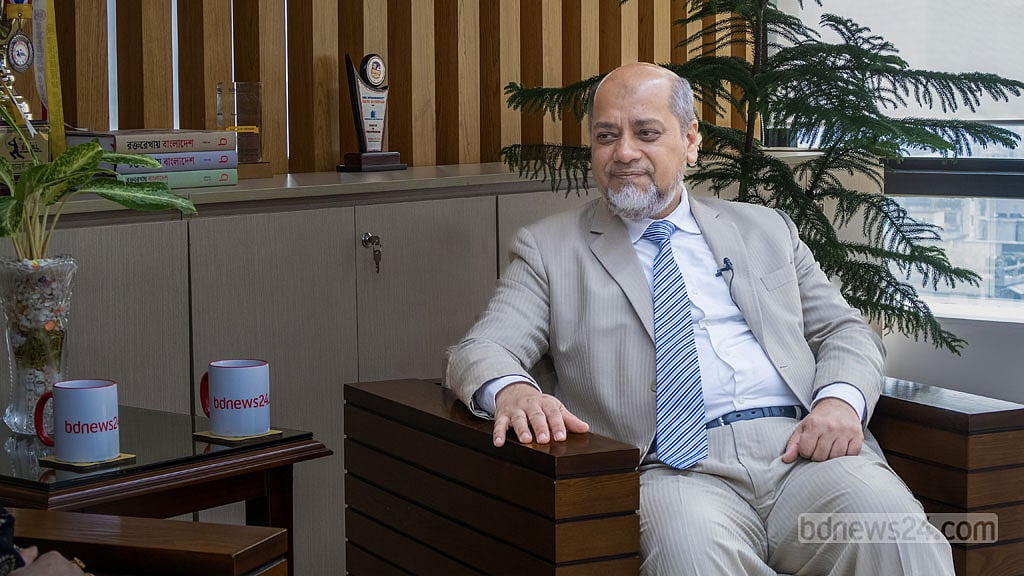
Speaking on bdnews24.com’s “Chinwag with the Chiefs”, Ali discussed banking-sector challenges, depositor confidence, lending rates, digital services and AI.
The interview was broadcast on the outlet’s YouTube channel and Facebook page.
Ali, also the chief executive officer, says technology alone cannot solve banking’s problems.
Careful borrower selection, rigorous checks of financial information, independent lending decisions and good governance at every level are essential to controlling defaults.
Rebuilding through Good Governance
Founded in 1959 as Eastern Mercantile Bank, the institution was nationalised after independence in 1972 and renamed Pubali Bank. It was reprivatised in 1983.
Ali says the bank’s financial position deteriorated after privatisation, with its non-performing loan ratio reaching 54 percent.
“Our first target was zero tolerance for any fraudulent activities and ensuring good governance. We have ensured that,” Ali said.
That year, Pubali ranked at the bottom of the list of good banks, he said. It adopted annual and five-year strategic plans, seeking to narrow the gap with competitors across financial indicators.
By the end of 2025, its non-performing loan ratio had fallen below 3 percent, while deposits exceeded Tk 1 trillion. Profit rose 41 percent in 2025 from the previous year.
Ali acknowledges that confidence in Bangladesh’s banking sector has been shaken as some banks struggle to return deposits.
Advertising alone cannot restore trust: customers must be able to withdraw their money when needed, with a mechanism to repay depositors if a bank fails.
Every Branch Goes Online
Technology was key to Pubali’s recovery. In 2007, the bank still relied largely on ledger-based accounting, even as many competitors had adopted core banking systems.
With limited technology and infrastructure, Pubali began connecting branches nationwide to an online network in 2008, aiming to bring one branch online each week. All branches were connected by 2014, Ali said.
Research showed that cash counters cost the bank about Tk 2.4 billion a year, Ali said.
Pubali expanded ATMs and cash deposit and withdrawal machines so customers could bank without visiting branches.
Its services include mobile apps, cards, QR payments, point-of-sale facilities and bill payments, with 250 digital centres planned nationwide. The aim is faster, accessible everyday banking.
Transactions through Pubali’s mobile app totalled Tk 860 billion in 2025 and have since risen beyond Tk 1.3 trillion this year, Ali said. Deposits have increased by Tk 210 billion this year.
Less Cash, Less Corruption
Ali believes wider use of digital payments could reduce corruption and expand tax collection.
Heavy reliance on cash makes it easier to conceal transactions, he says, pointing to property sales where deeds may show one price while the balance is paid in cash.
“If cash transactions are reduced, 90 percent of corruption will go down. The tax base will also expand,” he said.
He proposes limiting monthly cash deposits or withdrawals to Tk 200,000.
Bad Loans Reflect Weak Governance
Ali sees non-performing loans as a symptom rather than the root problem.
Weak governance, pressure from influential quarters and a lack of independence in lending decisions all contribute to defaults, he said.
At Pubali, major corporate loan proposals undergo three levels of review.
The relevant branch first assesses the customer; a regional manager reviews the proposal if it is not handled by a corporate branch; and the corporate division then conducts its own assessment.
The bank also scrutinises corporate financial statements and documents supplied by auditors, Ali said.

He claims none of the loans issued over the past four to five years has yet been classified as defaulted, while acknowledging that no bank can guarantee a loan will never go bad.
Strict borrower selection before disbursement remains the most important safeguard, he said.
Ali also supports prioritising agricultural credit, noting that Pubali’s default rate on agricultural loans is below 1 percent.
Banks must distinguish genuine farmers from sharecroppers and identify borrowers properly, he added.
Lower Rates, but with Safeguards
Ali favours bringing lending rates down to single digits. High borrowing costs can suppress demand for business and investment loans, hurting employment and growth.
He says lending rates were cut to 9 percent in 2020 but began rising again in the second half of 2023.
General lending rates now stand at 12 percent, while some small and medium-sized enterprise and consumer loans have reached 15 percent.
Lower lending rates, however, may also reduce the interest paid on deposits.
Many retired and low-income people rely on bank interest to cover household expenses, Ali said, and falling returns could leave them financially exposed.
With Bangladesh’s social safety net relatively limited, Ali said lower rates should follow inflation control and be paired with stronger protection for low-income people.
AI Enters Loan Assessment
Pubali is expanding its use of artificial intelligence to speed up banking services. AI is already being used in applications for car and flat loans and credit cards, Ali said.
Customers can submit information online and quickly learn about their eligibility and potential borrowing amount, reducing processing time.
“We have already incorporated AI for customers in three products,” he said.
The bank plans an AI lab to assess corporate loan proposals, companies’ financial information, repayment capacity and its loan portfolio.
It also wants to use AI in its call centre to assess customer complaints and suggest solutions automatically.
Ali said the technology helped identify a fraudulent investment proposal submitted to Pubali in the name of an international organisation.
From Engineer to Banker
Ali began his career in teaching after studying computer science and engineering at Bangladesh University of Engineering and Technology.
He later completed executive MBAs in marketing and finance at the University of Dhaka before joining Pubali, where he eventually served as chief technology officer.
Pubali must pair financial growth with reliable service, lending discipline, good governance and technology, he said.
For Ali, the ultimate measure of success is the customer experience: the bank will have achieved its goal when people choose its services whenever they need them.