
Published : 30 Jul 2023, 04:05 PM
Updated : 30 Jul 2023, 04:05 PM


The digital advertising hunt is back on. Meta Platforms and Alphabet, respective owners of Instagram and Google, got their mojo back thanks to renascent marketing activity. With some $130 billion still earmarked for commercials on traditional TV, the pack of vultures scavenging for revenue has grown to include Uber Technologies, Netflix and others.
Meta and Alphabet this week both unveiled solid upticks in their second-quarter top lines. The company led by Facebook founder Mark Zuckerberg notched a 12% rise in ad sales and expects third-quarter revenue to increase by as much as 25%, to nearly $35 billion. YouTube, meanwhile, rebounded from a first-quarter ad slump to generate a 4% boost.
Consumer confidence is playing a big part. It jumped to a two-year high in July, according to The Conference Board. What’s more, Federal Reserve Chair Jerome Powell said on Wednesday the central bank is no longer forecasting a US recession. As a result, companies such as soda and snacks maker PepsiCo are ratcheting up their ad spending.
Online shopping is contributing to the rebound, too. Upstart Chinese e-commerce site Temu will spend about $1.4 billion on US advertising this year, according to tech magazine Wired. Similarly, fast fashion retailer Shein is preparing to go public in New York, which should involve a chunky branding budget. Meta executives even called out the strong spending from Chinese businesses.
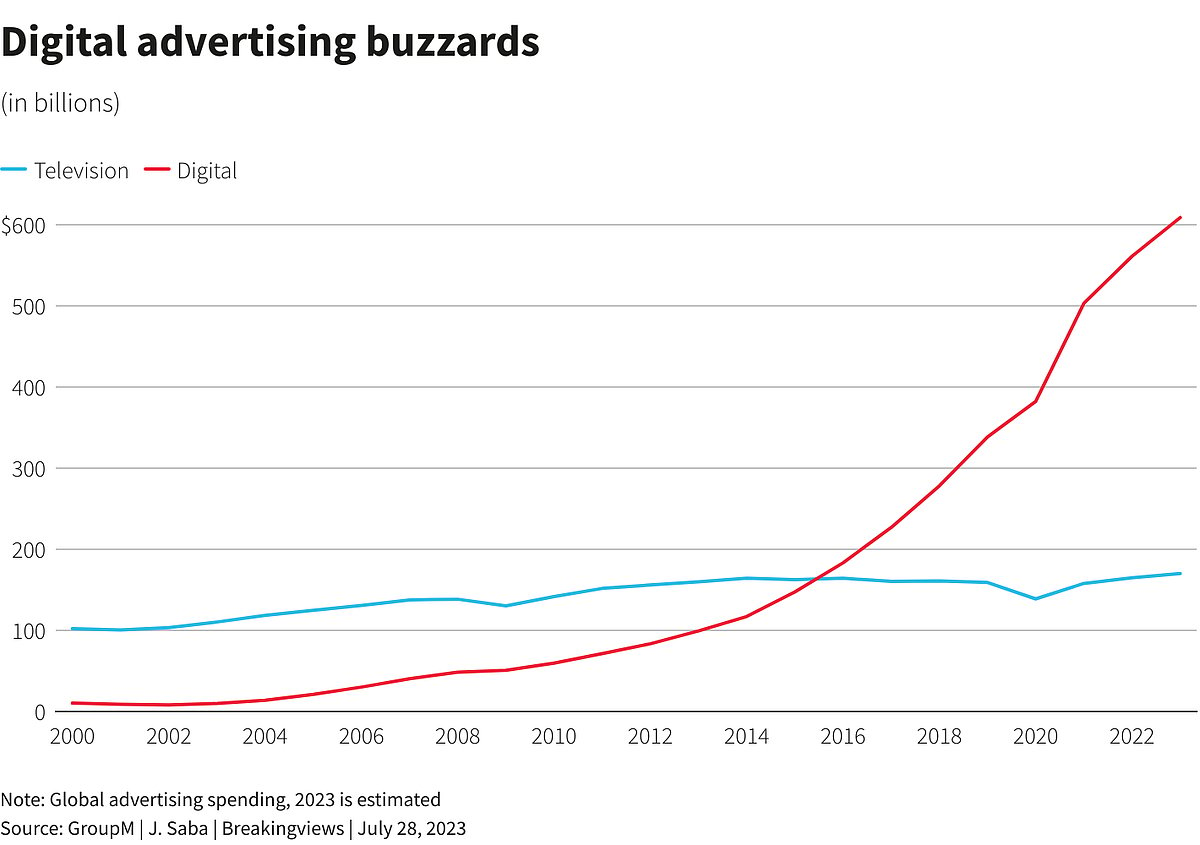
Although Meta and Alphabet dominate the digital ad market, there’s plenty of money yet to fight for. About seven years ago, TV lost its long reign as the top destination for marketing budgets to the internet, but clings to about 15% of the $600 billion worldwide pie, down from 26% in 2018, according to WPP’s GroupM. Fresh signs of traditional broadcasting’s decline is attracting more digital buzzards.
Comcast, for example, said on Thursday that US ad revenue at its NBC Universal media division fell 5% and overall EBITDA was down nearly a fifth. Broadcast networks slashed their prices this year and the volume of commercials sold in advance is expected to be the lowest since 2020, according to trade publication Variety.
Despite the volatile nature of advertising revenue because of its close links to economic trends, it also typically generates healthy operating margins. It’s no wonder then that Amazon.com, Walmart, DoorDash and many more are descending on TV’s carcass.
CONTEXT NEWS
Meta Platforms, the owner of Facebook and Instagram, said on July 26 that its revenue in the second quarter increased 11% from the same period a year earlier, to $32 billion.
Alphabet on July 25 reported that over the same three-month span its revenue grew 7% year-over-year, to about $75 billion.
Opinions expressed are those of the author