Published : 11 Mar 2022, 08:07 AM
Updated : 21 Oct 2022, 03:38 PM


With Russia in danger of defaulting on its sovereign debt and facing a sharp contraction in its economy, the West is betting that the looming, generation-defining economic crisis could make Russians turn on their president. It is also possible, however, that the crisis could end up strengthening Putin, validating his narrative that the West is determined to destroy Russia.
“I have no doubt that these sanctions would have been implemented no matter what,” Putin said in televised remarks Thursday, arguing that his invasion of Ukraine served merely as a pretext for the West to try to wreck Russia’s economy. “Just as we overcame these difficulties in years past, we will overcome them now, too.”
But the sanctions imposed in the two weeks since the invasion — combined with multinational companies that employ tens of thousands of Russians voluntarily deciding to withdraw amid the global outrage — dwarf any other economic pressure that Russia has faced under Putin.
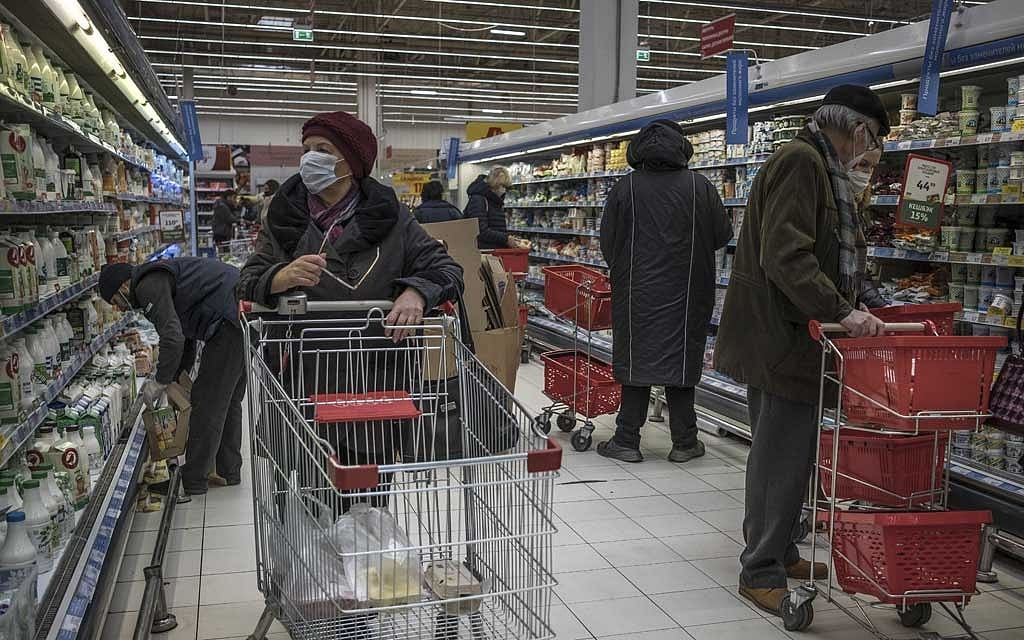
With the ruble having lost nearly half its value in the past month, prices of basic goods have risen sharply, causing panic buying at supermarkets. The central bank, which has kept the Moscow stock exchange closed since the war began, has introduced new capital controls, preventing companies from withdrawing more than $5,000 in cash for the next six months.
“This will be a gigantic, transformational downturn,” said Ruben Enikolopov, rector of the New Economic School in Moscow.
The Institute of International Finance, a Washington-based association of financial firms, predicted that Russia would see a 15% decline in its gross domestic product this year, which would wipe out much of the economic growth that Putin has presided over since taking office in 1999.
And things could get even worse. Further escalation of the war could lead more countries to refuse to buy Russian energy, the institute’s economists said, “which would drastically impair Russia’s ability to import goods and services, deepening the recession.”
The alarm with which Russian planners view the downturn is reflected in the radical measures they have proposed to arrest it.
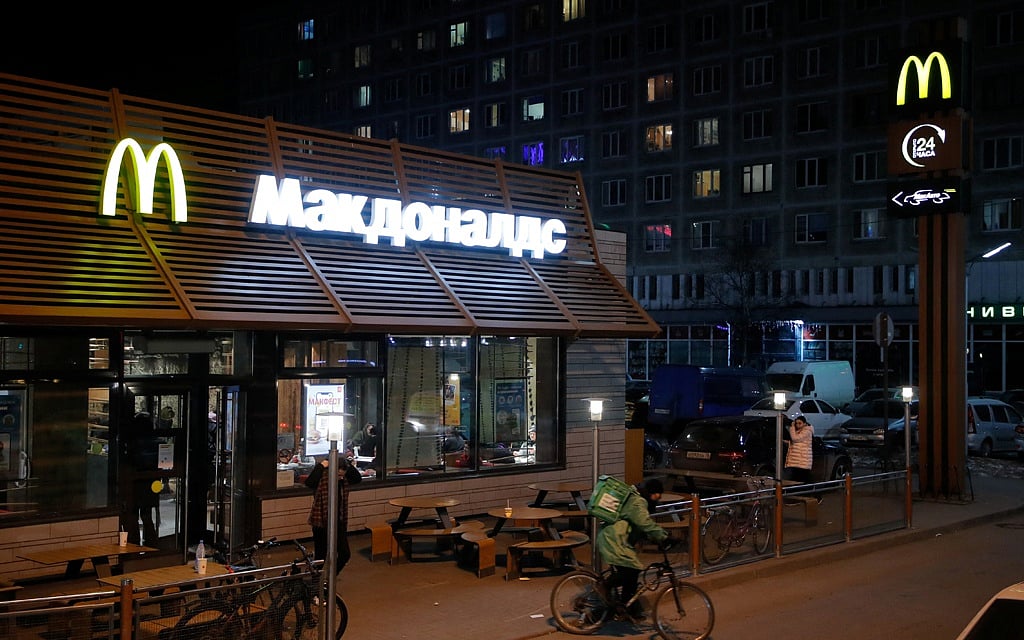
Of particular concern are Western companies that once symbolised post-Soviet Russia’s integration into the world economy, like McDonald’s and Ikea, that have shuttered hundreds of stores and factories. Putin told officials in the televised meeting that the assets of such companies should be put under “external management” and then transferred “to those who want to work.”
Dmitry Medvedev, vice chair of Putin’s security council, said the Kremlin could respond to Western companies leaving the Russian market with the seizure of their assets “and their possible nationalisation.”
The prospect of the Kremlin seizing private assets rattled Russia’s business community. Vladimir Potanin, a metals magnate who is one of Russia’s richest men, released a statement warning that such nationalisation would “bring us back 100 years, to 1917” — the year of the Russian Revolution, when the Bolsheviks forcibly took over private enterprises.
Russian oligarchs are facing their own threat to their assets. On Thursday, the British government placed new sanctions on seven prominent Russian businessmen, including Roman Abramovich, the owner of the Chelsea football club, and Oleg Deripaska, a powerful metals magnate.
Not all Russians are affected equally by the economic dislocation.
Those employed by the sprawling public sector and state-owned companies — who make up much of Putin’s political base — are relatively insulated, with their jobs likely to be secure. By contrast, middle-class Russians whose jobs and lives are tied closely to the world economy, and who are already more likely than the average Russian to oppose Putin, are under greater threat.
The risk for the West, some warned, is that the crushing sanctions could spark a backlash.
“The medicine could turn out to be worse than the illness, even from the point of view of declared goals,” Enikolopov said, arguing that the sanctions could end up entrenching anti-Western views. “No one is looking at the collateral damage at all.”
On the shore of western Russia’s Lake Valdai, Tatyana Makarova, an entrepreneur, said that she supported Putin’s war in Ukraine — and that the impact of the sanctions only shows that Russia has been excessively dependent on the West. Makarova, who owns a small cleaning company, said in a phone interview that she believed the economic crisis would finally force Russia to develop homegrown technology.
Makarova’s views are notable because she had long campaigned against Putin’s plutocracy by trying to stop illegal construction by members of the Kremlin elite on the Valdai lakefront, where Putin has a residence.
“Perhaps this will be good for us,” she said. “This will wake Russians up, and thank God.”
That is also the line being pushed by the pro-Kremlin media.
Komsomolskaya Pravda, the country’s most popular tabloid, published an online poll it said showed that Russians would not miss McDonald's: “More than half of the respondents prefer homemade food to fast food,” the paper claimed.
Timofey Bordachev, a prominent political analyst, wrote that the new “Iron Curtain now descending between the West and Russia” offered the country “an absolutely fantastic chance to start a more meaningful and independent life.”
But not all Russians shared that optimism. Interviews with private sector workers across the country Thursday revealed deep unease and showed that the economic crisis was already taking its toll on jobs and livelihoods.
Julia Andriyanova, 37, was laid off last weekend from her job as creative director at an independent advertising agency in Moscow that worked with global brands. When she went online to post her resume, she noticed that creative-industry message boards were flooded with the newly unemployed. It feels like the economic crisis of early pandemic days, she said — except that now the outlook seems even worse.
“It looks like everyone is leaving now,” she said of the international brands. “And I have the feeling that it’s just the beginning.”
In the town of Tikhvin, east of St Petersburg, Sergei Toptygin, 23, has a decent salary and medical coverage as a line operator in a factory run by Ikea, the Swedish furniture giant. After Putin’s invasion of Ukraine, Ikea suspended its operations in Russia, citing the “human tragedy” of the “devastating war in Ukraine.”
Ikea promised the roughly 1,000 workers at its Tikhvin factory that their salaries would be paid at least until the end of March. But Toptygin fears losing his job.
“Why would we need to fight a war?” Toptygin asked in a phone interview. “Everything was fine here.”
In the Urals city of Yekaterinburg, Elena Lerman, a 36-year-old makeup artist, said she had seen the prices of some of the imported materials she uses double in recent weeks. She was opposed to the war, she said, but recognised that “we cannot physically influence the situation in Ukraine in any way at all.”
Having gotten over the initial shock of the war, she said, she is focused on trying to keep her business going, trying to secure the materials she will need over the next eight to 12 months.
“Life goes on,” she said. “What we can do is try to preserve ourselves and our loved ones, and somehow try to prolong our survival and our livelihood.”
© 2022 The New York Times Company