


Published : 03 Sep 2020, 02:12 AM
Updated : 17 Oct 2022, 11:12 AM


The lack of a list of laid-off workers, a proper work plan, criteria of the jobless workers and consensus among the owners prevented Bangladesh from finalising a decision on the proposal three months intro receiving the proposal.
The government’s Economic Relations Division and the owners say they are thinking about sitting with officials of the EU embassy in Dhaka next week to determine who will get the incentives and how.
The coronavirus pandemic began shattering the world economy earlier this year, triggering widespread cut in consumption and joblessness.
According to the readymade garment entrepreneurs of Bangladesh, the sector lost orders with Tk 250 billion in the beginning of the crisis. The foreign buyers later restored some orders as the economies reopened.
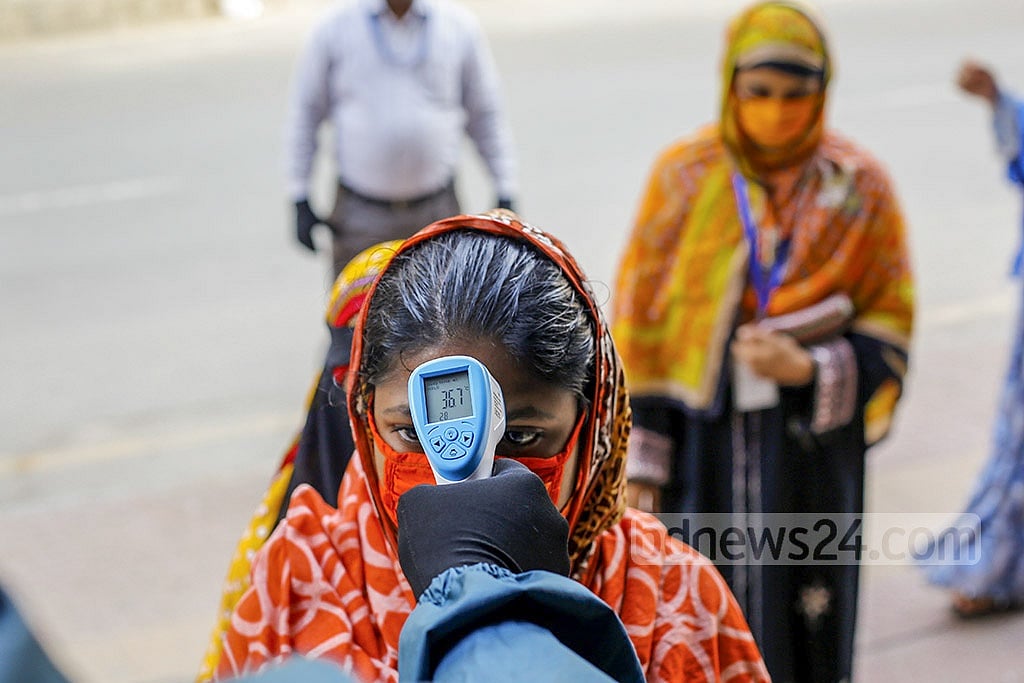
An official taking temperature of workers at the entrance of Snowtex Group's readymade garment factory in Dhaka's Mouchak as the plants continue production after reopening amid the coronavirus outbreak. Photo: Mahmud Zaman Ovi
Against the backdrop, the Bangladeshi exporters contacted the EU with a request not to cancel orders and force the buyers to purchase products.
After several rounds of discussion, the EU proposed the incentive plan for the jobless workers.
Mohammad Ali Hossain, an official at the ERD’ European division, said the bloc wanted to give a total of 117 million euros, including 20 million euros coming from Germany.
Discussions were held as to who will get the help and how much, he said. “More discussions are being held. We hope to reach a decision this month,” he added.
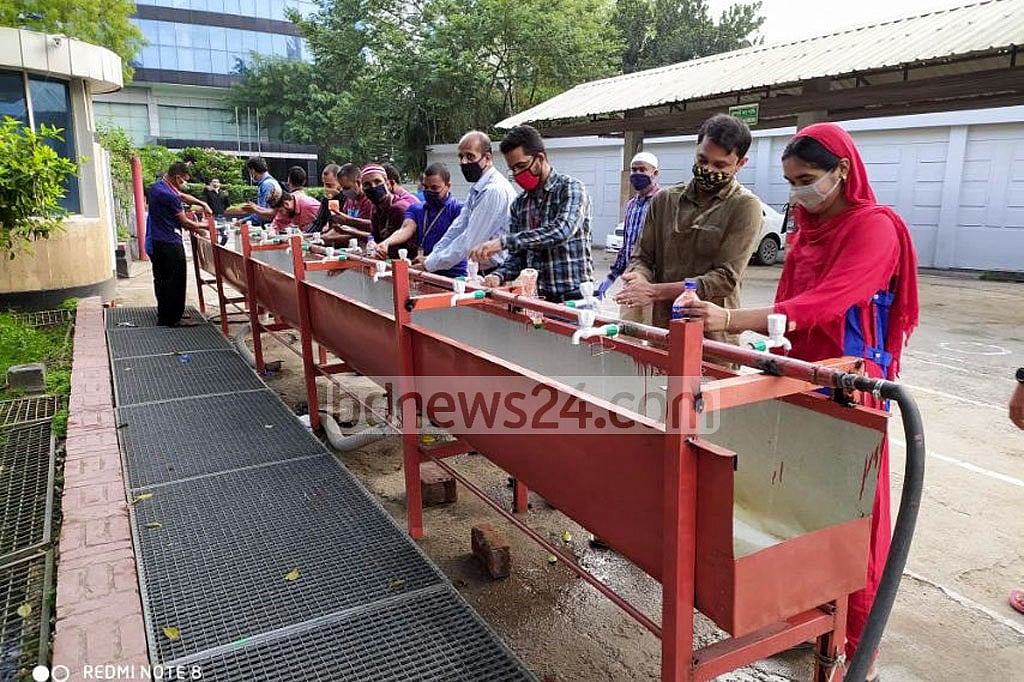
Several garment factories reopened on Sunday risking an aggressive spread of coronavirus infection. Workers are washing their hands before entering an apparel factory in Dhaka.
Rubana Huq, the president of garment exporters’ lobby BGMEA, said they sought EU help considering the situation in March, but government incentives to pay the workers and reopening of the factories have changed the picture.
Now they are thinking about ways to help the factories that were ineligible for the government’s loan help and struggling to pay the workers, she said.
The EU money could be used to help the workers of the factories that want an exit route due to a financial crunch, Rubana added.
The owner of a factory said it was difficult to implement the proposal to give the jobless workers incentives because it is difficult for the government and the owners to make a list of such workers.
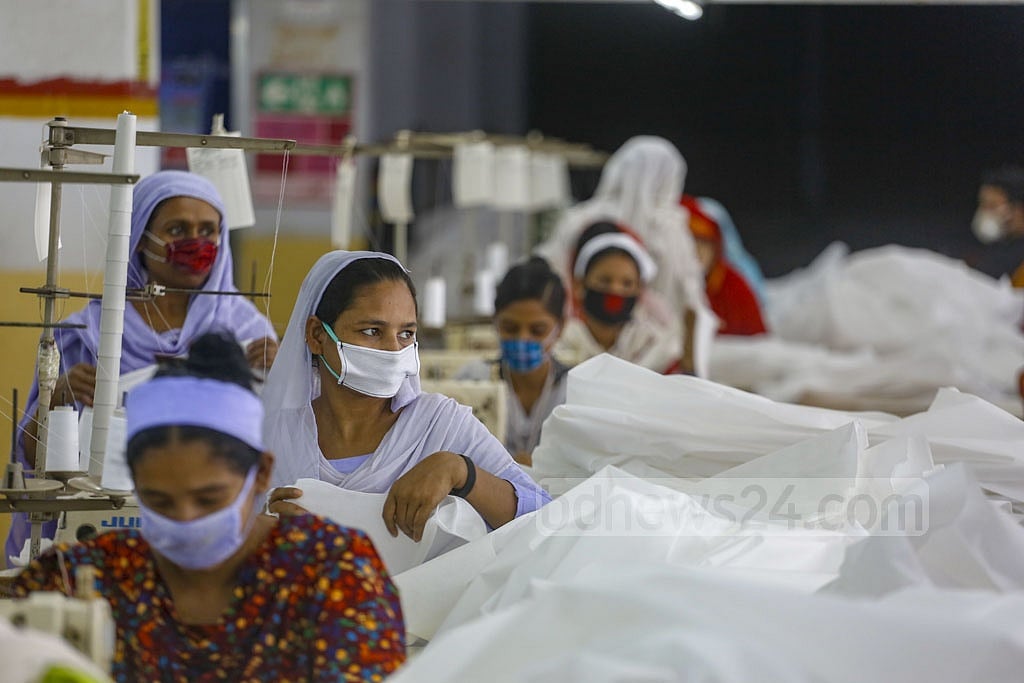
New Generation Garments is manufacturing the PPEs having ensured the complete safety of its workers. Photo: Mahmud Zaman Ovi
If the complexities persist, the entrepreneurs will make this proposal to the EU, the BGMEA chief said.
Fazlee Shamim Ehsan, a director of knitwear exporters’ lobbying group BKMEA, said the laid-off workers must have joined reopened factories or other professions by now, which has made it difficult to identify those who actually lost income.
“So, how realistic is the EU proposal in the current context? That’s why its implementation has been delayed,” he said.
Nazma Akter, the president of workers’ group Sammilita Garments Federation, said discussions on the issue are supposed to resume next week.













