Published : 29 Sep 2026, 05:25 PM
Updated : 29 Sep 2026, 05:25 PM


Jute-sector entrepreneurs have placed a set of recommendations before the government, targeting $1 billion in exports of diversified jute products by 2030 and the creation of around 100,000 new jobs.
They have also proposed creating 1,000 new entrepreneurs to help achieve the targets.
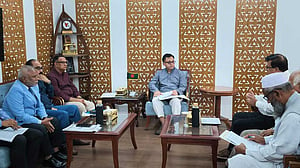
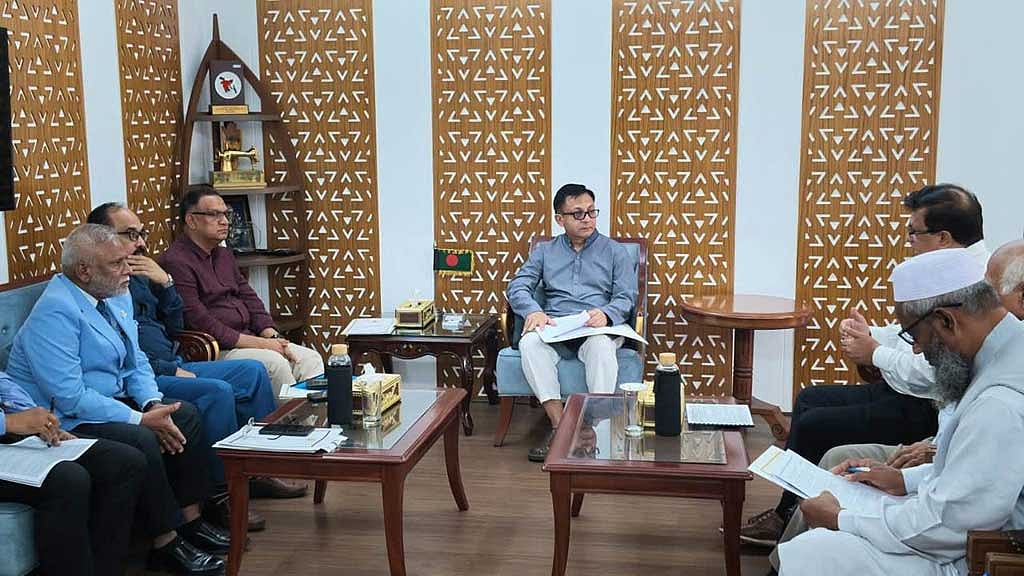
The proposals were presented by Bangladesh Diversified Jute Products Manufacturers and Exporters Association President Md Rashedul Karim Munna at a meeting at the commerce ministry on Monday. Commerce Minister Khandakar Abdul Muktadir chaired the meeting.
Munna told bdnews24.com that the minister appreciated the specific proposals put forward on various issues affecting the sector.
“Entrepreneurs requested that a timeline be set for implementing the proposals on a priority basis and that responsibilities be assigned to the relevant institutions. The minister listened to the proposals attentively and wanted to meet again next month,” he said.
At Monday's meeting, Munna presented the entrepreneurs' proposals, saying Bangladesh currently earns around 90 percent of its jute-sector foreign exchange from exports of raw jute, jute yarn and conventional jute products.
“Yet this needs to be reduced to 60 to 70 percent by producing higher value-added products and diversifying markets. This is why export earnings from the jute sector have not been increasing for a long time,” he said in the proposal.
The proposal said 56 percent of Bangladesh's exports of raw jute and yarn depend on three countries — India, Turkey and China.
To reduce production costs, the entrepreneurs proposed a number of measures involving the National Board of Revenue and export policy.
These include tax rebates on research and product development expenses; withdrawing the existing 25 percent VAT and tax on the cost of participating in international trade fairs and instead providing matchmaking facilities; and reducing the 1 percent tax deducted from export proceeds to zero.
They also proposed eliminating the existing 0.50 percent tax deducted at source on purchases of raw materials and the 10 percent tax deducted against cash assistance. They further proposed amending existing NBR laws in line with bond facilities.
The entrepreneurs also called for bilateral agreements with countries outside the Generalised System of Preferences where Bangladesh is losing markets because of higher tariffs.
They pointed out that India is somewhat ahead in this regard.
Munna called for jute to be included in the agriculture ministry's list of agricultural products so that improved-quality seeds could be developed and supplied, rating systems improved, and farmers provided with financial and policy support.
They also proposed including jute-based products in the list of agro-processed products.
The entrepreneurs further called for Bangladesh to develop the capacity to produce 100 percent domestically sourced, high-quality jute seeds.
Munna proposed making the purchase of jute products mandatory under government procurement policies wherever products made from jute can be produced and supplied.
He also proposed extending the schoolbag project for several more years and introducing one or two more similar projects.
The entrepreneurs said the absence of separate Harmonised System codes for diversified jute products in imports was creating various complications and proposed that the Tariff Commission examine the issue.