
Published : 29 Sep 2026, 09:28 AM
Updated : 29 Sep 2026, 09:28 AM


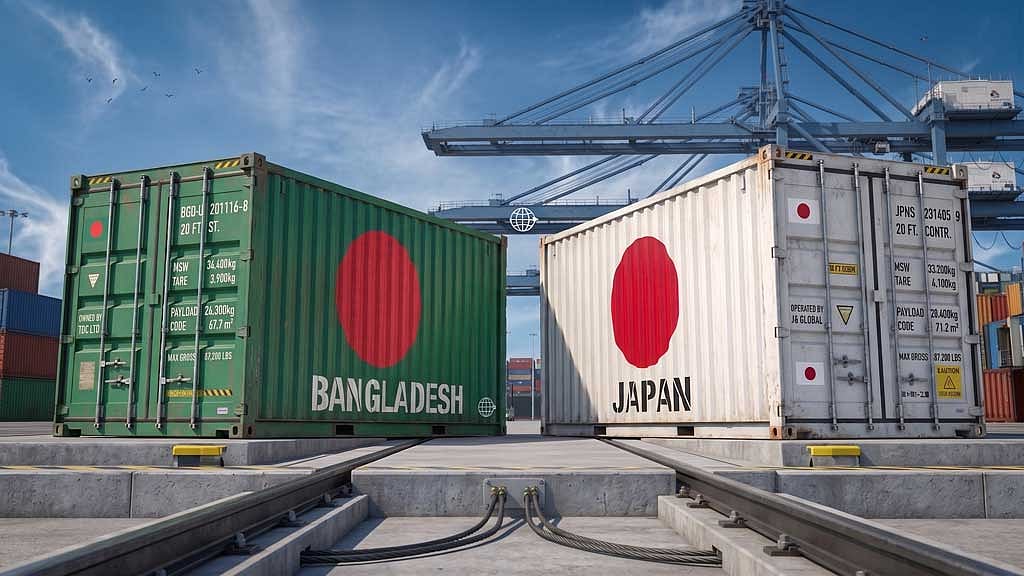
Bangladesh's garment makers and exporters have drawn up a long-term strategy to tap Japan's $25 billion ready-made garment market.
After a year of talks between policymakers, entrepreneurs and buyers from both countries, the Bangladesh Garment Manufacturers and Exporters Association (BGMEA) has launched a "Japan Desk".
The desk was formally inaugurated at the BGMEA complex in Dhaka's Uttara on Wednesday by Japan's Ambassador to Bangladesh Saida Shinichi, in the presence of BGMEA President Mahmud Hasan Khan and other garment industry owners.
The desk will act as a "one-stop platform" to boost engagement with Japanese buyers and investors and create investment opportunities.
As part of the push, 100 new factories have been selected for garment exports to Japan, joining an existing 172 factories.
Together, these 272 factories will be "dedicated or reserved" for the Japanese market, with no other factory permitted to export garments there.
The plan also includes offering full support to Japanese brand buyers to make imports from Bangladesh smoother and easier.
A committee named "Strategic Market Development" was formed a year ago to work with Japan on boosting exports.
The committee has held regular meetings with policymakers, entrepreneurs and importers-exporters from both countries, identifying obstacles to market expansion and agreeing on strategies to address them.
The 272 factories were selected as part of this effort, and will produce garments to specific standards set by Japanese brands and buyers such as Uniqlo, Muji, GU and Shimamura.
These factories can still export to other countries based on their capacity, but garments meant for Japan will need to meet separate quality guidelines, with the Japan Desk overseeing compliance.
Mohammed Sohel, BGMEA director and managing director of Bangla Garments Limited, who coordinated the Strategic Market Development committee, told bdnews24.com: "Our garment exports to Japan have been stuck in the same place. Even in years when it grew, the growth has been marginal.
“Given the current uncertainty in global trade, we want to boost our exports to the Japanese market. That's why we've spent over a year working on this, and have now come up with a long-term plan. As the first step, we've launched the Japan Desk at BGMEA.”
He pointed out that this marks the first time in Bangladesh's history that a separate desk has been opened at BGMEA to boost exports to a single country.
Japan, he said, is different from other markets, with Japanese buyers placing huge importance on quality and inspecting every single garment.
“Standards matter more to them than price, they don't mind paying more," Sohel added.
Laying out the numbers behind the plan, he said Japan’s ready-made garment market is worth $25 billion, while Bangladesh currently exports around $1.2 billion to the market.
The industry aims to raise that to $5 billion, although it has not set a specific timeline for reaching the target.
"What I'll say is, we've just started,” the director said. “We want to move forward gradually. But I can say this: if we can win the trust of Japanese businesses through this new initiative between the two countries, reaching the $5 billion target shouldn't take too long."
Asked what other steps were being taken to boost exports to Japan, Sohel said the 100 newly selected factories, alongside the existing 172, had already received orientation as part of the new push.
"We've told everyone, we want to capture the Japanese market properly. That means producing garments to their buyers' preferences. There can be no compromise on quality.”
“Every factory or group must keep the country's image in mind while producing and exporting garments," he added.
Why Has Japan Remained a Difficult Market?
While Bangladesh has built a strong position exporting to the US and European markets, the world's largest economies, it has struggled in Japan, another major market.
Exports there have remained stuck between $1 billion and $1.5 billion for nearly a decade.
Even after a much-anticipated Economic Partnership Agreement (EPA) with Japan, exports have not grown, they have actually declined.
According to the latest data from the Export Promotion Bureau (EPB), Bangladeshi exporters shipped $263.8 million worth of goods to Japan in the first two months (July-August) of the 2026-27 fiscal year, which began on Jul 1, down 0.30 percent from $264.6 million in the same period last year.
Garment exports to Japan earned $227.2 million in July-August this fiscal year, up 1.33 percent from $224.2 million in the same period last year.
EPB data show that Bangladesh exported $1.36 billion worth of goods to Japan in FY26, which ended on Jun 30, down 3.65 percent from the previous year and 18.56 percent below the export target.
Of that amount, $1.16 billion came from garments. Export earnings from Japan stood at $1.41 billion in FY25.
Bangladesh recorded its highest-ever export earnings from Japan in FY23, when it shipped $1.45 billion worth of goods to the country.
Despite repeated efforts by the government and exporters over the years to boost exports to Japan, the desired results haven't materialised.
Yet demand for Bangladesh's main export product, garments, stands at around $25 billion in this market, of which Bangladeshi exporters capture only about 5 percent.
Former chief advisor of the past interim government Muhammad Yunus visited Japan in May last year, during which talks were held on boosting exports.
Following this, Bangladesh signed an Economic Partnership Agreement (EPA) with Japan on Feb 6, five days before the national election.
This is Bangladesh's first-ever economic partnership agreement with any country.
Under the deal, 7,379 Bangladeshi products gained duty-free access to the Japanese market.
Even so, Bangladesh's exports to the country have not grown, despite Japan being the country's largest source of loan assistance.
Asked about this, Fazlul Hoque, administrator of the Federation of Bangladesh Chambers of Commerce and Industry (FBCCI) told bdnews24.com: "To be honest, we've focused so much on boosting exports to the US and European markets that we haven't paid much attention to Japan, despite it being a big market.
The former president of the Bangladesh Knitwear Manufacturers and Exporters Association (BKMEA) said there had been failure on the government's part, as well as on the part of exporters.
Had a collective initiative been taken, he said, exports to Japan would certainly have grown, perhaps even reaching $5 billion, but they hadn't even crossed $1.5 billion.
Sitting idle will not grow exports, he said, adding: "We need to figure out why exports haven't grown for so long despite this being a big market, where we went wrong, and build a new plan to capture this market."
Fazlee Shamim Ehsan, managing director of Fatullah Apparels Limited and executive president of BKMEA, told bdnews24.com: "We need to change the kind of products we export to Japan. We need to add new products.
“For instance, there's huge demand for sports items in Japan, we need to export those. The garments we export to Europe and America won't work in the Japanese market.
Ehsan said claims that Japanese consumers only buy expensive clothing are inaccurate, as they also purchase lower-priced garments.
“The bottom line is, we need to export garments that match their demand and preferences. That's how exports will grow."
He added that capturing Japan’s fashion-forward, quality-conscious market could open up a new path for Bangladesh.
BGMEA President Mahmud Hasan said the association was focused on diversifying products and markets to reduce excessive reliance on a single sector or a few traditional markets.
Japan holds strong potential for Bangladesh's garment sector, he said, and the Japan Desk had been launched to tap into that potential.
According to him, Bangladesh's geographical distance from Japan is greater than that of China, Vietnam, Cambodia and Indonesia, meaning it takes longer for goods to reach Japanese buyers.
Lead time, he said, remains a major challenge for Bangladesh.
"We need the Japanese government's cooperation in reducing transport costs and speeding up delivery. At the same time, diversifying markets and products is essential to reduce excessive dependence on a few traditional markets," the BGMEA chief added.