Published : 24 Sep 2026, 10:03 PM
Updated : 24 Sep 2026, 10:03 PM


Bangladesh has long been a nation of rumour-mongers. In the social media age, a whole host of people -- from enthusiastic individuals to social groups to government functionaries -- have taken on the task of doctoring reality to present a distorted image or view.
In recent days, especially with such headline-catching events such as Prime Minister Tarique Rahman’s visit to the United Nations, sycophantic spinning has reached a fever pitch.
Rumours -- whether deliberately spread or shared and amplified by gullible masses -- have always existed in society. There was a time, perhaps four or five decades ago, when rumours could only spread through word of mouth, where the “gullible masses” played the key part.
Nobody knew where the rumours originated or who planted them, but they nevertheless shared it with others to spread it far and wide. Why? Possibly because they actually believed the rumours in the first place and, driven by that bias, did not see any reason to even question its veracity. Or they felt that, by sharing the rumours with others, they would come across as “important”, by appearing to be someone “in the know”.
Things have changed a lot since then, but not the basic principles of it. Rumours are now called “disinformation” or, with somewhat less gravitas, “misinformation”. But the underlying characters are the same -- disinformation, like rumours, can be outright lies or twisting of truth to present a fact in a distorted light, to convey a meaning that is even diametrically opposed to the actual event.
Buying in Business Class
The goal of disinformation, whether a single piece of misinformation or a campaign, is to present a distorted picture of reality, or to build an image of a government, a party or a leader that appears appealing but which may not be the case in reality.
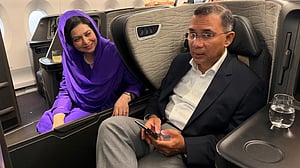
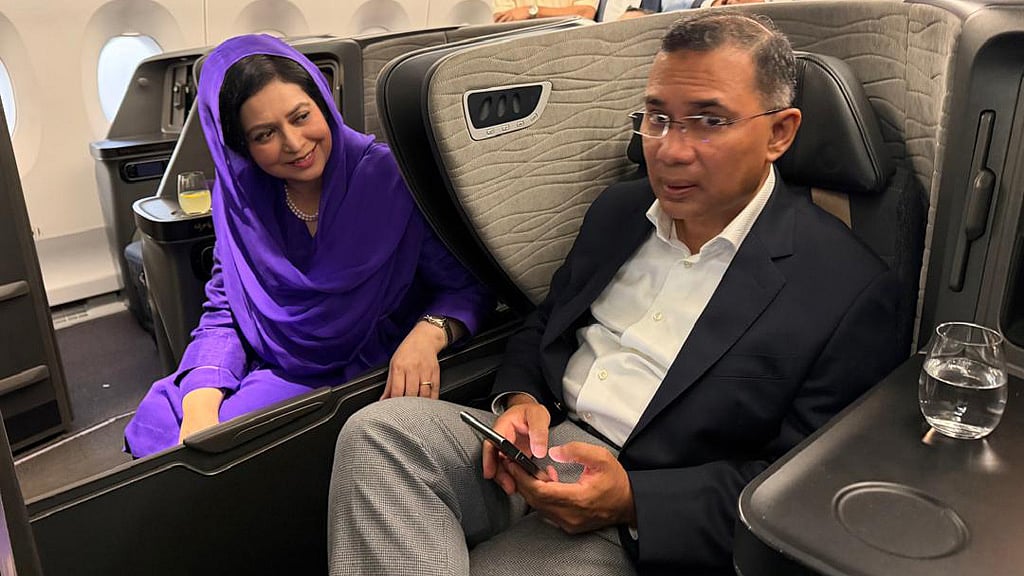
The most eye-catching piece of social media spin was Tarique’s stopover in Istanbul on the way to New York. The premier and his entourage travelled in Business Class, and naturally they enjoyed the appropriate hospitality in transit. But the video of him collecting food -- freshly made by the chef -- from the counter was hyped as some mega breaking news, an extraordinary display of humility by the prime minister.
Some media suggested the video showed the prime minister “queueing and buying” his own food, like ordinary folks. In truth, however, there was hardly any queue and, like any guest at a Business Class lounge, Tarique did not have to pay for anything. But sycophants are not known to allow the small matter of truth to get in the way of flattery.
More recently, a photo of Tarique surrounded by security and followed by officials walking down a street in New York circulated even in mainstream media. What was the big story here?
The “story” was that the prime minister, a 60-year old healthy man, was walking from his hotel to the UN building. He was walking along the sidewalk of an eminently walkable city. That, apparently, was the story.
Spin Doctor Cometh
The UN building is a 10-12 minutes walk from the Hyatt Grand Central hotel where the Bangladeshi delegation was staying. The photo itself would not have been out of place in the general coverage of the UN events. But by highlighting the fact that Rahman was “walking” the 10 minute distance, the sycophantic nature of the photo became self-evident.
But it’s not only enthusiastic individuals or even legacy media who are guilty of sycophancy. The government’s own spokespeople have a job to do too.
The word “spin” is often used to describe a disinformation campaign by official spokespeople who attempt to present government failures in a way to make them look like accidental or even a success. Wrapping of bad news in the glossy paper of an explanation designed to present the government as a “well-meaning” entity, is a classic tactic of people known as “spin doctors”.
The Bangladesh government’s spokesman is actually a doctor. He is better known as a political analyst and commentator. But since becoming the BNP government’s spokesman -- in addition to being the Prime Minister’s advisor on strategy and policy -- Zahed ur-Rahman has had to shape his statements with an eye to the gallery.
A touch of spin is always expected of government spokespeople, whether in a democracy or an autocracy or those in-between. Bangladesh is no exception. It is not the doctor’s fault that the media is ill-equipped or too feeble to call out his spin. He is doing his job.
Why not New York?
Recently, he made a factual statement about Tarique’s itinerary during his attendance at the UN General Assembly session. What he said was less important than what he did not say.
Tarique’s itinerary was reduced from seven days to three. This had raised some questions, including rumours about restrictions imposed on Tarique, resulting from alleged visa revocation dating back nearly 20 years.
The good doctor informed the media that the prime minister had cancelled his planned meeting with Bangladeshi diaspora in San Francisco as a cost-cutting exercise, to save money at a time of acute economic stress. That did not explain everything.
What was left unsaid was the curious absence of any event, meeting, reception etc., in New York itself, but outside the confines of the UN campus. The official itinerary can always change in these gatherings, but any public event outside the corridors and cubicles of the UN would have to be organised and announced weeks ahead. The fact that none was announced meant none was planned. The question is, why?
Nearly half of all Bangladeshi migrants in the US live in New York, mostly in the city’s key boroughs such as Queens, Brooklyn and the Bronx. For visiting Bangladeshi prime ministers -- or even lesser politicians -- the ideal and obvious place to have interactions with the diaspora would be New York, not San Francisco which is 4,000km away and hosts less than 2,000 Bangladeshis.
Disappointed Diaspora
Given that it would not cost anything extra to attend a reception in New York by the Bangladeshi community or business groups or even the US branch of BNP, the question begs an answer: why did the diaspora community not organise such an event? The only plausible answer would be that they were advised not to.
MM Shaheen, a key member of the Bangladeshi diaspora in New York and chairman of the board of editors at Bangla newspaper Thikana, made an interesting observation in his Facebook page recently. The post exposed the opaque nature of Tarique’s tour.
Shaheen recalled how in the past when Bangladeshi prime ministers visited New York, there was a “beautiful tradition of a civic reception accorded by representative members of the community”. But things have changed.
Shaheen wrote that many local leaders and activists had expected to interact with Tarique, even if only for a couple of hours. But it wasn’t just the local BNP leaders and workers who expected a meeting.
“Expatriate media workers, who had for years promoted the rights and interests of the diaspora community, also had similar expectations to meet the prime minister for an exchange of views or at a press conference,” Shaheen wrote.
“Why it did not happen, only relevant authorities would be able to explain,” he said.
In other words, not even the top editor of the largest-circulated Bangla newspaper in New York had any idea. Or, if he did, it was too sensitive to reveal. It is entirely possible that conflicts within the Bangladeshi community made it a security risk for the prime minister to venture out of midtown Manhattan.
On the other hand, the point remains as to why Tarique Rahman did not have a single engagement outside the confines of the UN headquarters. No credible explanation has been offered officially.
That’s what has been driving the speculation about restricted movement, and that’s what the spokespeople needed to dispel without any spin.
[Sabir Mustafa is a journalist and podcaster]