Published : 20 Oct 2022, 10:21 AM
Updated : 20 Oct 2022, 10:21 AM


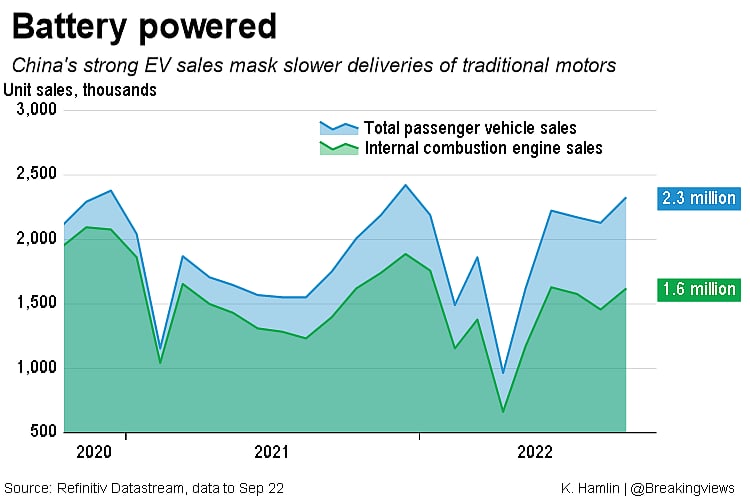
Automakers are hitting China’s growth limit. The industry achieved four consecutive months of double-digit growth in September when deliveries reached 2.3 million, 33% higher than a year earlier, per the China Association of Auto Manufacturers. But temporary government incentives greased sales, which could pull forward demand.
Some recent purchases represent pent-up demand after months of lockdowns. Buyers were also capitalising on new policies: Beijing extended tax exemptions for electric cars in August, soon after halving auto purchase taxes for smaller gas guzzlers.
Stimulus doesn’t always mean a bumpy ride. In the United States, a 2009 so-called Cash for Clunkers scheme, where drivers relinquished older motors in return for subsidised newer models, successfully invigorated sales without undermining the months that followed. However, in China, underlying demand seems soft. Smoothing out data on a year-to-date basis, total sales grew 14% from a weak base. Purchases of traditional engines, representing two-thirds of the market, are down by a quarter year-to-date, making life tough for marques such as Volkswagen– the world’s largest auto market accounted for a third of its deliveries last year.

As incentives expire, cars could follow a similar route to China’s commercial vehicles. A combination of new regulations and Covid-19 stimulus encouraged buyers to upgrade in 2020. Battery-powered designs were especially popular. But after a wave of purchases, truckers tightened their purse strings: sales shrank by a third in the first nine months of 2022.
There are already signs of stress: sales to retail buyers grew far more slowly than sales to dealerships in September, according to Chinese broker China Merchants Bank International, suggesting that ordinary consumers are less keen to splurge and unwanted inventory could build up. And while electric-vehicles sales for local brands such as BYD, Automobile Group, and Geely Automobile are growing fast, many old favourites aren’t faring so well. With a few exceptions, notably Tesla, Chinese drivers are also less enthusiastic about foreign badges.
The trend is particularly striking in the premium sector, usually a stronghold in tough times for overseas manufacturers. Fewer buyers plan to purchase brands such as Tata Motor’s Jaguar Land Rover, General Motors’ Cadillac, and even German marques like BMW and Audi, according to a September report from Bernstein. It was the first time enthusiasm for foreign luxury names waned since the researchers began their survey in 2015. Treacherous roads lie ahead for automakers in China.