
Published : 10 Dec 2024, 08:53 AM
Updated : 28 Aug 2026, 01:14 AM


After bottled soybean oil nearly disappeared from the market, prices skyrocketed, followed by sudden claims of increased supply.
But why did the shortage happen in the first place?
The government attributes the price hike to rising international costs, while local retailers blame distributors for restricting supply.
Distributors, in turn, accuse major companies of hoarding stock despite having adequate reserves but opting to hold back.
For their part, the companies deny these claims, insisting the shortage was driven by widespread stockpiling once price hikes became apparent.
Shoppers endured days of frustration, many searching multiple stores just to find a bottle of oil.
Even when they found bottled oil, it could not be purchased at the declared maximum retail price, as shopkeepers removed the posted price and asked for extra money.
On Monday, the Bangladesh Edible Oil Association President Mustafa Haider, after a meeting with the commerce ministry, announced a price hike with government approval.
The price of bottled soybean oil has risen by Tk 8 per litre, setting the new maximum retail price at Tk 175.
The price for loose soybean and palm oils will be Tk 157 per litre, while a five-litre bottle of soybean oil will now cost Tk 852.
Commerce Advisor Sheikh Bashir Uddin explained why the prices went up, but did not give a clear answer on why the shortage has lasted over a week.
At the press conference, he said that the price was set at Tk 167 back in April, but since then, international prices have increased "quite a bit”.
He added, "After talking with the companies, we've now set a 'fair' price, so there shouldn’t be any more problems."

HOW MUCH HAS IMPORT COST INCREASED?
Mustafa said, "The price of oil in the global market has hit $1,200 per tonne. Back in April, when the government set the price, it was $1,035 per tonne. Now, based on $1,100 per tonne, we’ve decided to increase the price by Tk 8 per litre."
After the international market price rise, the government reduced the value-added tax, or VAT, on edible oil imports by 5 percent on Oct 18, while completely removing VAT at the production and business levels.
Then, in November, VAT at the local production level was also reduced by 5 percent, leaving only 5 percent VAT on imports.
Despite these measures, companies have continued to propose price hikes, claiming they are incurring losses.
“We have to calculate the price by adding up the values of the Ex-Bond, In-Bond, and the LC opened in the last month. Then we need to add processing and bottling costs. This has been the standard procedure since 2011," said Mustafa.
According to the Chicago Board of Trade, or CBOT, the price of oil has been hovering around $1,100 per tonne for the past four months.
The Bangladesh Edible Oil Association president said from now on, oil prices will be fixed monthly through discussions with the government.

IMPORT RISE
According to the National Board of Revenue, or NBR, from July to October this year, Bangladesh imported over 248,106 tonnes of crude soybean oil, which is 54,017 tonnes more than the same period last year.
During this time, over 455,776 tonnes of refined palm oil were imported, along with more than 3,999 tonnes of crude palm oil.
The commerce advisor said, “After analysing all the data, we found that the stock in the country is satisfactory; there’s no shortage in reserves. However, we’ve noticed hoarding activity across various areas, from small shops to larger stores.”
He added that the Consumer Rights Protection Department is working against hoarding, and the interim administration is considering price adjustments to restore normalcy in the market.

MARKET SITUATION
Before the price hike announcement on Monday afternoon, there was a shortage of bottled soybean oil in Karwan Bazar.
Most shops didn’t have one-litre bottles, and sellers were charging more than the marked price for two-litre or five-litre bottles.
According to them, selling at the printed price would give them only a "limited" profit. Even dealers were jacking up prices.
Mohammad Siam, a seller at Shahmiran General Store, told bdnews24.com: "When there’s a bit of a supply shortage in the market, customer demand increases. That's when dealers and suppliers hike the prices."
He added, "Distributors also start to withhold supply. If I need 20 cartons, they only give me 2. That’s when shortages happen."
Mohammad Riyad, a seller at Messers Chatkhil Store, said: “We’re not getting the stock according to our needs. And they’ve increased the price. So, we’re forced to sell above the marked price.”
Mujibur Rahman of Messers Comilla General Store said, "Earlier, dealers used to sell five-litre bottles for at least 50 Taka less than the printed price, now I only get Tk 3-4 off. So, what else can we do but sell at higher prices?"
He added, "I need 500 cartons of oil, but I’m only getting 5 cartons. How will the shortage end if dealers and suppliers keep pushing the prices up?"
Rehana Begum, a resident of Tejgaon, who was at Karwan Bazar looking for oil, said: “I went to a lot of shops and finally found a one-litre bottle. They charged me Tk 172, even though the marked price is Tk 167.”
After the price hike, the situation reportedly improved a little, but many are questioning how supplies increased so quickly.
Shah Alam, a seller at Niketan Kitchen Market, said: "As of now, supplies are still low. But since the price adjustment has been made, I believe supplies might pick up in a day or two, and the shortage will end.”

WHAT ARE COMPANIES SAYING?
When asked about these allegations from traders, Shafiul Athhar Taslim, director of the importer and marketer TK Group of Industries, denied claims of supply reduction.
“There’s no direct link between price hikes and supply shortages. Whether the price goes up or down, we’ve always had more than enough supply," he told bdnews24.com
He continued, “Since there was an expectation that prices would go up, everyone—dealers, shopkeepers—knew this. So, everyone thought ‘Let’s hold on to it for a couple of days and make a profit’ which made the shortage worse. But there was no actual shortage of supply.”
Shafiqul gave an example, saying: "When I asked a dealer in Karwan Bazar ‘You used to take three trucks of goods a month, why do you now want three trucks a week?’ He replied ‘My demand has increased’. And because of that, he claimed he wasn’t able to get the stock, even though he was asking for more.”
“Because everyone thought ‘If we hold it for two days, we’ll make a profit’.”
The director said supply documents had been shown to the ministry, adding: “In the last 15 days, everyone has received more deliveries than before.”
He concluded, “Now that the uncertainty has cleared up, any stock that was held back at various stages will hit the market soon. We never had a shortage, and we won’t in the future.”
IS PRICE FIXING LOGICAL?
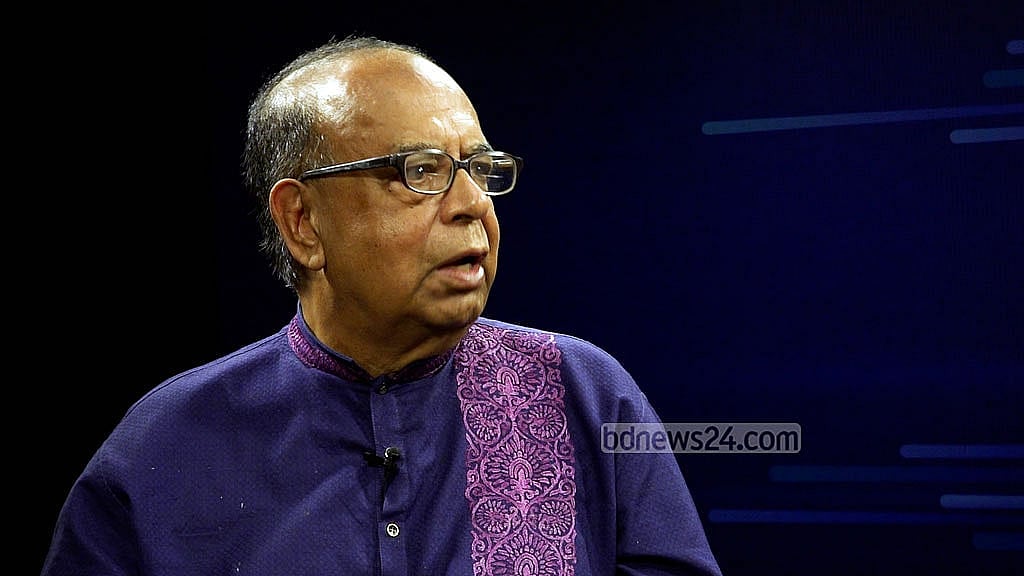
Golam Rahman, former president of the Consumer Association of Bangladesh, CAB, believes the government's decision to set a price cap is not justified.
“The market should be controlled based on supply, demand, and competition. If supply and demand are stable and competition exists, no one can raise prices, and even if prices are fixed, goods could still be sold for a lower price if there's competition,” he told bdnews24.com
The former CAB president pointed out that without competition, even a fixed price will not last.
He added, “The government sets prices for many things, but it often doesn’t reflect in reality because the market runs on its own mechanisms. Unfortunately, we have very few importers, refiners, and producers, so we need to focus on figuring out how to increase that."
“When global prices go up, prices rise here too, but when the international market drops, local prices don’t follow. Our traders are always looking for opportunities to maximise their profit, no doubt about that," said Golam.
He concluded, "In our country, everyone creates crises to push their demands. They go on strikes to get what they want. No one makes a decision unless there is a crisis. This happens at every level."
[Writing in English by Sheikh Fariha Bristy]