Published : 25 May 2026, 07:14 AM
Updated : 21 Aug 2026, 03:46 PM


The Digital Cattle Rush
Haats lose ground: Smartphone purchases quietly overtake physical markets as buyers bypass traffic, summer heat and hectic bargaining
Swift sales: Top digital platforms report near-total sell-outs weeks before Dhaka's physical cattle markets officially opened
Hassle-free delivery: From live-weight pricing to ready-to-cook meat, online platforms provide full transparency and home delivery
The cattle markets of Dhaka officially opened on Sunday. Across the capital, traders tethered cows beneath bamboo sheds, wiped dust from hides and waited for the annual rush that precedes Eid-ul-Azha.
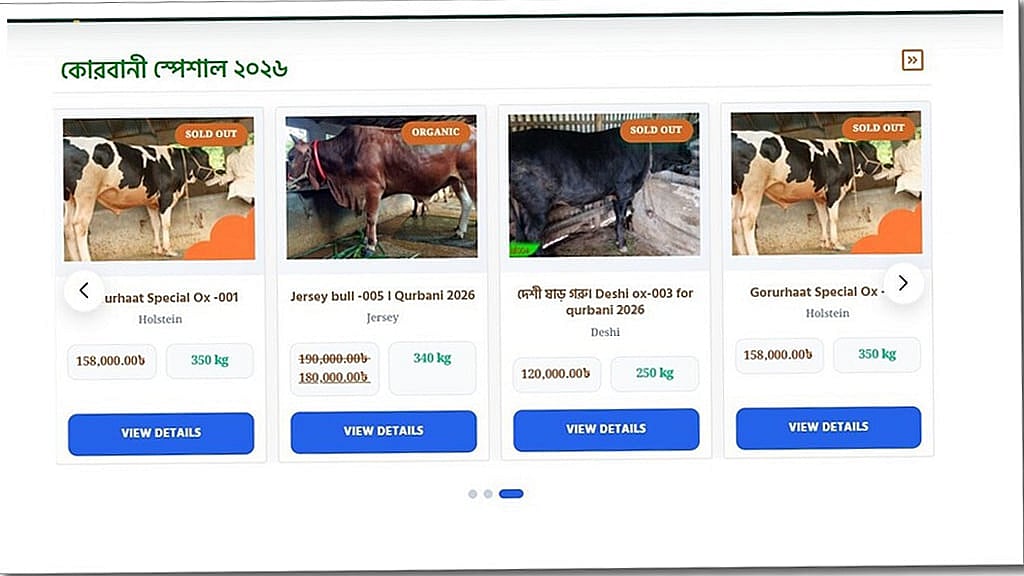
But long before buyers stepped into the city’s 24 sacrificial animal markets, thousands had already completed their purchases -- not in crowded Haats, but on phones.
On websites, Facebook pages and WhatsApp groups, Bangladesh’s digital Qurbani economy -- the online marketplace built around the Eid-ul-Azha ritual of animal sacrifice -- has quietly surged ahead of physical markets.
Sellers say many farms are already nearly sold out. Some exhausted their stock weeks ago.
What began during the COVID pandemic as a practical workaround has evolved into a sophisticated online marketplace worth hundreds of millions of taka.
Today, buyers can purchase cattle by live weight, arrange shared sacrifices, hire butchers and even receive fully processed meat at home.
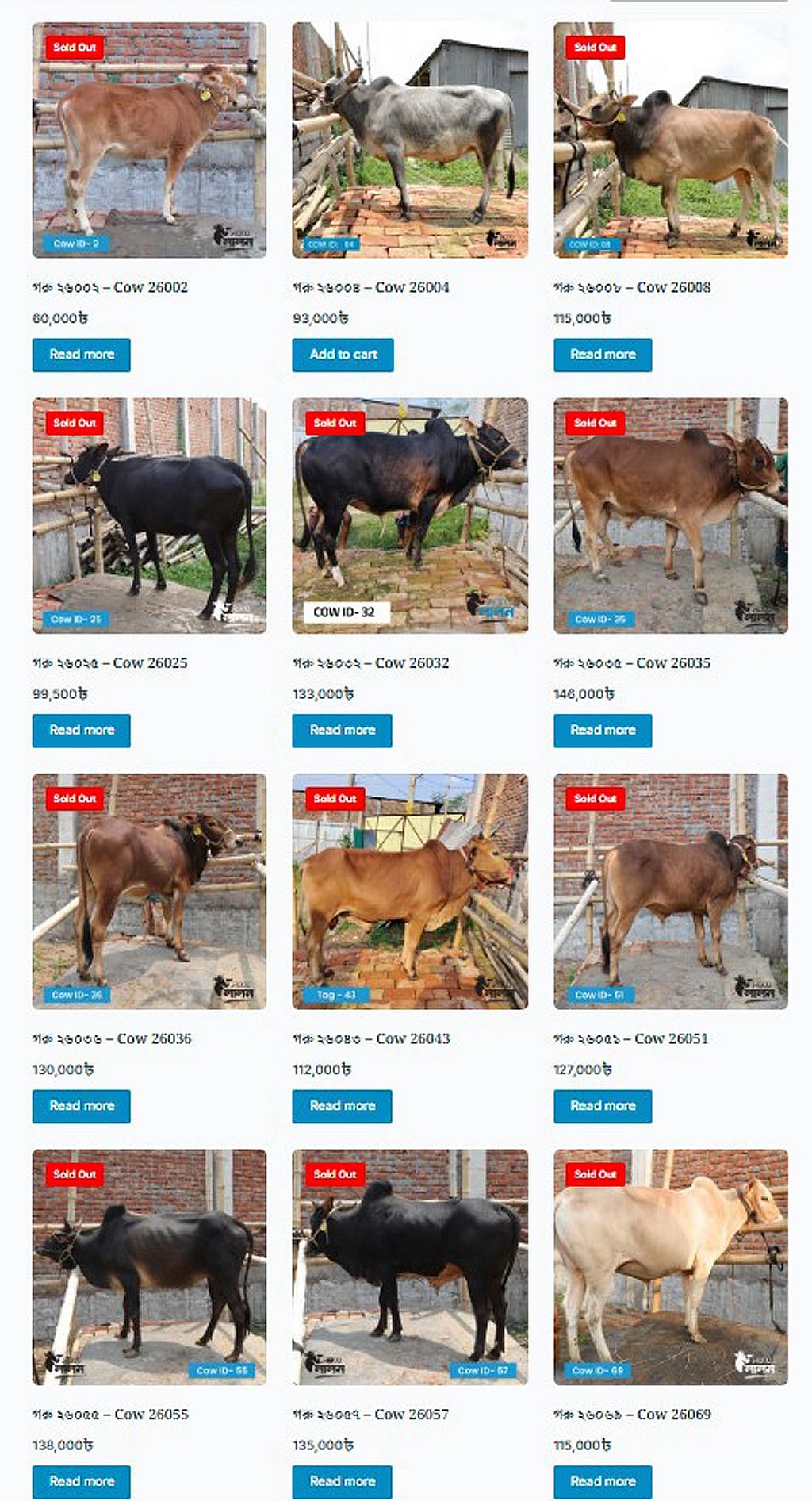
Packages vary widely. Some start at Tk 15,000. Others exceed Tk 50,000. Premium services for whole animals can push costs into the hundreds of thousands of taka.
The appeal is practical: avoidance of traffic gridlock, crowded Haats and the exhaustion of bargaining in the summer heat.
In 2020, during the COVID pandemic, authorities launched the government-backed “Digital Haat” platform through Dhaka North City Corporation, the ICT Division, the e-Commerce Association of Bangladesh and the Bangladesh Dairy Farmers Association.
That year, 27,000 sacrificial animals were sold online. The number jumped to 387,000 in 2021 before dropping to around 60,000 in 2022. The platform was shut down in 2024 after the fall of the Awami League government.

Fast-moving Stock
Among Bangladesh’s best-known online cattle platforms is Gorurhaat.com, based in Pabna’s Bhangura. The company sells domestic and foreign breeds using live-weight pricing and also markets cattle feed, sweets and ghee made from cow’s milk.
“We’re getting a very good response. Demand for local cattle is much higher,” said co-founder Sagar Ahmed.
“Cattle below Tk 150,000 sold the fastest. Those were sold out a month ago. Around 90 cattle were gone.”
He admitted the company stocked cautiously this year amid market uncertainty.
“We only sell cattle from our own farm now,” he said, explaining that some small farmers fail to vaccinate animals properly, causing outbreaks of foot-and-mouth disease during transport.
Out of roughly 100 cattle in stock, only two remain.

At another online seller, Shorobor Lalon, senior sales representative Md Shams said only four animals remain unsold from a stock of more than 90 cattle.
The company claims to follow “Islamic Shariah” principles in sales. Buyers are given 24 hours to inspect cattle physically before confirming purchases.
“We don’t sell cattle strictly by [kilogram] or live weight,” Shams said. “Height, colour, condition and overall appearance are all considered.”
The company operates farms in Demra, Uttarkhan, and Chapainawabganj, selling cows, buffaloes and goats alongside shared Qurbani packages.
At Samarai Cattle Farm in Rampura, owner Wahiduzzaman Sami Khan said 90 percent of this year’s stock had already been sold.
“We start promoting cattle right after Eid-ul-Fitr through Facebook, WhatsApp and direct calls,” he said. “Even expatriates are buying online.”
Fear, Traffic and Social Media Pressure
Yet the booming online business faces growing pressures.
Sagar said many customers remain hesitant about making large online payments. Others demand delivery on the night before Eid, creating logistical nightmares amid Dhaka’s traffic congestion.
Another challenge is cost.
“When we raise cattle organically, prices become higher. Buyers negotiate heavily, and profit margins become very difficult,” he said.
Sami described what he called “media trials” surrounding expensive cattle purchases.
“If someone buys a costly cow, social media starts attacking them. People fear harassment, investigations and public scrutiny,” he said.
He blamed YouTubers for fuelling online hype around high-priced cattle.
“After videos go viral, people start following buyers. Some even face visits from different agencies. Nobody wants trouble after performing Qurbani.”
The controversy echoes last year’s viral incident involving Sadeeq Agro Farm, where the son of a tax official bought a goat for Tk 1.5 million, triggering nationwide scrutiny.
Still, buyers continue shifting online.

Gazipur resident Zakir Hossain said digital platforms offered greater transparency.
“Many platforms now provide live videos, digital scales, age verification via dental inspection records and veterinary certificates,” he said. “There’s no hassle over market tolls. That’s why I prefer buying online.”
Officials insist there will be no shortage of sacrificial animals this year. Bangladesh has more than 12.33 million animals ready for Qurbani -- around 2.2 million above projected demand.
“This year, domestic production alone will be enough,” Fisheries and Livestock Advisor Md Aminur Rashid said after visiting Dhaka’s Diabari cattle market on Sunday.