Published : 07 May 2023, 03:01 PM
Updated : 07 May 2023, 03:01 PM


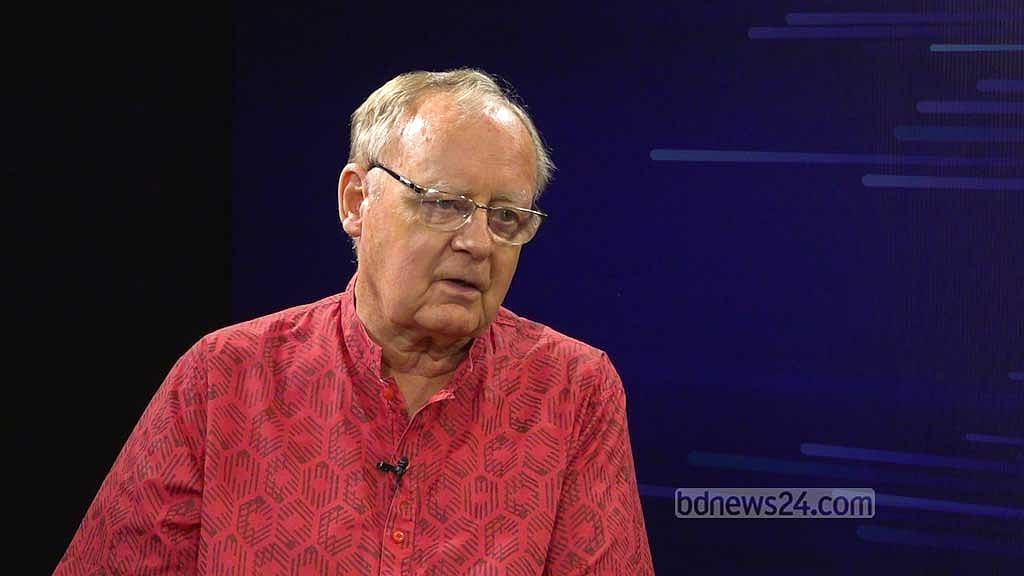
Though the poverty rate in Bangladesh has decreased over the years, the difference in lifestyle between the very rich and the very poor has continued to widen, says Julian Francis, a former Oxfam official who helped refugees in the 1971 Liberation War.
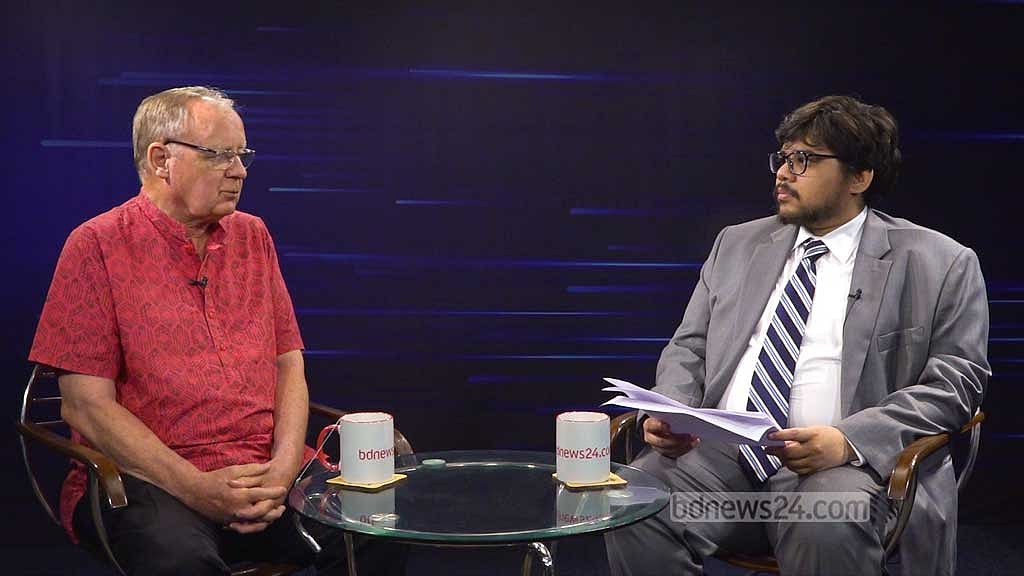
“It’s pretty obvious that the gap between the very rich and the very poor is getting bigger,” he said in an interview with bdnews24.com’s Inside Out.
“Although extreme poverty has reduced significantly, there is still you know, that 10-14 percent who are still in great difficulty.”
The responsibility to bridge this gap lies on the rich, believes Francis, who was recognised by the UK and Bangladesh governments for his efforts to care for the Bengali refugees fleeing to India in 1971.
“I think everybody would agree that if people paid what income tax they should be paying, then the government would have more funds to deal with people’s needs and increase the number of people who can be assisted with social welfare grants.”
“So I think there's too much complacency regarding getting income tax paid from people who should be paying income tax.”
A video of the full interview is available on bdnews24.com and its Facebook and YouTube pages.
When Bangladesh’s Liberation War broke out, Francis, a British national, was working with Oxfam in India’s Bihar. He coordinated the relief efforts of the British donor organisation Oxfam for over 600,000 refugees in Tripura, Assam, Meghalaya, and Cooch Behar.
Bangladesh is set to celebrate 50 years of collaboration with Oxfam at an event on May 10.
In 2012, Francis’s support for Bangladeshi refugees was recognised with the Friends of the Liberation War award. In 2018, he became a Bangladeshi citizen.
Francis, however, is a bit embarrassed by the scale of the honours bestowed upon him for his humanitarian efforts at the time.
“I feel, sometimes, that I have been over-honoured,” he said.
“Because whatever I've been doing, I was either leading a team or part of a team. And so there are many people who, who really are part of the award. I mean, without them, my name wouldn't be anywhere.”
“But no, it's been a great honour and receiving the Bangladesh citizenship was a particularly a great honour.”
It is necessary for younger generations to learn the history of the time, Francis said.
Initially, the newspapers and the BBC overseas service had been covering the growing unrest in East Pakistan following the cyclone of 1970, he said.
“And then the general election, and then the delay in handing over power to the Awami League that had won the election. And so it was getting tense,” he said.
At the time, Francis lived in Gaya, a tourist town in Bihar, where the Bengali community was angered by the political developments and the military operation in East Pakistan.
“So that's how we we've heard about the unrest and police firing. And then, of course, we heard about the crackdown, Operation Searchlight, on Mar 25.”
Once the war began, the organisations working in India’s border areas informed Oxfam that their capacity was overrun by the influx of refugees. A senior Oxfam staff member who had lived in East Pakistan had estimated that as many as 10 million might be displaced by the war, Francis said.
“But he was calculating it based on refugees mainly being Hindu. And so Oxfam just thought he was crazy, talking about 10 million. But soon we were asked to go to the border areas, and we reported 20,000 or 30,000 were crossing in a day.”
Oxfam had to quickly assess the needs of these refugees. The government of India was concentrating on shelter and basic food supplies, but many other things were also needed, Francis said.
Aid workers needed to pay immediate attention to food, sanitation and health. People were coming across -- malnourished and short of food. Some of them were badly wounded and some walked for days.
“The challenges for a small organisation like Oxfam and for the government for that matter were immense and it was difficult really, to know where to start.”
A cholera epidemic made its way through the camps, killing many, but its impact was probably less than expected.
“But there were other [diseases like] chronic diarrhoea and gastroenteritis. And so, the sanitation situation was very difficult to control. Then you had problems, particularly with scabies, a skin infection,” Francis said.
The cholera was controlled due to a mass vaccination effort that saw over a million doses of a vaccine distributed within 72 hours through a collaboration between the Indian government and Oxfam.
But Francis also credits the team that came up with oral saline. Several of the American doctors who had worked at the Dhaka cholera research laboratory, now ICDDR,B, were evacuated. They brought their knowledge to the camps, saving many lives.
“In some camps, there was a 30 percent death [rate] from cholera. And where we were able to use the ORS, it went down to about 3 percent.”
Nowadays, Francis is largely in the public eye as a writer for several publications. He often writes about his memories of the Liberation War as well as other major contemporary issues like corruption.
Still, he has some plans for the future himself.
“Partly for being concerned about my own health I would [like to] disappear and live in a village, probably in the north, and write about agriculture. My original background is animal husbandry so that's what I sort of dream about. Just look after some cows and drink fresh milk.”