Published : 27 Aug 2023, 02:28 AM
Updated : 27 Aug 2023, 08:21 AM


As Bangladesh launched its eagerly anticipated Universal Pension Scheme, Shakila Afroz, employed in the private sector, didn't need much convincing to get on board.
Inaugurated by Prime Minister Sheikh Hasina on Aug 17, the ambitious initiative aims to extend the social safety net to at least 100 million citizens in their twilight years.
Shakila opted for the Pragati scheme, which requires her to make monthly payments of Tk 5,000.
Much to her surprise, however, she soon realised that the programme has its share of hidden costs.
The first stumbling block was her lack of an account with Sonali Bank, the state-owned institution tasked with handling the premiums.
This means that in order to pay the monthly instalments, she must visit a Sonali Bank branch -- the only venue accepting deposits for the scheme -- as she can't use the bank's facilities without an account.
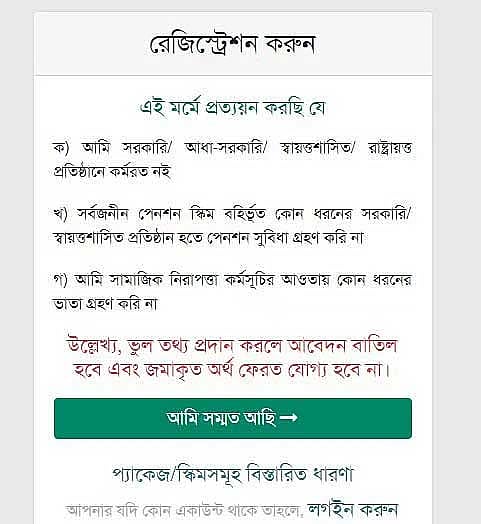
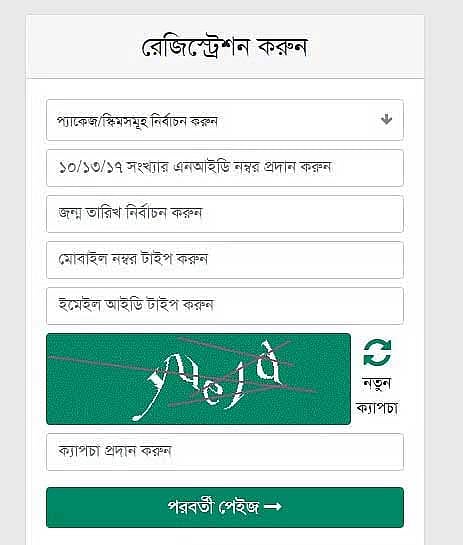
The scheme has yet to be integrated with the Bangladesh Electronic Fund Transfer Network. As a result, Shakila cannot transfer funds directly from her bank account.
Her other payment options are mobile financial services (MFS) and debit or credit cards.
The standard MFS charge for a Tk 5,000 payment stands at Tk 40.
However, card charges vary. Using a Dutch-Bangla Bank Nexus debit card incurs a Tk 75 fee, whereas Visa or Mastercard charges are Tk 87.50. An American Express card carries a higher charge of Tk 112.50.
To further break it down:
- At age 35, Shakila can make deposits for another 25 years.
- Using MFS services, she'd incur an added Tk 12,000 in fees.
- With a Nexus card, the surcharge totals Tk 22,500. The additional charges would amount to Tk 26,250 for Visa or Mastercard and a whopping Tk 33,750 with American Express.

When bdnews24.com addressed the concerns voiced by Shakila and other subscribers, Md Golam Mostafa, a member of the National Pension Authority, said plans to partner with other commercial banks to expand payment options are in the works.
“As you can understand, it's a massive project. We will address all these issues over time. We are doing some trials at the moment,” he said.
SUBPAR MARKETING
Post-launch, promotional campaigns to introduce the scheme to potential beneficiaries have been found wanting.
The lack of advertising, highlighted in recent social media discourse, casts doubt over the scheme's viability and the security of the deposited funds, given the prevailing economic uncertainties.
AAMS Arefin Siddique, a former vice-chancellor of Dhaka University and a retired professor of mass communication and journalism, underscored the need for bespoke promotional content.
“The government should focus on grassroots outreach to make people understand the benefits of signing up for the scheme.
REINVESTMENT OF PENSION FUND
The authorities plan to reinvest subscriber deposits. This is a common practice in the developed world, with Japan’s Government Pension Investment Fund (GPIF) being a prime example.
Over the last 21 years, the GPIF has emerged as Japan's leading domestic stockholder, with assets worth £1.7 trillion. Given its enormous size, both Japanese and global investors keep a close eye on the GPIF’s moves.
Its recent decision to venture into startups made waves and could potentially influence other pension funds to follow suit.
Similarly, the Bangladesh Pension Authority is mulling over options to reinvest the corpus. It is primarily eyeing sovereign bonds, according to Golam Mostafa.
"We are also considering investments in future mega projects like another Padma or similar endeavours,” he said.
[Writing in English by Adil Mahmood; editing by Turaj Ahmad]