Published :
07 Nov 2015, 01:07 AM
Updated :
08 Aug 2022, 05:03 PM
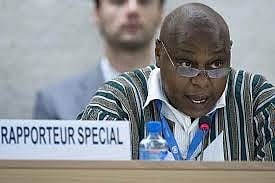
In a statement on Friday, ahead of the parliamentary debate on the proposed bill, he said the act could “severely restrict” civil society organisations’ access to funding and “hinder their activities”.
He also offered assistance to the government to help ensure that “the bill complies with international human rights laws”.
The draft Foreign Donations (Voluntary Activities) Regulation Act is expected to be debated during the next Parliament session starting Sunday.
But Kiai says the bill is “deeply worrying”.
“I urge the Parliament not to adopt the Bill as its purpose clearly violates the right to freedom of association, and has a ricochet effect on the realisation of other human rights, as well as on the delivery of aid in a country prone to natural disasters”.
The statement was endorsed by the Special Rapporteur on the situation of human rights defenders, Michel Forst, and by the Special Rapporteur on the promotion and protection of the right to freedom of opinion and expression, David Kaye.
The Special Rapporteurs are part of what is known as the Special Procedures of the Human Rights Council. They are not UN staff and they serve as experts in their individual capacity.
In his statement Maina Kiai noted that the proposed law would, among other “problematic” issues, compel NGOs seeking foreign funds to register with the government-controlled NGO Affairs Bureau, and obtain its approval for each project undertaken with these resources.
The Bureau’s commissioners would also review on a monthly basis the progress made by NGOs in their projects.
The Bureau would also have the authority to approve each appointment of foreign specialists under foreign-funded projects, as well as all trips abroad paid for with foreign funding.
Failure to comply with these provisions could lead to the cancellation or suspension of an NGO’s registration, the interruption of the project, and a fine up to three times the amount of the foreign funding received.
“Such governmental intrusion is totally unacceptable. The ability to seek, secure and use resources is essential to the very existence and effective operations of any civil society organisation,” said Kiai.
“Registered and unregistered NGOs should be able to operate and function freely without prior authorisation or other undue impediments,” he added.
Kiai says civil society is a crucial component for the promotion and protection of human rights, good governance and the rule of law, as well as for contributing to the provision of humanitarian assistance.
“Unduly restricting civil society organisations’ access to resources therefore not only has a detrimental impact on freedom of association, but also deeply undermines the civil, political, economic, social and cultural rights that these organisations seek to promote and protect,” he stressed.
Kiai, who hails from from Kenya, was designated in May 2011 by the UN Human Rights Council as the first Special Rapporteur on the rights to freedom of peaceful assembly and of association.
He has served as Executive Director of the International Council on Human Rights Policy, Chair of the Kenya National Human Rights Commission, Africa Director of the International Human Rights Law Group, and Africa Director of Amnesty International.