Published : 02 Aug 2018, 01:11 AM
Updated : 19 Oct 2022, 02:16 PM


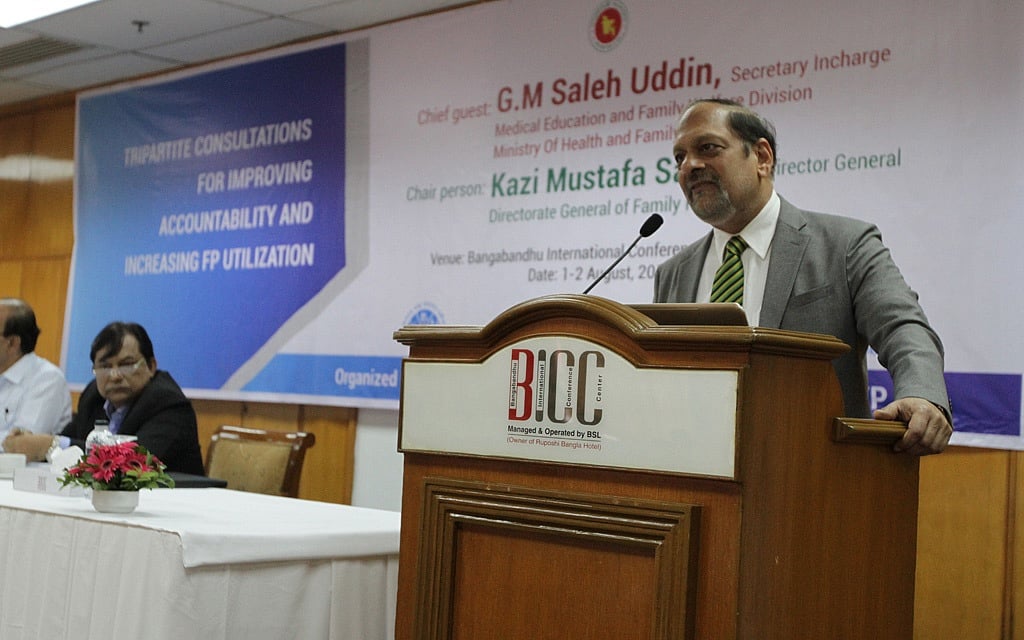
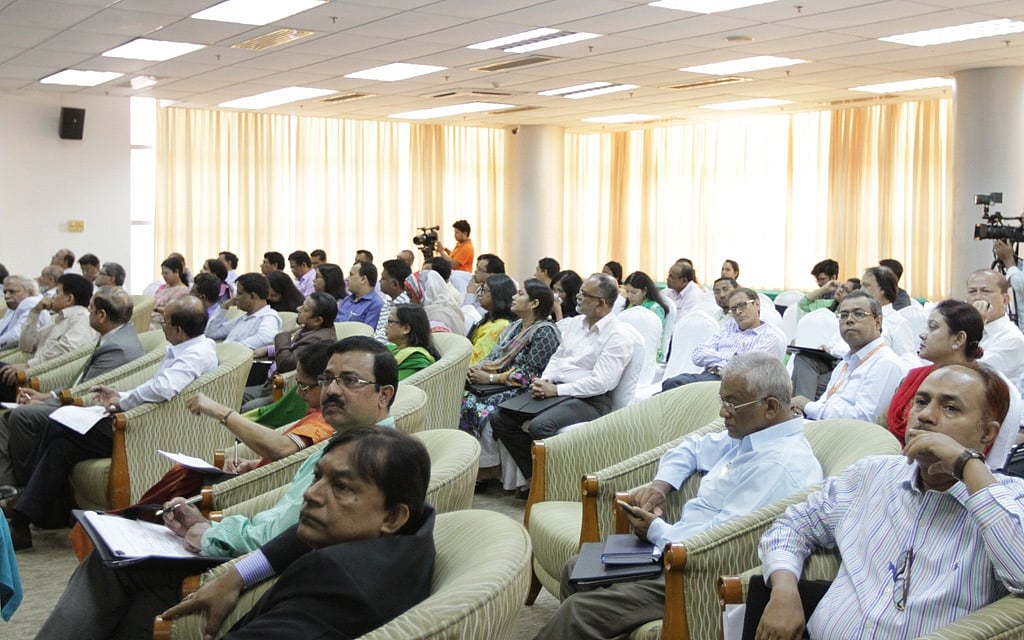
The UNFPA said for the first time in the family planning programme of Bangladesh, the health ministry organised the two-day tripartite consultation in partnership with the UN agency.
It brought all the stakeholders together to discuss and explore reasons and find solutions to the current challenges in family planning.
Bangladesh is the world’s eighth most populous country with 160 million people, but it is also known for its success to contain the growth with the current rate at 1.32 percent.
Recent statistics show the total fertility rate in Bangladesh is also close to the replacement level when a couple are being replaced by their two children.
However, population analysts have often warned against complacency, since the trend of having several children has persisted in some areas such as Sylhet and Chittagong.
Maternal mortality rates also continue to remain high. The links between unmet need for family planning, unintended pregnancies, and unsafe abortions leading to maternal deaths is well established.
Dr Vinit Sharma, a Regional Technical Adviser to the UNFPA, said Bangladesh has achieved “appreciable success in family planning programme, but still there is high adolescent fertility rate and unmet need of family planning”.
He thanked the government for giving importance to brainstorm together with policy makers, service providers and consumers.
“It is commendable for Bangladesh to start the debate on accountability on family planning programme and consider Family Planning as a development intervention” Dr Sharma said.
Dr Hussain Zillur Rahman, founder of Power and Participation Research Centre (PPRC), said to sustain Bangladesh success in family planning programme there is a need to focus on three policy re-thinking.
“Link up family planning agenda for realising SDGs, prioritize the FP agenda on the ‘Last Mile’ challenge and refocus the implementation strategy from community versus institution to community and institution,” he said.
Director General for Family Planning Kazi Mustafa Sarwar thanked the UNFPA for helping the government organise the workshop.
“We hope it will help to identify the areas of concern and will integrate the findings in the next Operational Plan for the successfully utilization of our resources.”
Secretary in charge of Medical Education and Family Welfare Division of the health ministry GM Saleh Uddin also spoke at the meeting.