Published : 29 Jun 2023, 01:56 AM
Updated : 29 Jun 2023, 01:56 AM


Muslims in Bangladesh are set to celebrate Eid-ul-Azha, the second largest festival in the Islamic calendar, with prayers and the ritualistic sacrifice of animals, and rains in the forecast.
The rains may hamper Eid congregations and traditional animal sacrifices to commemorate Prophet Ibrahim's willingness to obey Allah's command by sacrificing his son Ismail, but heavy showers in the afternoon will also ease the work to remove the cattle waste.
Much of the meat will be distributed among the poor or shared among families.
Millions of people have left capital Dhaka and other major cities for their ancestral homes in towns and villages to celebrate the Eid with their families as the rains largely failed to dampen the spirit of the festival, despite a relative lul in business for many, including cattle traders and clothing retailers.
Railway stations, bus and launch terminals were overcrowded for the last few days as holidaymakers headed for their destinations.
Homegoers, mostly north-bound passengers, suffered most in long gridlocks on the highways due to bad weather, road accidents and breaking down of vehicles. The extended four-day holiday began on Tuesday.
Traffic eased in Dhaka on the second day of the Eid holiday on Wednesday. Even on the busiest roads, there were very few vehicles. The persistent rain since the morning also largely kept people off the streets.
Users of more than 1.9 million mobile phone SIM cards from four operators left Dhaka on the first day of Eid-ul-Azha holidays, Tuesday.
The celebrations on Thursday will begin with congregations across the country.
Traditional congregation grounds in Kishoreganj's Sholakia and Dinajpur’s Gor-e-Shahid, along with the National Eidgah in Dhaka, are all set to host large gatherings.
Eid prayers will follow slaughtering of sacrificial animals. In Bangladesh, this Eid is called the Eid of Qurbani or sacrifice.
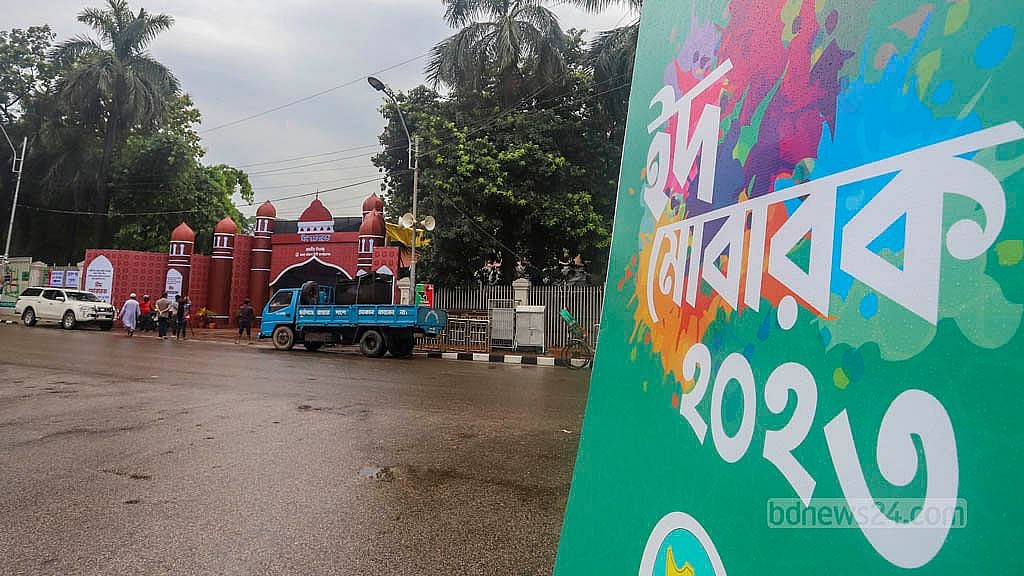
Roads and important establishments have been decorated. Special meals will be served at hospitals, prisons, and shelters across the country.
Television and radio stations are broadcasting special programmes Eid while newspapers, too, are publishing special editions.
The usual rush of buyers at the cattle markets on Eid eve was absent due to rains, forcing many traders to sell their animals at lower-than-expected prices or bring them back home.
The government has increased the prices of rawhide by 6 percent for procurement during the Eid this year.
The price of salted cowhide has been set at Tk 50-55 per sq foot in Dhaka, compared to Tk 47-52 last year. It will cost Tk 45-48 to procure a sq foot of rawhide outside Dhaka.
Meanwhile, the price of goat leather has been fixed at a maximum of Tk 20 per sq foot.
Blacksmiths were busy ahead of Eid as sales of choppers, knives, cleavers and other butchering instruments heated up before the traditional ritual animal sacrifice on the Muslim holiday. Old butchering tools were also sharpened and cleaned.
RAINS
Dhaka was drenched by persistent monsoon rains on Wednesday, and scattered showers may continue in the city throughout the day. Similar conditions may prevail on Thursday.
Light to moderate rains struck all across Bangladesh in the past few days amid the monsoon season. The showers exacerbated the hassles for people visiting cattle markets and those headed home to celebrate the Muslim festival.
The National Eidgah will host the main Eid prayer congregation in Dhaka at 7:30am, while five congregations will be held at the Baitul Mukarram National Mosque.
However, the main congregation will be held at the Baitul Mukarram National Mosque at 8am if the weather is unfavourable for the outdoor prayer service.
Police have asked Muslim devotees not to bring anything other than prayer mats and umbrellas to the main Eid congregation at the National Eidgah Maidan.
Nearly 35,000 devotees, including many state leaders, are expected to attend the prayer congregation there.
Worshippers will undergo a search at the entrance to the venue, while instructions on car parking sites have also been issued by the police.
WASTE REMOVAL
The Dhaka city corporations said they were ready with thousands of workers and hundreds of vehicles to remove waste from cattle to be sacrificed on Eid in a day.
During the last Eid-ul-Azha, over 20,600 tonnes of waste were cleared in the areas under Dhaka South City Corporation, DSCC spokesperson Md Abu Naser told bdnews24.com, adding that the expected waste amount this year is 22,000 tonnes.
The goal is to remove the waste within 24 hours, he said.
The exact number of animals to be slaughtered in the Dhaka North Corporation areas is yet to be determined, according to Mokbul Hossain, a spokesman for the DNCC.
Last year, they removed 50,000 tonnes of waste in three days, and this year's volume is expected to be similar.
They aim to remove the waste even faster than the previous year, which took 11 hours from 3pm, said Mokbul.
In the capital city this year, there are 20 cattle markets where animal waste will be cleared starting from noon on Eid day.
The city corporations have cancelled the leaves of officials and employees from departments such as waste management, transport, and the mechanical department, which are responsible for monitoring waste management activities.