Published : 07 Jan 2021, 01:04 PM
Updated : 03 Aug 2022, 01:42 PM


In an attempt to reduce the expenses, Advocate-on-Record Md Taufique Hossain filed a petition to Chief Justice Syed Mahmud Hossain seeking an exemption from submitting the paper books for the appeal.
According to the Constitution and the Supreme Court's procedural law, an advocate-on-record is a lawyer authorised to appeal to the court on behalf of any party.
The Supreme Court law stipulates that an appeal has to be filed within 30 days of collecting the certified copy of the High Court's verdict. Accordingly, the deadline to lodge an appeal will pass in the coming week.
But so far, only one appeal has been filed, which was submitted on Tuesday. According to the lawyers, the convicts are being deterred to lodge any more appeal due to the high fees.
The nine convicts facing death penalties are Sepoy Kamal Molla, Abdul Mohit, Bazlur Rashid, Md Moniruzzaman, Habildar Yusuf Ali, ATM Anisuzzaman, Subedar Md Shahidur Rahman, Nayek Subedar Fazlul Karim and Nayek Abu Sayeed Alam.
Aminul Islam, a lawyer for the accused, told bdnews24.com, “We’ve lodged an appeal on Tuesday. The High Court sentenced them to death. We’ve pleaded for an acquittal in the appeal.”
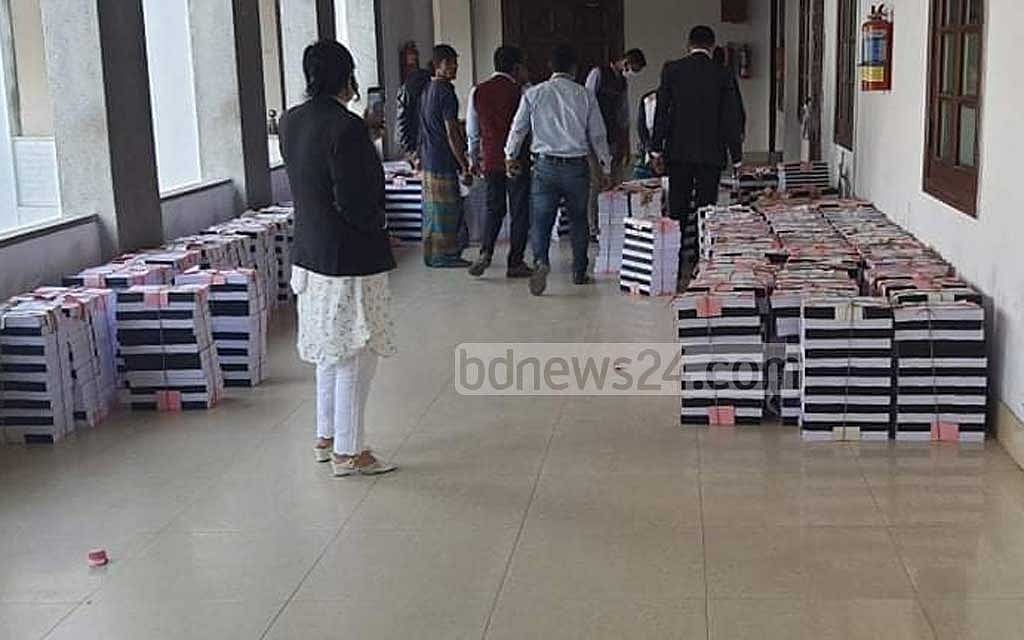
“The appeal is 55,623-pages long. Each appeal will require the same amount of pages, with a total of 140 volumes of 400 pages. Fourteen sets of appeals are outlined in every volume. Accordingly, 1,960 books had to be submitted. The appeal was accepted after the submission.”
File Photo
Referring to the high costs involved, he said, “[Bearing this] is not possible for many. And due to that, we’ve filed an appeal with the chief justice.”
“The paper book of the first appeal contains everything. Each appeal will have similar contents. The appellants cannot bear the cost. Besides, it is not possible for the respected justices to handle this huge appeal.”
The late attorney general Mahbubey Alam had previously expressed fears of a stalemate in the final settlement of the case on the 11th anniversary of the Peelkhana massacre.
“The situation has become such that it appears to me that it may hit a deadlock,”
His worries stemmed from the cost of the certified copy of the High Court’s verdict, storage of the paper book in court along with the different judicial processes tied to the final judgment, among others.
In January 2020, the High Court passed the full 29,000-page verdict on the murder case of 50 officers in Peelkhana.
Lawyer Aminul said, “According to the Supreme Court law, an appeal should be filed within 30 days from the date of collecting the certified copy of the High Court’s verdict. So the last date of filing the appeal is Jan 13.
“It wouldn’t be possible to file appeals for everyone within this time. Now if the chief justice waives the submission of the paper book, then we would be able to file appeals on behalf of those who come to us by January 10 or 11.”
On what would happen if the chief justice turns down the petition, the lawyer said, “I don’t know what we’ll do if we don't get the approval. If we do, we’ll be able to file the appeal. The state filed a few appeals without the paper book by asking for an exemption from the chief justice. We also want the same procedure to apply here.”
Advocate Aminul also expressed concerns over the hearing of the appeal.
“It is hard to say what the procedure of the hearing would be. It would solely depend on the decision of the chief justice. There would be some difficulties. The hearing took three years in the High Court. The working hours of the Appellate Division are shorter, so naturally, it would take more time.”
He also believes the hearing of this appeal cannot be conducted by a virtual court.
On the other hand, the state has filed for a leave-to-appeal, demanding the reinstatement of the death penalties for 83 convicts, who were either acquitted or are serving life terms instead of facing the capital punishment.
Attorney General AM Amin Uddin said that the application was filed on Dec 24.
The petition was filed to challenge the acquittal of 75 and commutation of death penalties of eight to life term by the High Court
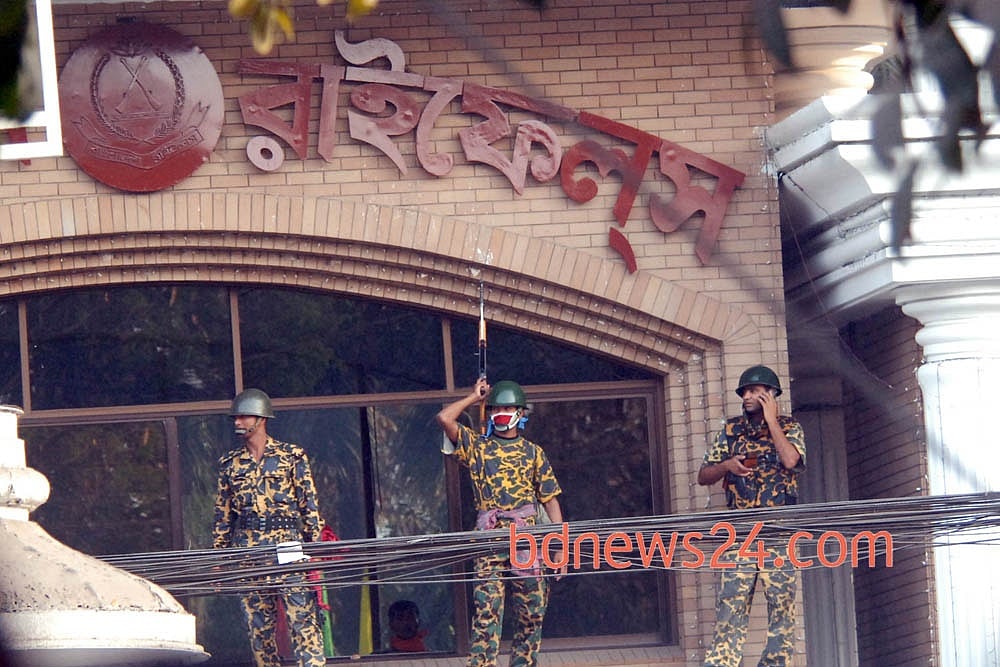
Seventy-four people, including 57 army officers, were murdered by mutineers on Feb 25-26 in 2009 inside the erstwhile Bangladesh Rifles headquarters in the capital’s Peelkhana.
An internal trial was conducted by the force through which, 6,000 soldiers were jailed. Later, a general court began trial proceedings over the massacre.
A Dhaka Judge Court subsequently handed down death sentences to 152 of the accused and life imprisonment to 160 others. Another 256 accused were fined and given jail terms in 2013. As many as 277 people were also acquitted by the court.
The High Court upheld the death sentence of 139 accused in 2017. It also sentenced 185 to life imprisonment while another 228 were handed different jail terms.
The mutiny sent shockwaves across the world while the number of death sentences that were subsequently handed down in a single case was also unprecedented.
The death reference (approval of the death penalty) of the accused came to the High Court after the judgment of the Judicial Court.
After hearing the appeals of the convicts and the state, a three-strong special bench of the High Court announced its verdict on Nov 26 and 27 in 2017.
The court upheld the death sentence of 139 accused and sentenced 175 people to life imprisonment while another 228 were handed three to 10 years in jail.
As many as 288 accused were acquitted by the High Court. Six of the 846 accused died.
The full verdict of 29,059 pages was published on Jan 8 last year, more than two years after the verdict was pronounced.
Justice Md Shawkat Hossain wrote 11,407 pages of the verdict, Justice Md Abu Zafor Siddique16,552 pages while Justice Md Nazrul Islam Talukder penned the remaining 1,100 pages.
However, the judges of the special bench of the High Court unanimously upheld the death sentences of 139 accused, life imprisonment of 185 and retained the sentences of the others on different terms.