Published : 01 Jan 2024, 03:05 AM
Updated : 01 Jan 2024, 03:05 AM


Another year has passed with tragedies and achievements. The year 2023 was marked by the worst outbreak of deadly dengue fever and fatal opposition protests before the election. But the launch of several megaprojects brought hopes of a renewed start for 2024. Here are 10 notable events of 2023:
1. ELECTION, POLITICAL TENSION
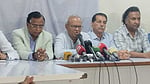
The ruling party and the opposition remained adamant with their stance on election-time caretaker government. Now, the 12th national poll is going to be held in the beginning of the new year amid hartals, or shutdowns, and transport blockades called by the BNP.
The Election Commission has been taking the last minute preparation for the Jan 7 election. The ruling party Awami League, the opposition party in parliament the Jatiya Party, and 27 other political parties are contesting the election.
Usually, the Awami League punishes its leaders and activists coming up as ‘rebel candidates’ opposing the party nominees. But in a rare move, the party did not do it this time. Rather, it encouraged leaders and activists to contest the election as independent candidates to prevent an uncontested election like the one on Jan 5, 2014. It would increase the voter turnout, they believe.
The ruling party left 26 seats for the Jatiya Party and also shared six constituencies with its 14-Party Alliance.
Although the newly registered three political parties were prominent during the political dialogues before the election, they were not much favoured by the ruling party when it came to seat sharing. The new parties planned to persuade BNP leaders to join them and contest the election.
Kalyan party Chairman Syed Muhammad Ibrahim, who left the BNP-led alliance and formed the new party, is in a better position as his opponent Salah Uddin Ahmed, Awami League candidate for the Cox’s Bazar-1 seat, lost his candidacy over a complaint of loan default.
Shahjahan Omar, who stepped down from the post of BNP vice chairman and got an Awami League ticket, made it to the headlines most of the time. The former state minister of the BNP government was jailed with other BNP leaders but suddenly granted bail and nominated by the Awami League for Jhalakathi-1.
2. DENGUE
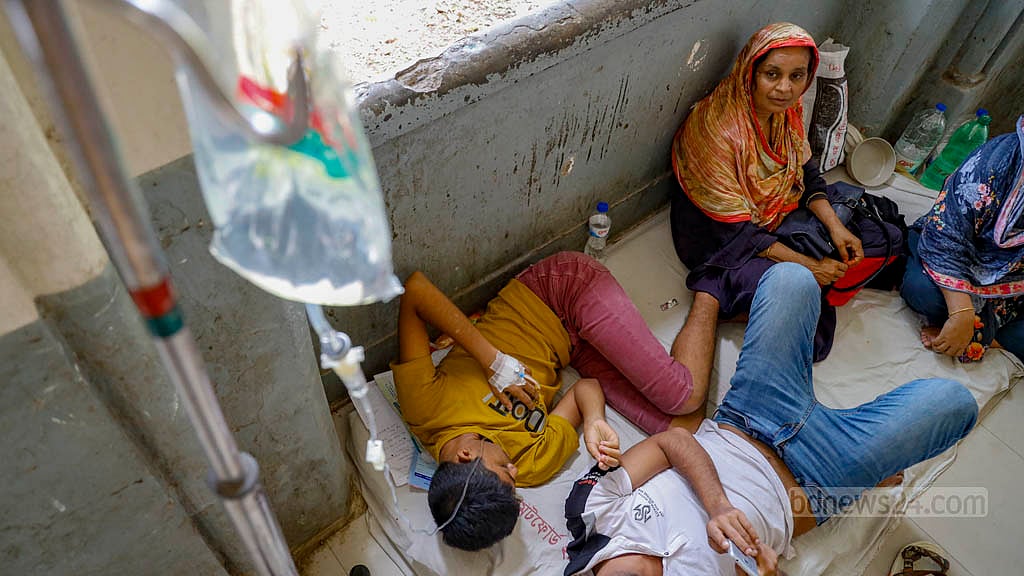
After the coronavirus pandemic ebbed in Bangladesh, it was dengue that spread across the country in 2023. The death toll from dengue continued to make new records.
The dengue death toll rose to an unprecedented number as of July 2023. The Aedes mosquito-borne disease was under control to an extent in the first half of the year. But cases surged and the death toll rose from July.
Dengue cases surged despite the initiatives taken by the health ministry and local government ministry.
Also, the dengue menace spreading across the country was evident with more patients admitted to the hospitals outside Dhaka.
According to the data collected from hospitals, average admission of dengue patients stood at 1,330 in the first six months while in July, the number rose to 43,876.
The number was 71, 976 in August, 79,598 in September, 67,769 in October, and 40, 716 in November.
On Nov 15, the country experienced the highest daily death from dengue with 24 patients dying on that day. As of Dec 31, as many as 1,705 people died from dengue.
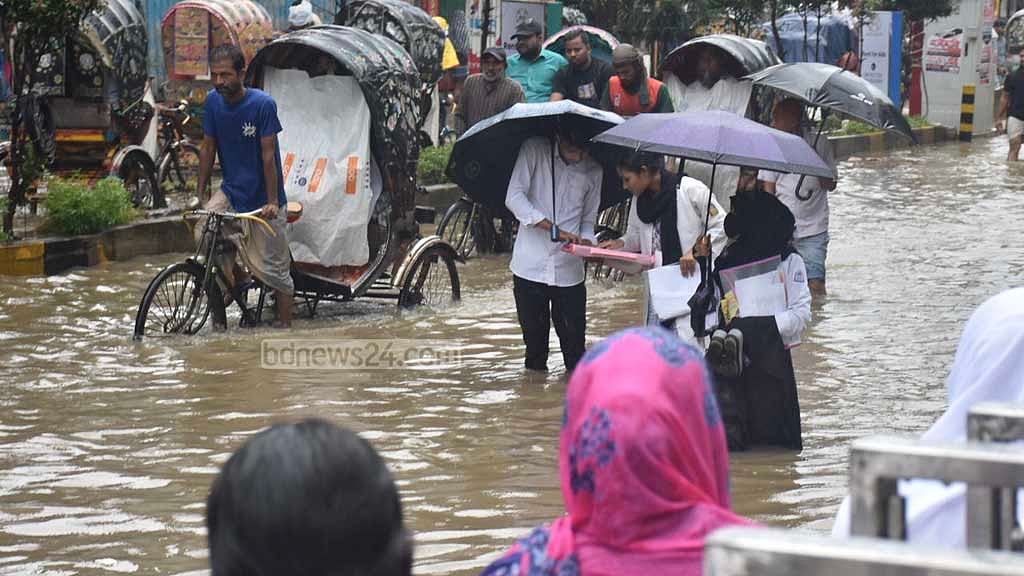
Due to heavy rain, mosquito breeding intensified in the country, believed the entomologists. Also, most of the people suffered from coronavirus infection which made them vulnerable to other pathogens. In the post-COVID pandemic situation, people do not pay enough importance to fever. All these led to the spreading of dengue, experts believed.
3. PRICE HIKE: INFLATION
Just at the time the national economy rebounded after surviving the COVID-19 pandemic, the foreign currency reserves began to fall due to the impact of the Ukraine war. The taka started to be devalued against the dollar and inflation reached a point of concern.
To maintain the reserves, the government curbed the import business which caused the economy to shrink. Production was hampered due to the fuel crisis while Bangladesh continued to face the long-term adverse impact of climate change.
The International Monetary Fund (IMF) approved $4.7 billion in loans for Bangladesh at the request of the government, helping the country build a buffer against depleting forex reserves.
Bangladesh received the first tranche of $476.2 million in February. Later the IMF approved the second tranche of $4.7 billion loans in December for Bangladesh to receive $682 million.
As the taka continued to devalue, the Association of Bankers Bangladesh (ABB) and the Bangladesh Foreign Exchange Authorised Dealers Association (BAFEDA) started to fix the dollar exchange rate in consultation with the Bangladesh Bank in September 2022.
However, the market became volatile in 2023 as the rate fixed by BAFEDA and ABB was never maintained due to the dollar crunch. The rake was somewhat controlled in the banks but it rose to Tk 128 in the open market.
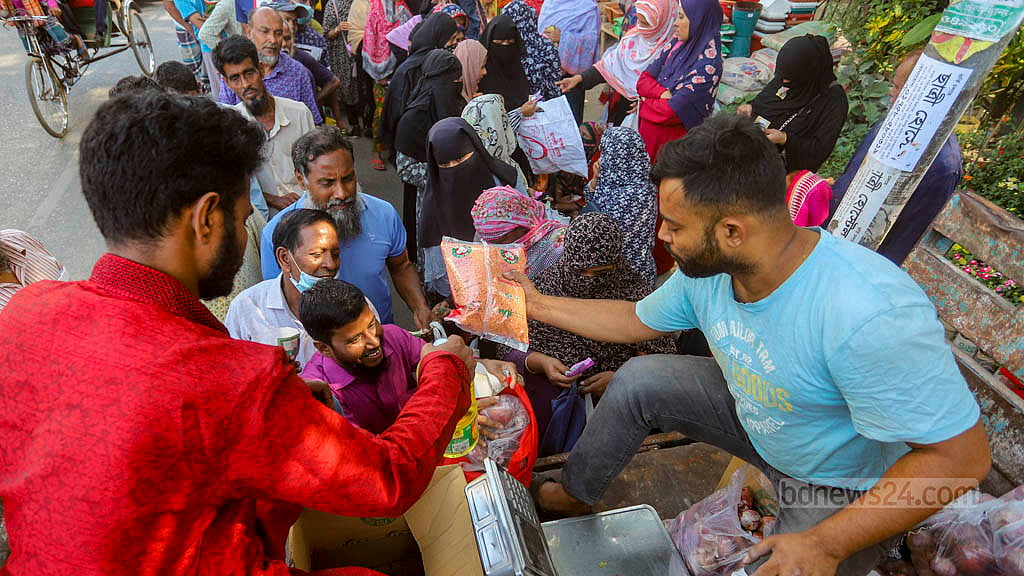
Inflation skyrocketed and prices of essentials hiked now and then. Prices of egg, chicken, onion, green chilli, and potato rose unbridled in the year 2023.
4. ARSON ATTACKS RETURN
The BNP observed peaceful political programmes throughout the year demanding an election-time caretaker government but their movement turned violent after the grand rally it called on Oct 28.
As violence broke out even before the rally started formally, BNP Secretary General Mirza Fakhrul Islam Alamgir ended it and called for a hartal for the next day. The opposition party then enforced a 48 hours blockade in protest to the arrest of its leaders and activists including the secretary general.
The BNP then continued to enforce blockades and hartals with brief intervals. The violence during the hartal and blockades including arson attacks on vehicles brought back the memories of sabotage the BNP did a decade ago.
As many as 285 transports were torched from Oct 28 to Dec 24, according to the Fire Service and Civil Defence. This included 180 buses, 45 trucks, 23 covered vans, eight motorcycles, and 29 other vehicles.
Meanwhile, the two rounds of sabotage on the Mohanganj Express stirred panic among people. A total of five people died in two incidents with the train running on the Dhaka-Netrokona route.
On Dec 13, assailants used gas cylinders and uprooted parts of the rail tracks in Gazipur’s Goheen. At least seven carriages of the Mohanganj Express derailed in the incident killing one person and injuring more than fifty people.
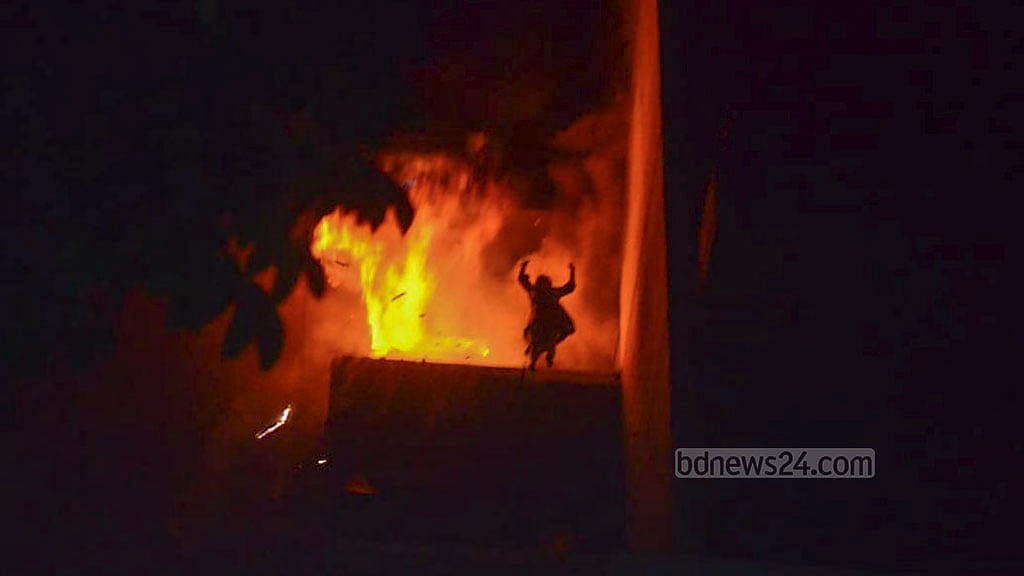
The Mohanganj Express faced another sabotage on Dec 19, when it was torched on the eve of hartal called by the BNP and its ally Jamaat-e-Islami. The fire spread to three carriages killing four passengers including a child.
Bangladesh Railway halted train service in some routes to ensure the security of passengers following the incidents of train sabotage.
A pair of commuter trains on the Dhaka-Narayanganj route halted running on Dec 16, while Uttara Express on the Rajshahi-Parbatipur route halted service on Dec 22.
The railway also stopped a pair of local trains on the Ishwardi-Rajshahi-Rohanpur route and another local train on the Mymensingh-Bhuapur route on Dec 15.
Besides, the authorities shortened the route of Intercity Jamuna Express on the Dhaka-Tarakanda route. The train is running up to Jamalpur from Dec 15.
5. US CONCERN
While foreign diplomatic missions in Bangladesh were concerned about the political situation in Bangladesh and urged for a free and fair election amid the different viewpoints of the opposite political camps, US Ambassador Peter Haas was in the limelight.
The United States announced a new visa policy in May saying it would deny visas to those dampening the election process in Bangladesh.
Some of the high-ups in the US government visited Bangladesh in 2023 and discussed the election among other issues.
The media followed Haas diligently and even published the news when he went on holiday.
Before the Election Commission announced the election schedule in November, Assistant Secretary of State for South and Central Asia Donald Lu wrote to the Awami League, BNP, and Jatiya Party urging them to hold a dialogue without any conditions.
The BNP said it was ready for dialogue but did not move its stance for having a non-partisan neutral government. The ruling party, on the other hand, said that the time had arrived for the election and no scope for dialogue existed.
China and Russia termed the US concern about the Bangladesh election ‘foreign intervention on internal issues’ and criticised it. Although India did not issue a statement against the US on the matter, it nurtured a position similar to China and Russia.
All three countries said that the election was an internal issue of Bangladesh and that the people in Bangladesh would decide the election process based on the national constitution.
India, China, and Russia’s viewpoint on a stable Bangladesh is similar to that of the Awami League government.
The United States Department of State mentioned the human rights and election issues in Bangladesh more or less regularly in its briefing. On the other hand, foreign ministries of China and Russia issued statements against the US.
In July, the European Union sent an Election Exploratory Mission to visit Bangladesh to conduct a feasibility study on the prospects of a free, fair, and participatory election. Based on their report, Josep Borrell, the EU's high representative for foreign affairs, decided the EU would send a technical team of four election observers for the 12th parliamentary polls of Bangladesh.
The Bangladesh government summoned and briefed the foreign diplomats at different times on different issues including the diplomats issuing statements on the attack on Hero Alom, a famed content creator who was contesting the Dhaka-17 bypoll. Lastly, the diplomats were briefed on the clash between the BNP and police following the rally on Oct 28.
6. DISASTERS, ACCIDENTS
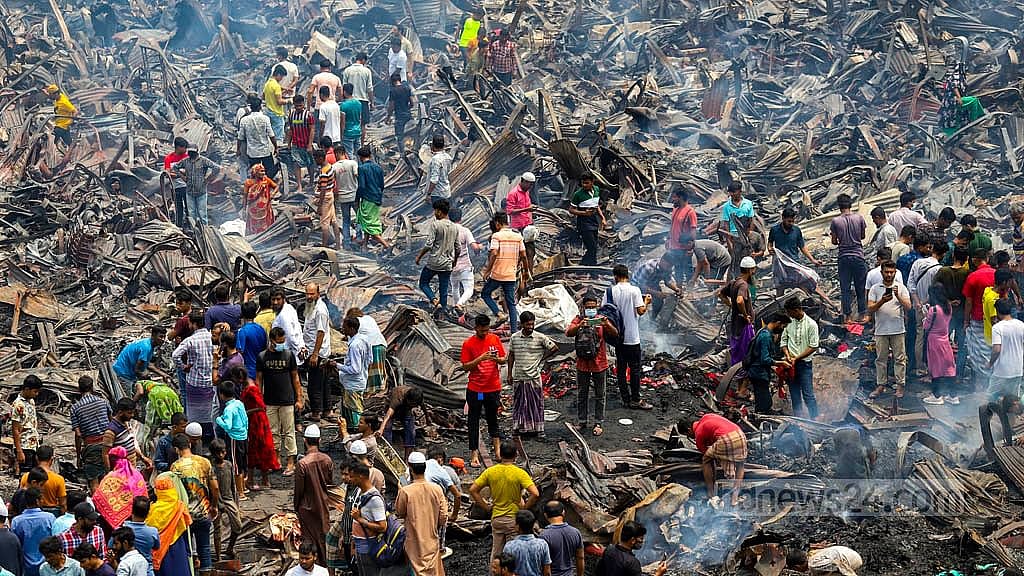
A few days before Eid-ul-Fitr, Bangabazar, the biggest clothing market was gutted down in a devastating fire on Apr 4. Owned by the Dhaka South City Corporation, Bangabazar has four units- Bangabazar Complex, Mahanagar Unit, Adarsha Unit, and Gulistan Unit. All of the 2,370 shops in the labyrinthine market were engulfed by fire.
The fire spread to the seven-storey Anexco Tower on the northwestern side of the Bangabazar and the Mahanagar Complex Market adjacent to the Police Headquarters and some other markets on the western side of the road. Altogether, most of the 5,000 shops housed in those market buildings were burnt.
A control room of the Dhaka Metropolitan Police and a police barrack also caught fire.
At least 3,845 shops were gutted down and the damage was worth Tk 3 billion, a DSCC probe panel said.
On March 4, a severe explosion occurred at Sima Oxygen Limited’s plant in Chattogram’s Sitakunda. The blast occurred at the private facility in the Kadam Rasul area of Sonaichhari near the Dhaka-Chattogam highway.
At least seven people were killed in the incident and around 25 others were injured.
The government opened an investigation into the blast and announced that it would pay the medical bills for the victims.
The Fire Service and Civil Defence, the police and local administration officials rushed to the site after the incident.
The fire service said nine units of firefighters brought the flames caused by the blast under control in less than an hour.
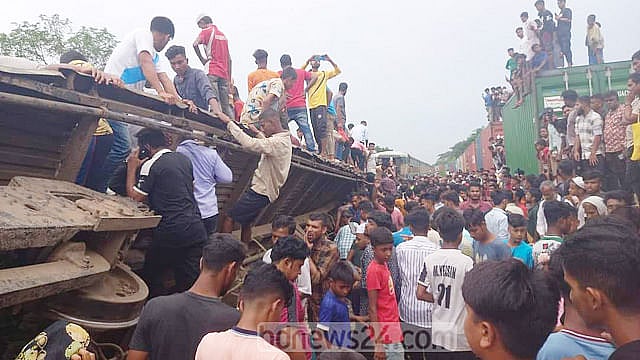
At least 17 people died when a container train rammed a passenger train Egaro Sindur Express in Kishoreganj’s Bhairab derailing two carriages on Oct 23.
7. NEW DIMENSION IN CONNECTIVITY
Some of the mega projects in the connectivity sector in Bangladesh were implemented in 2023. While some of them were launched fresh, some got expanded, refurbished, and relaunched with a new look and service.
The Awami League government introduced the Bangabandhu Tunnel, the first-ever underwater tunnel built under the Karnaphuli River. Prime Minister Sheikh Hasina inaugurated the tunnel on Oct 28 and travelled to Chattagram’s Anwara from Patenga in three minutes.
The main tunnel is 3.32 kilometres long, including two 2.45 kilometres long tubes. The east and west ends of the tunnel have 5.35 kilometres of approach roads in total.
The deepest part of the tunnel is 31 metres below the riverbed.
The tunnel will enable people to travel from Dhaka and Chattogram to Cox's Bazar via Anowara, Bashkhali. The tunnel connects Matarbari Deep Sea Port and the industrial belt in South Chattogram to the rest of the country.

A part of the Elevated Expressway was inaugurateed on Sept 2 in an attempt to ease the traffic jam in the city. ।
The expressway’s Shahjalal International Airport-Farmgate section with a length of 11.5 kilometres was open to the public in the first phase. After completion of the project, the length of the expressway will be 19.73 km, from the airport to the Dhaka-Chattogram Highway in Jatrabari's Kajla.
Bangladesh had its first metro rail inaugurated in December 2022 with the part from Uttara to Agargaon opened to passengers. The other parts of the route Agargaon to Motijheel opened in 2023.
While the Padma Bridge brought a new dimension to connectivity in Bangladesh, the rail link on the bridge added a new advantage to it. Currently, trains are running on the 82-kilometre-long rail route from Dhaka to Faridpur's Bhanga via Padma Bridge. Prime Minister Sheikh Hasina inaugurated the rail link on Oct 10.
8. DEATH OF SULTANA JASMINE IN RAB CUSTODY
The death of Sultana Jasmine, an employee at the Naogaon Sadar Upazila land office in the custody of the Rapid Action Battalion, sent a ripple of concern across the country.
RAB arrested Jasmine on Mar 22 in Naogaon after Joint Secretary Enamul Haque submitted a complaint against her. The elite force detained her for four hours and then took her to the Naogaon Central Hospital when she fell sick.
Jasmine was then shifted to the Rajshahi Medical College Hospital where she died after two days.
She died due to the ‘torture’ by RAB, her family alleged. RAB denied the allegation and said that Jasmine fell sick after she was detained for questioning over allegations of fraud.
The RAB formed a committee to investigate the Naogaon incident.
The High Court ordered officials to submit the post-mortem examination report on Jasmine and asked who interrogated her in custody.
The post-mortem report showed that Jasmine died due to 'severe internal bleeding in brain'.
Enamul also named a man along with Jasmine in a case filed under the Digital Security Act with the Rajpara Police Station in Rajshahi.
Amid criticism over the death of Jasmine, RAB said that Jasmine hacked Enamul's Facebook ID and used it for forgery. They arrested Jasmine in the presence of the joint secretary over the allegation.
Later, RAB withdrew 11 members and attached them to the RAB 5 Battalion Headquarters.
9. BANGLADESH ENTERS THE BAND OF COUNTRIES USING NUCLEAR POWER
Bangladesh officially became the 33rd country in the world to produce nuclear power after receiving the first shipment of uranium fuel for the Rooppur Nuclear Power Plant.
On Oct 5, the fuel supply certificate was handed over to Prime Minister Sheikh Hasina via videoconference with Russian President Vladimir Putin.
Construction work on the nuclear plant at Pabna’s Rooppur began in 2017. The first of its twin 1,200-megawatt units is slated to begin operations next year and both reactors should be fully online in 2025, Bangladesh technology minister Yeafesh Osman had said.
Washington's sanctions on key Russian firms since last year's invasion of Ukraine, including state nuclear agency Rosatom, delayed construction work because Dhaka was unable to make loan repayments in US currency.
In April, Bangladesh agreed to make payments of more than $300 million in Chinese yuan in an effort to circumvent the sanctions.
The government expects that the $12.65 billion project with two units of 2,400 MW capacity will supply power to the national grid by 2025.
The first unit of the plant was scheduled to go for production in December 2023, but got delayed due to the COVID-19 pandemic and other issues.
10. WORLD CUP CRICKET
Instead of showing better performance on the ground, the Bangladesh Cricket Team spent the year mostly creating controversies. All eyes were set on all-rounder Shakib Al Hasan due to his feud with fellow cricketer Tamim Iqbal and friendship with businessman Arav Khan.
Shakib bagged the ruling party Awami League nomination for Magura-1 and is now running his election campaign.
It wasn’t cricket but all the other issues regarding the cricketers that became the talk on social media before the World Cup Cricket.
Tamim getting dropped off the World Cup team, his video message and then an explosive interview given by Shakib Al Hasan before the team left for the World Cup- all were hot topics of Bangladesh cricket.
Bangladesh openers couldn’t do much in the World Cup. Almost in every match, they returned to the dressing room before the power play ended. This opening performance impacted the total batting order.
It was then everyone talked about Tamim’s absence. The Tigers showed a disastrous performance in the entire tournament losing seven of nine matches. The team ranked eighth among ten teams.
Shakib created a huge controversy when he travelled to Dubai in March to join the inauguration of Arav Jewellers, owned by Rabiul Islam, aka Arav Khan who was a fugitive suspect in the murder of a police inspector. his business.
Shakib and other celebrities who attended the inauguration were well aware Arav was a fugitive suspect in the murder of an inspector, said Harunor Rashid, an additional commissioner of Dhaka Metropolitan Police’s Detective Branch.
“I have no idea why they went to the inauguration even after being informed [about the charges against Arav]. It’s unfortunate,” said Harun.
Shakib gave another surprise at the end of the year by joining politics and contesting the 12th national poll as an Awami League candidate.