Published : 05 Oct 2026, 02:21 PM
Updated : 05 Oct 2026, 02:21 PM


Prosecutors have appealed to the Supreme Court seeking the death penalty for Jatiya Samajtantrik Dal (JaSaD) President Hasanul Haq Inu, who is serving a 10-year prison sentence for crimes against humanity committed during the July 2024 mass uprising.
International Crimes Tribunal Prosecutor Gazi MH Tamim announced the development on Monday.
"The prosecution has appealed to the Supreme Court seeking to increase Hasanul Haq Inu's 10-year sentence to the death penalty," he said.
The prosecution had sought the maximum punishment for Inu during closing arguments in May, citing his "superior command responsibility" and involvement in a "criminal conspiracy".
The defence, meanwhile, had sought his acquittal, arguing that the prosecution had failed to prove the charges against him.
International Crimes Tribunal-2, headed by Justice Nazrul Islam Chowdhury, convicted Inu on three of eight charges on Jun 30.
He was sentenced to 10 years in prison on each of the three counts, with fines of Tk 100,000 on two of them.
The tribunal ordered the three prison terms to run concurrently, leaving Inu with an effective sentence of 10 years and a total fine of Tk 200,000.
The 500-page full verdict was published on Sept 20.
In its observations, the tribunal said Inu was not a "passive observer" during the uprising and had participated in and incited the crackdown on protesters.
It said his principal role was to "conspire, incite and facilitate" the crimes, despite not being physically present at the scenes.
The tribunal said it relied heavily on intercepted phone conversations between Inu and then-prime minister Sheikh Hasina, along with his public statements and decisions taken by the Awami League-led 14-Party Alliance.
According to the verdict, the recordings were obtained from the National Telecommunication Monitoring Centre and verified by the Criminal Investigation Department's digital forensic laboratory.
The first of the three charges on which Inu was convicted concerned a phone call to the Kushtia superintendent of police on Jul 20.
The verdict said Inu instructed the police official to identify protesters from video footage and take measures to suppress, detain, torture and kill them.
Another conviction concerned a Jul 29 meeting of the 14-Party Alliance.
The tribunal said Inu sought to divert the movement by labelling protesters as "Jamaat, terrorists and communal", and that his involvement in the decision to ban Jamaat-e-Islami amounted to an attempt to legitimise the killings and torture of protesters.
The third conviction concerned events on Aug 4, when the verdict said Inu labelled protesters "militants", took part in a decision to impose a curfew and use gunfire against them, and instructed subordinates to implement the decision.
Inu was acquitted of the other five charges due to insufficient evidence.
One of those charges alleged that six protesters -- Abdullah Al Mustakin, Suruj Ali Babu, Ashraful Islam, Bablu Farazi, Yusuf Sheikh and Usama -- were killed on Inu's orders in Kushtia on Aug 5.
The tribunal found that charge had not been proved.
Inu has maintained his innocence throughout the proceedings. His lawyers have previously described the allegations as false and fabricated and sought his acquittal.
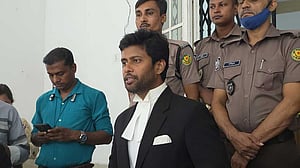
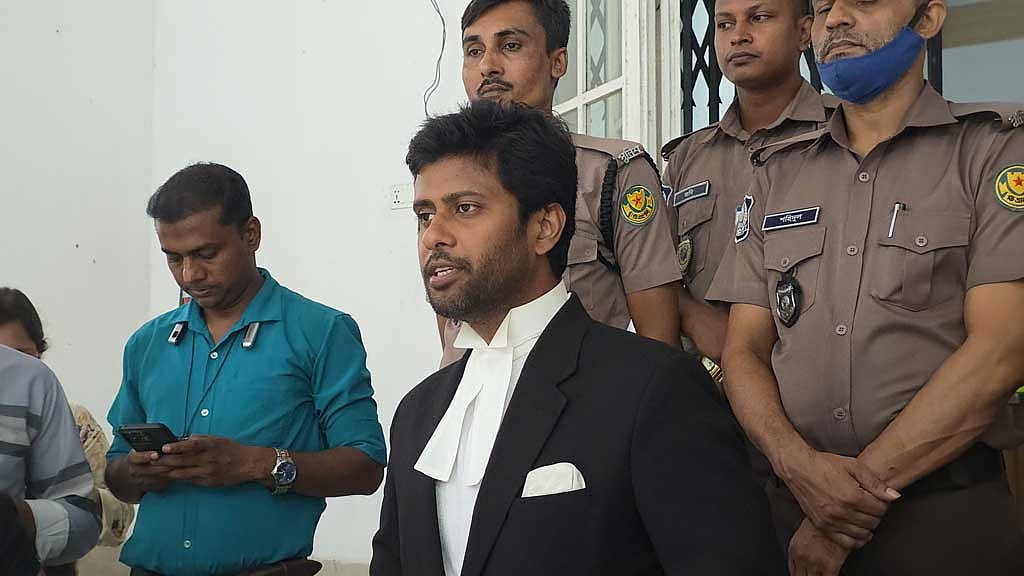
His lawyer Sifat Mahmud Shuvo said on Sunday that the defence had received the full verdict on Sept 20 and also intended to appeal.
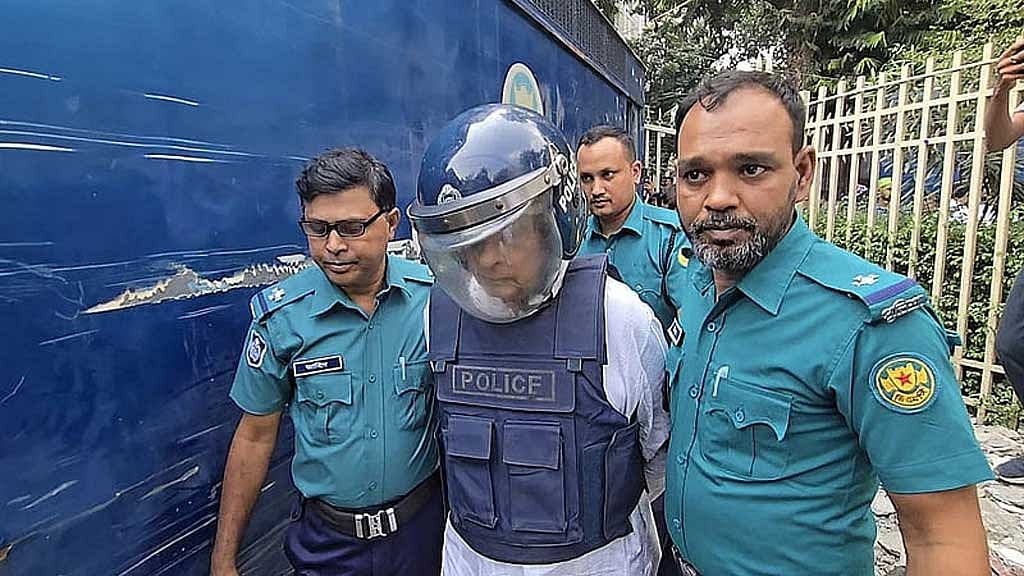
Police arrested Inu in Dhaka's Uttara on Aug 26, 2024, following the fall of the Awami League government in the student-led uprising.
He has been in jail since.