Published : 13 Mar 2017, 02:30 AM
Updated : 19 Oct 2022, 03:30 PM


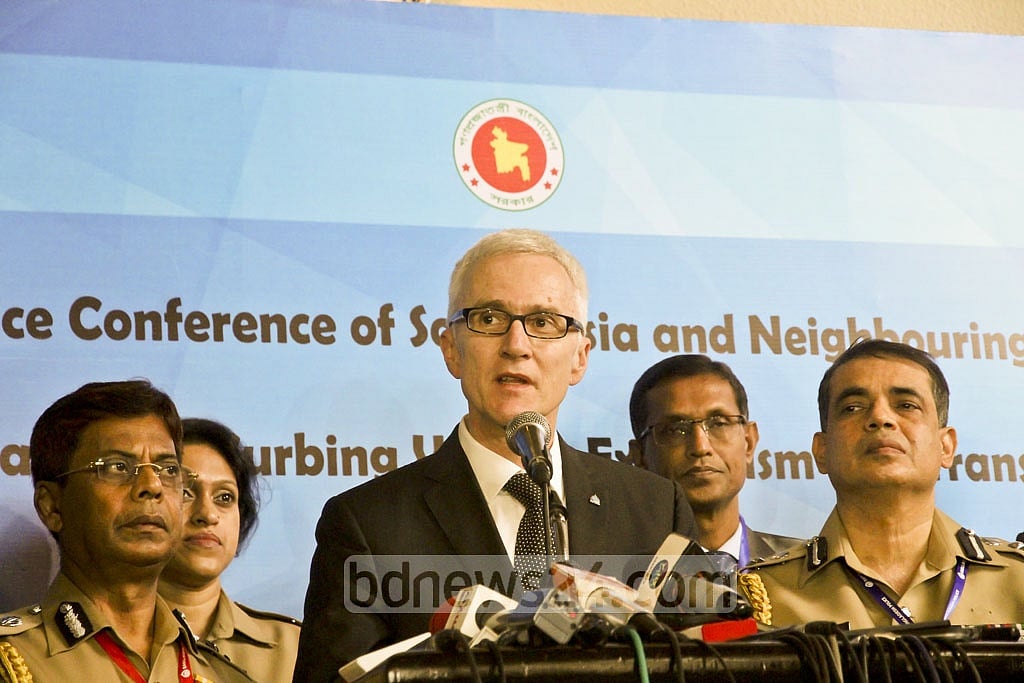
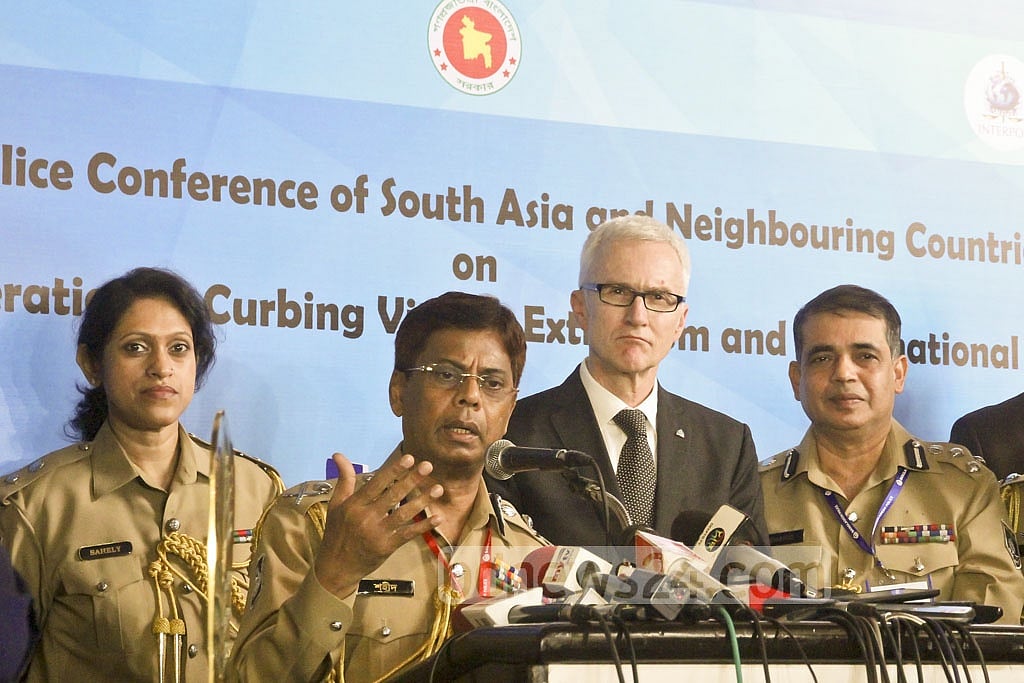
He thanked Bangladesh Police for their successful anti-militancy operations after the attack.
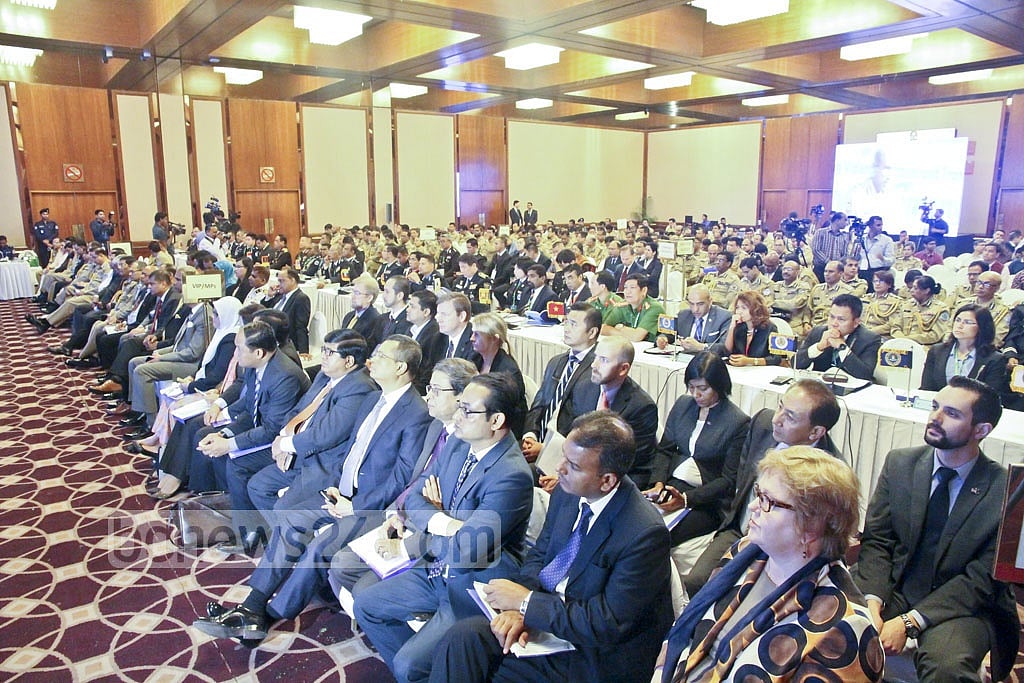
He was speaking to the media after the opening session of an international police conference at a Dhaka hotel on Sunday.
The three-day conference is titled 'Chiefs of Police Conference of South Asia and Neighbouring Countries on Regional Cooperation in Curbing Violent Extremism and Transnational Crime'.
The security forces killed the attackers in a commando strike to free the hostages in the Holey Artisan Bakery in Gulshan on July 1 last year.
In the anti-militancy crack-down later, Bangladeshi Law enforcers killed many top militant leaders, including the masterminds of the cafe attack that saw 22 people, including 17 foreigners, killed.
Speaking at the conference, Home Minister Asaduzzaman Khan Kamal said, "Bangladesh Police have dismantled the organisational structure of the local militants and arrested many of them after the Gulshan attack. Some militants surrendered too."
Interpol Secretary General Stock also said that his organisation would continue the work to create a network of law enforcers from different countries to exchange information for combating militancy and terrorism.
When asked, he denied the allegation that governments sometimes seek information from Interpol to suppress the opposition.
Rohan Gunaratna, Professor of Security Studies at Nanyang Technology University, referring to the so-called Islamic State magazine 'Dabiq', said has militants carried out the Gulshan attack.
He said Bangladesh's local group JMB changed strategy and now they are exchanging information with the Middle East-based IS.
The professor said the anti-militancy drives would be more successful if the people are given 'correct information'.
He also advised to the government to strengthen the programme to rehabilitate surrendered militants.
Bangladesh government and law-enforcing agencies deny the claim of any international radical group's presence in the country.
Inspector General of Police AKM SHahidul Hoque said a comprehensive strategy to combat transnational crime and terrorism would be developed through the exchange of information and experiences.
The conference hopes to also create a platform for cooperation between the various police forces and create a professional and technical support network for law enforcement within the framework for bilateral and regional cooperation in the South Asia region.
Representatives from Afghanistan, Australia, Bhutan, Brunei, China, India, Indonesia, Maldives, Malaysia, Myanmar, Nepal, South Korea, Sri Lanka and Vietnam will be participating in the conference.
Officials from Interpol, Facebook, US IGCI, FBI, ASEANpol and ICITAP and other international organisations are also attending the conference.
Fourteen working sessions will be held on various subjects at the event. These topics include terrorism, human trafficking, financial crime, terrorism financing, drug trafficking, arms trafficking, intelligence and cybercrime issues.
At the end of the conference, the international group of law enforcement officials will sign a joint declaration on terrorism and transnational crime.