Published : 14 Jul 2016, 05:55 PM
Updated : 08 Aug 2022, 03:47 PM


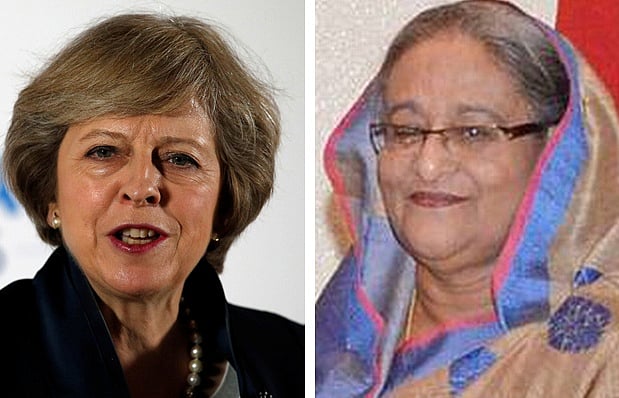
May, 59, assumed office on Wednesday after David Cameron stepped down following the UK’s vote to leave the European Union in a referendum last month.
She is the second woman to lead Britain, after Margaret Thatcher, who served as prime minister from 1979 to 1990.
Hasina in her message said as a woman prime minister, “it is more heartening for me to see you leading the United Kingdom”.
“I am happy to note that Bangladesh and the UK are working in partnership for strengthening the democratic ethos, empowering the vulnerable, countering terrorism and extremism, addressing the impacts of climate change among other global challenges of our time.”
The prime minister said she “firmly” believed that the existing relations would continue to grow with “fresh initiatives exploring new areas of cooperation” under her new counterpart’s “able and dynamic” leadership.
“You would agree that there is scope for further development in our bilateral relations through trade, investment, education and knowledge-sharing,” she wrote to May.
“To that end, I would like to invite you to visit Bangladesh I near future at a mutually convenient time.
“You, then, would be able to see for yourself the overall progress made by Bangladesh, particularly through mainstreaming and empowering women,” Hasina said.
The Bangladesh prime minister was “confident” that the visit would infuse “impetus to our relations and take them to a greater height”.
Hasina recalled the contribution of Bangladeshis in Britain and said they had “further strengthened our ties”.