


Published : 17 Aug 2015, 04:43 PM
Updated : 23 Apr 2022, 01:01 PM


It has also given the green light to an amendment to the Anti Corruption Commission (ACC) Act, which will allow the agency to probe money-laundering allegations related to only bribery and corruption.
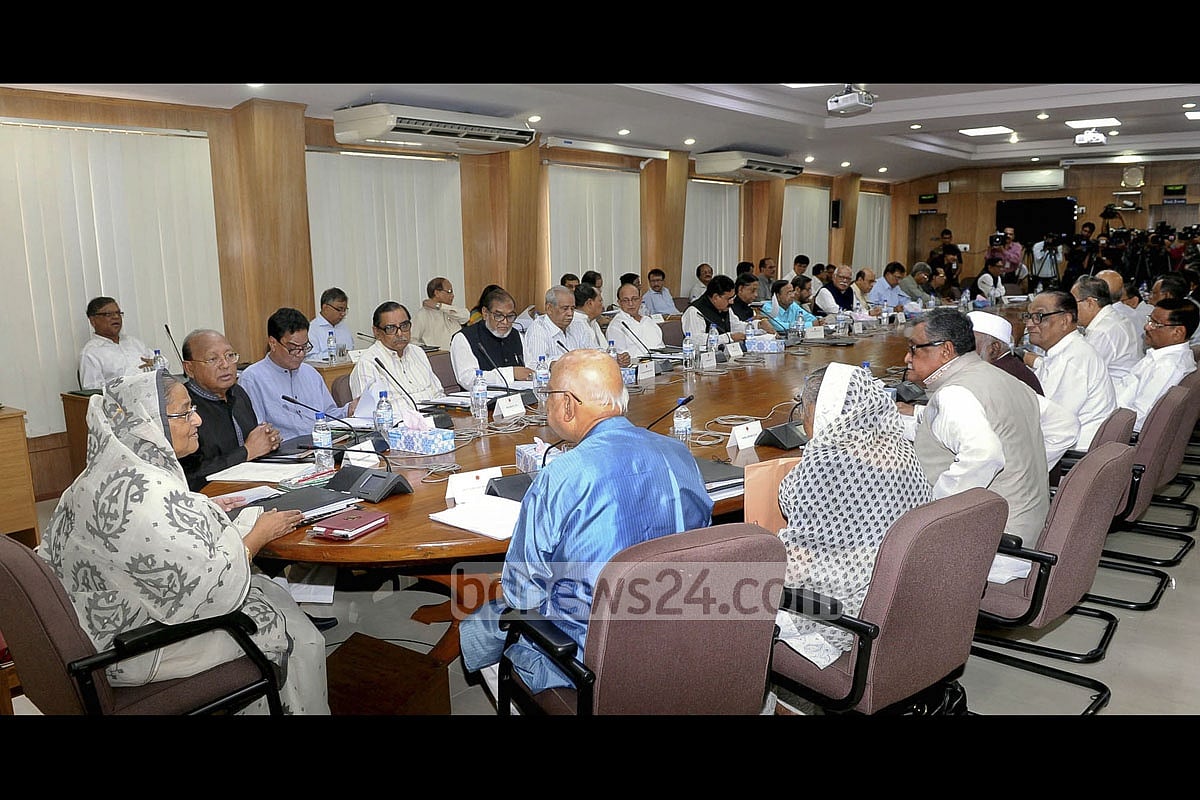
Monday’s regular Cabinet meeting chaired by Prime Minister Sheikh Hasina finalised the drafts of Money Laundering Prevention (Amendment) Act 2015 and the Anti Corruption Commission (Amendment) Act 2015.
“Bangladesh Bank’s Financial Intelligence Unit will be further strengthened under the new law,” Cabinet Secretary Muhammad Musharraf Hossain Bhuiyan told reporters after the meeting.
The 2012 money-laundering Act kept a provision of four to 12 years jail, which will remain unchanged. However, the amount of monetary fine will be adjusted upward.
A Tk 1 million penalty or double the amount of the laundered money, whichever is more, was kept for offenders. In the amended law, it will be Tk 2 million.
In the current law, the ACC was responsible for probing all sorts of money-laundering charges. Other agencies could join the investigation only if the ACC took them on board.
From now on, the agency will only investigate money-laundering allegations related to bribery and corruption.
Relevant agencies will investigate such charges related to other crimes, said the Cabinet secretary.
“Many of these issues will be handled by police. The NBR will oversee matters related to customs, drug-related cases will be probed by the Department of Narcotics Control,” he said.
The existing law does not allow investigation by multiple agencies, but the amendments will pave the way.
“The investigation team was not defined (in the law), but now it has been done as the issue of money-laundering is a complex one.
“If the laundered money has been used for committing crimes like murder, then a joint investigation may be needed,” explained Bhuiyan.
He said that the amendment would allow investigation team drawn from different agencies. “For instance, a team may have men from the police, NBR, narcotics control department.”
The new law provides for ‘further empowerment’ of the central bank’s Financial Intelligence Unit (FIU).
“The existing one is a wing of the Bangladesh Bank, headed by a deputy governor. An executive director (of the central bank) works as the deputy chief. Others who work for it comes from the Bangladesh Bank,” said the Cabinet secretary.
Citing examples of such bodies in different countries, he said the FIU in India was not an organisation under its central bank, and it reported to the Economic Intelligence Council headed by the Indian finance minister.
“In Bangladesh, we have National Coordination Committee on Money-Laundering and Terror Financing.”
However, the draft of the amended law does not propose an autonomous FIU.
“It takes time to establish an autonomous organisation…so a provision has been kept for operational autonomy for the FIU under the Bangladesh Bank. It will have a functional independence,” Bhuiyan elaborated.
According to the amendment, the government will appoint the chief of the unit with the status of a deputy governor.
The appointment will be made through a search committee, which would include the Bangladesh Bank governor, said Bhuiyan.
“The FIU chief will operate autonomously, but for administrative matters, he would be under the governor.”
The unit chief, appointed for four years, will report to the national committee through the governor.













