


Published : 20 Aug 2019, 08:19 PM
Updated : 17 Oct 2022, 11:44 AM



The experts mentioned different aspects in relation to prevent the disease including the weather, killing of Aedes mosquito, awareness among the people but failed to provide any specific timeline when the menace will be over.
According to the Directorate General of Health Services, a number of 1884 patients suffering from dengue were admitted to the hospitals in June. The number increased to 16,253 in July.
At least 36,336 patients diagnosed with dengue were admitted to the hospitals in the country as of Aug 19; a highest record of dengue cases in the country.
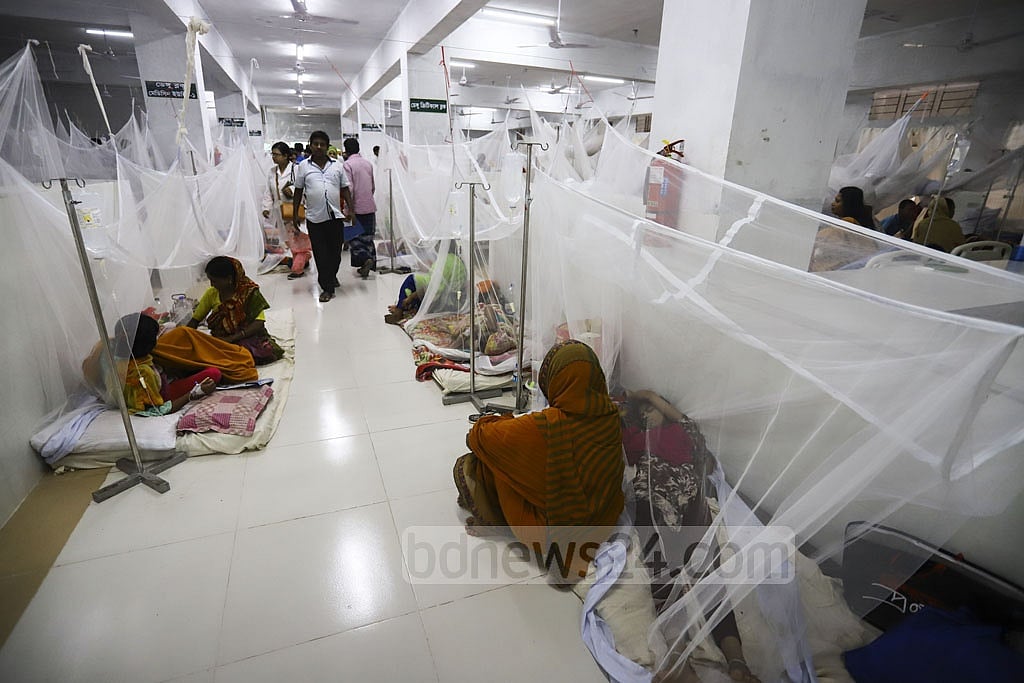
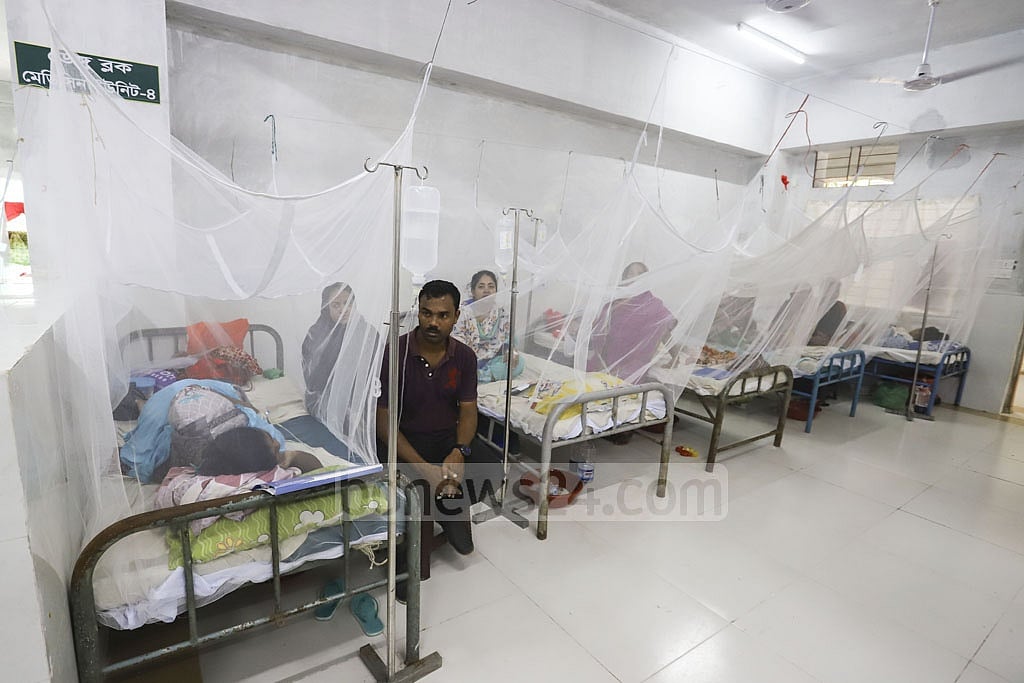
Patients with mosquito-borne viral dengue fever lying inside mosquito nets at a special ward of the Shaheed Suhrawardy Medical College Hospital in Dhaka on Sunday. Photo: Asif Mahmud Ove
The highest recorded death toll from the disease in the country so far is 93 in the year 2000.
Dengue season begins in June, spreads more in September and starts to fade out in October, said the DGHS officials. The ‘peak time’ for dengue has not started yet, they said.
Dengue season depends on two major factors --weather and success in controlling the breeding of the Aedes mosquito, said Dr Meerjady Sabrina Flora, director of the Institute of Epidemiology, Disease Control and Research IEDCR.
Patients with mosquito-borne viral dengue fever lying inside mosquito nets at a special ward of the Shaheed Suhrawardy Medical College Hospital in Dhaka on Sunday. Photo: Asif Mahmud Ove
Dengue will spread further if the Aedes breeding grounds are not destroyed, she warned last month.
She believed the authorities have been successful in controlling the issue as of now, adding that there are areas which merit greater focus. “There is no doubt the programmes have been strengthened,” she said.
Heavy rain kills the Aedes larvae but the country is yet to experience such downpours. There is less chance of heavy downpours in September too, said Senior Meteorologist Abdul Mannan.
“The rain pattern has been different this year. Usually, it rains heavily in June and July and less so in August and September. But there isn’t much heavy rainfall in Dhaka as of now and the chances of it occurring are low in the near future.”
The present weather is quite suitable for mosquito breeding, believes Prof Kabirul Bashar of Zoology Department in Jahangirnagar University.
The outbreak of dengue may abate slightly in September, believes the entomologist.
“The dengue situation will remain ‘stable’,” he told bdnews24.com. “It is a suitable environment for Aedes mosquito, but the programmes initiated by the government and common people may prevent dengue from spreading,” he told bdnews24.com.
It is hard to say if the dengue cases will increase or decrease in coming days, said Prof Sania Tahmina, director Disease Control in DGHS. The ongoing bout, however, will end earlier as the outbreak began early this year, she hoped.













