Published : 24 Apr 2022, 11:55 PM
Updated : 25 Oct 2022, 09:51 AM


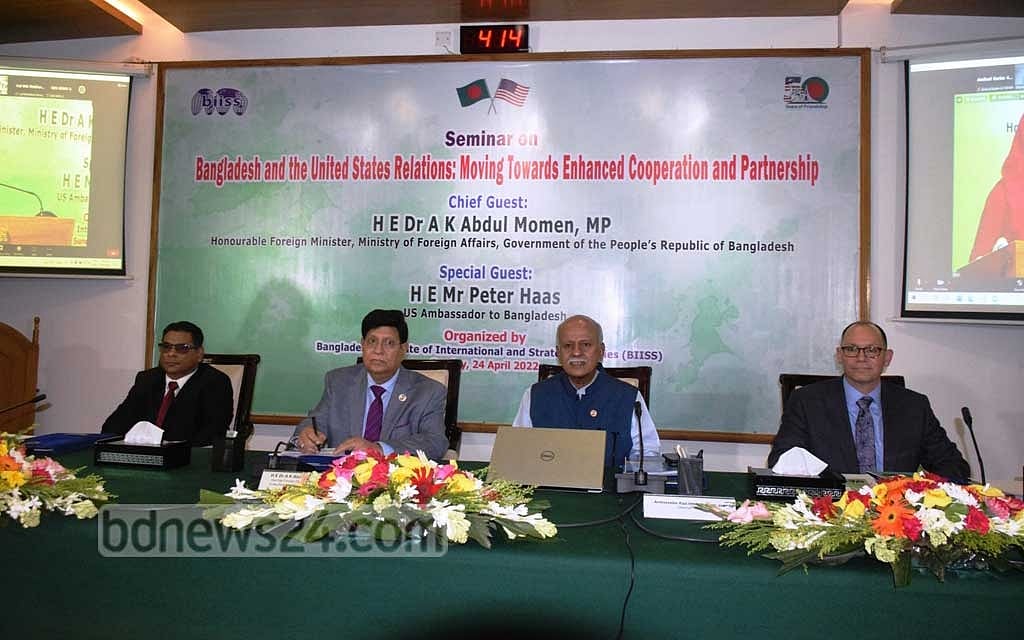
The elite police unit must also hold to account those responsible in its ranks for the serious violation of human rights, US Ambassador Peter Haas said at a seminar organised by Bangladesh Institute for International and Strategic Studies in the capital on Sunday.
The Biden administration slapped the sanctions in December citing “serious human rights violation” by the force. The officials who faced the sanctions include Benazir Ahmed, a former head of the RAB and current inspector general of police.
The foreign ministry summoned Earl Miller, the then US ambassador in Dhaka, to react to the sanctions.
Foreign Minister AK Abdul Momen wrote to US Secretary of State Antony Blinken, urging him to lift the sanctions. The government has also hired a lobbyist to improve relations with the United States.
File Photo
In the meeting with Secretary Blinken, Momen had highlighted RAB’s activities in countering terrorism. After the meeting, he said it would require a lengthy process for the United States to lift its sanctions on the RAB.
Momen raised the issue in Sunday’s seminar again and spoke about the achievements of the force in battling militancy and drugs.
Speaking about law enforcement, Haas said, “I will be honest. There is no scope for repeal of sanctions against the Rapid Action Battalion without concrete action and accountability.
“We want to see a RAB that remains effective at combatting terrorism, but that does so while respecting basic human rights.”
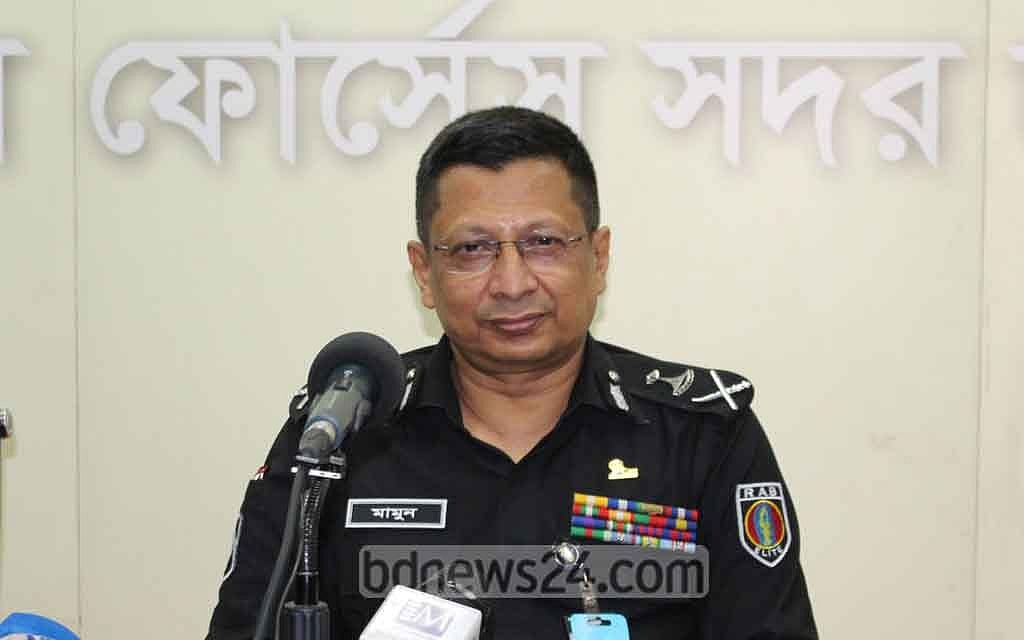
Chowdhury Abdullah Al-Mamun, the incumbent director general of RAB who is among the officials on the US sanctions list, also attended the seminar.
He claimed the force has “successfully” countered religious extremism, narcotics and human trafficking, and controlled the use of illegal arms.
“We mainly work on anti-terrorism and anti-drugs, which are two prime mandates of the US also. We want to take our mutual relationship to a new height in future for the smooth functioning of the elite force to uphold the HR credentials,” Chowdhury Abdullah said.
“For the safe and secure community we want get engaged with you [Haas] and engaged with the US embassy and we need their engagement. They were engaged with us before. They were collocating with us [on] our campus. We want further engagement with the US embassy.”
Ambassador Haas said RAB sanctions do not mean the two countries cannot enhance their “strong” law enforcement security cooperation. He said the US will continue to work with Bangladesh to combat transnational crime and terrorism, enhance border security, and prevent violent extremism.
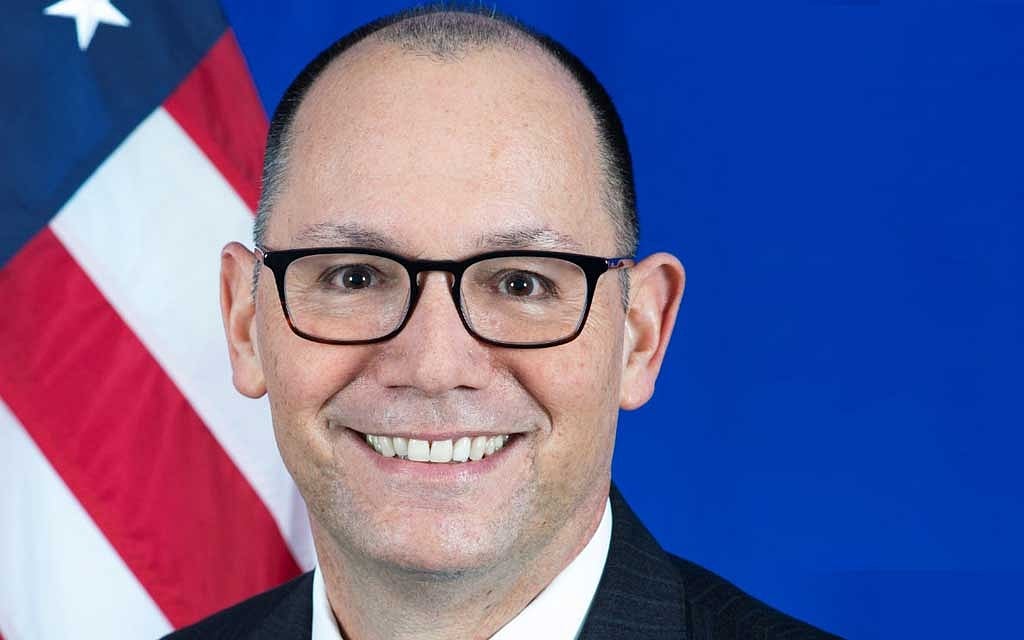
Peter Haas, File Photo
The American ambassador hoped the signing of a proposed Memorandum of Agreement would facilitate the US’s ability to implement its anti-terrorism assistance training programme and to donate new equipment to the police.
‘US WON’T PICK A SIDE’
Haas said the US and Bangladesh can work together to promote democracy and protect human rights.
“The United States is not perfect. We have embarked on our own democratic renewal. This journey includes tackling our own issues with police accountability and ensuring all Americans can cast their ballots on election day.
“And we are inviting countries around the world to make similar commitments to strengthen their democracies.”
The diplomat said he was pleased Momen had stated that Bangladesh would welcome international observers during the next election.
“Holding an election consistent with international standards is not just about the day votes are actually cast. In effect, the elections have already started. Truly democratic elections require the space for civic discourse to take place, an environment where journalists can investigate without fear, and the ability for civil society organizations to advocate broadly.”
“Let me be clear: the United States will not pick a side in the upcoming elections. We simply hope for a democratic process that allows the Bangladeshi people to freely decide who will run their country,” Haas asserted.