


Published : 04 Feb 2022, 03:48 AM
Updated : 21 Oct 2022, 03:35 PM


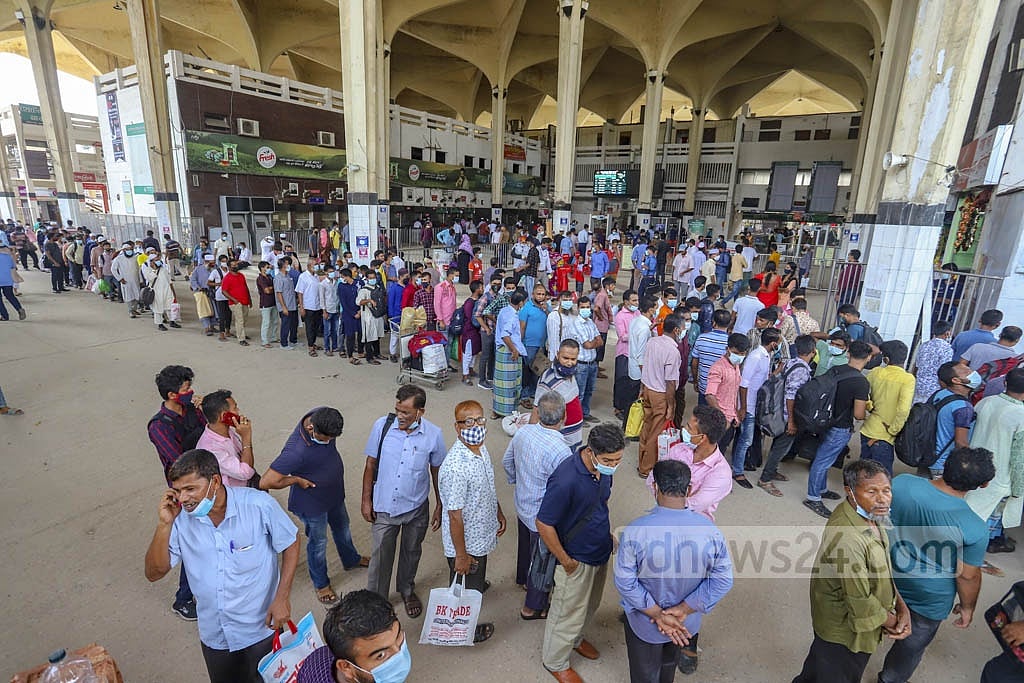
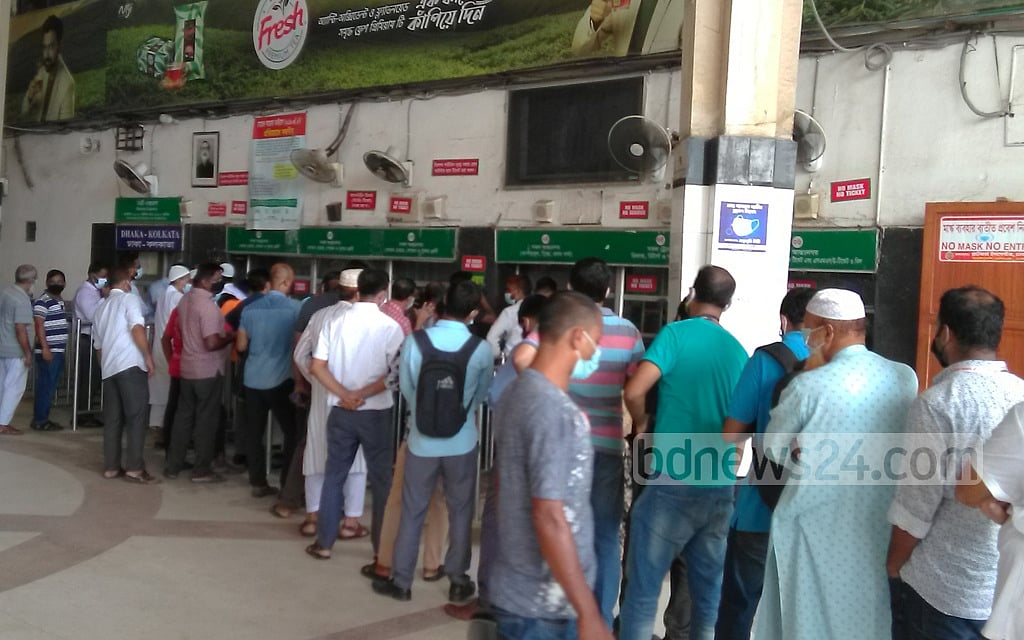
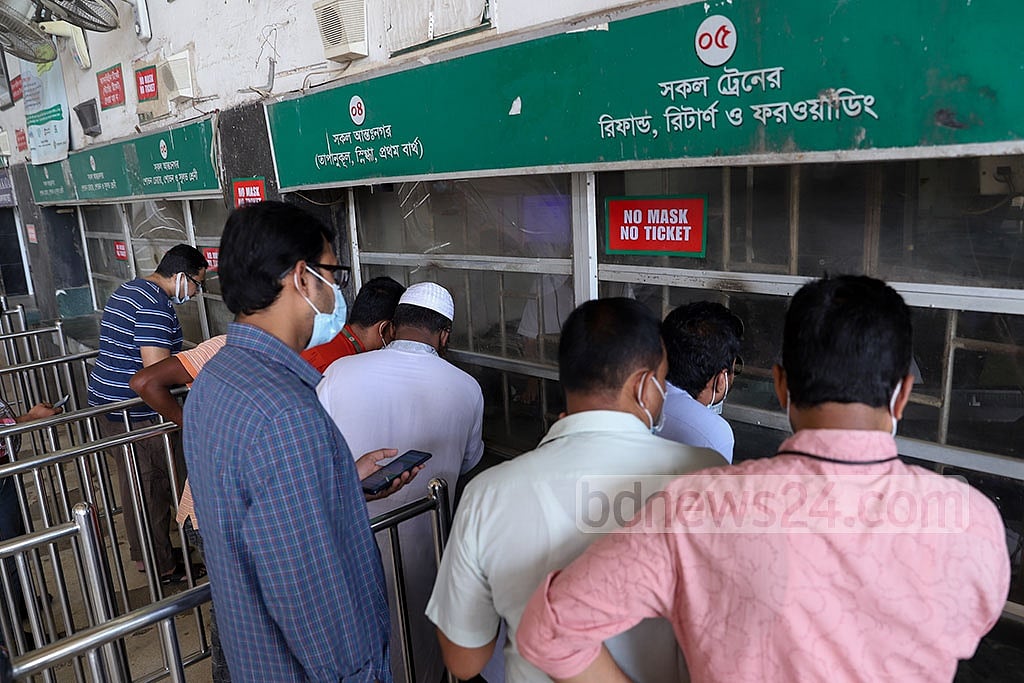
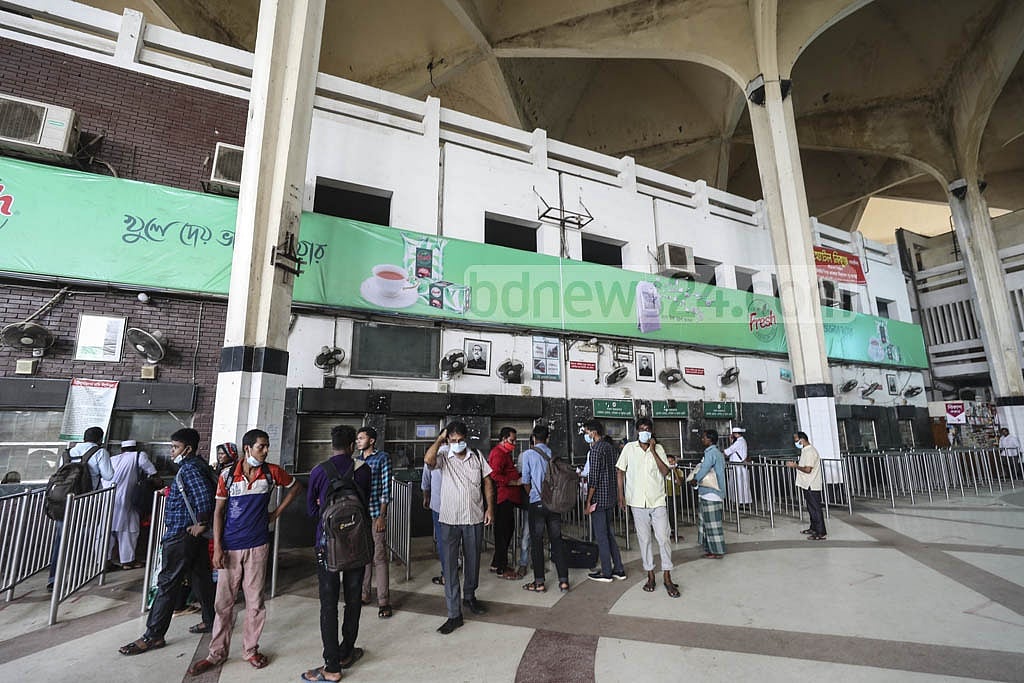
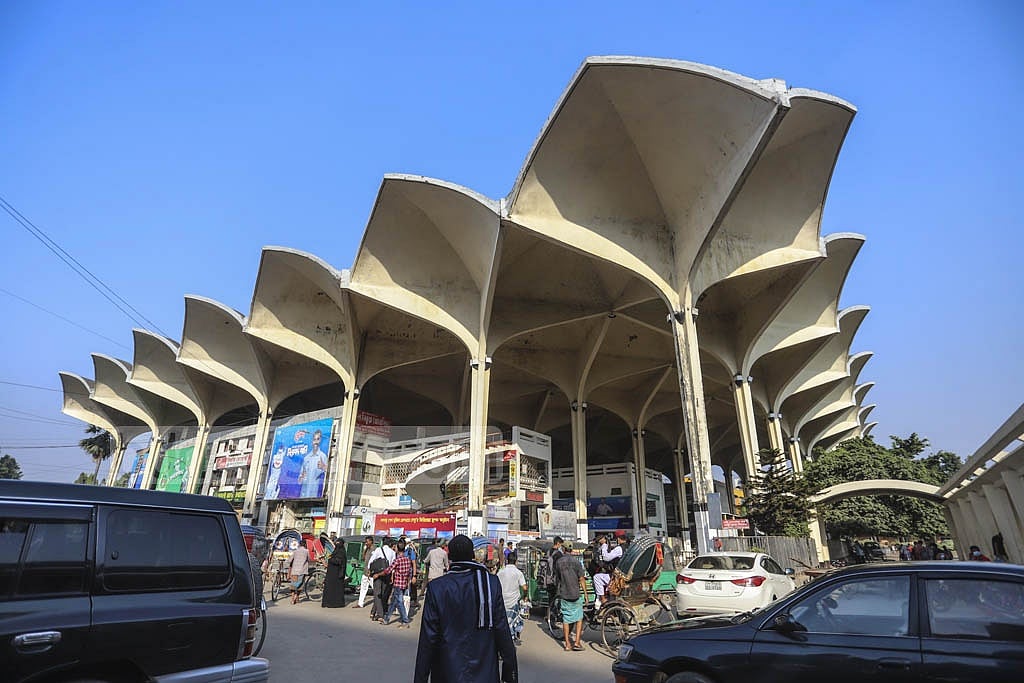
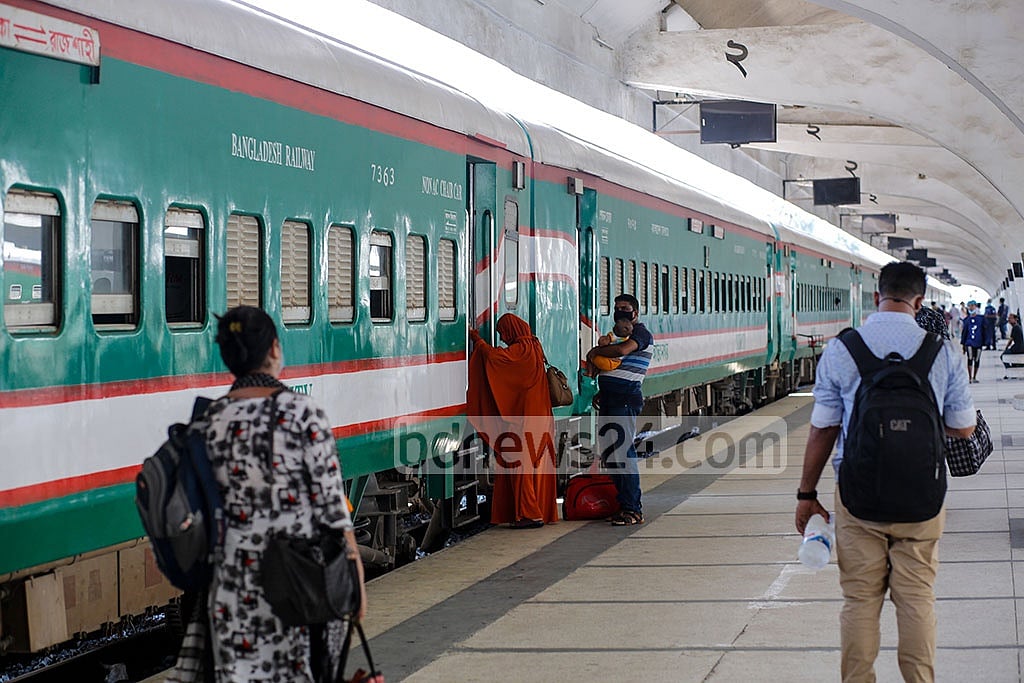
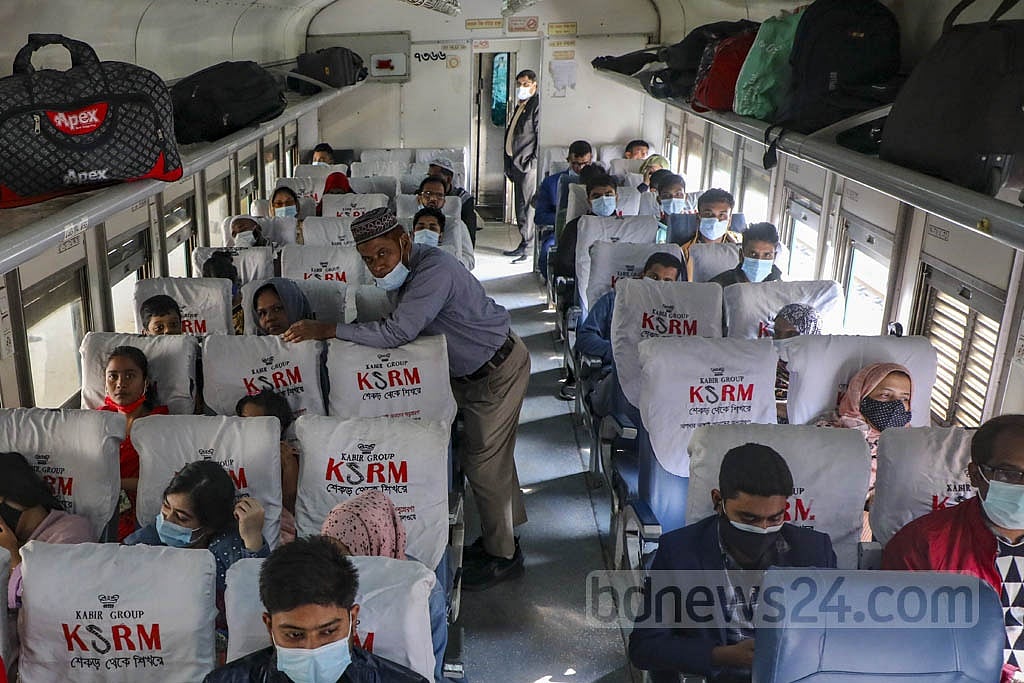
As complaints abounded over Bangladesh Railways' online seat reservation system, many passengers at Dhaka's Kamalapur Railway Station have been paying over the odds to buy tickets from black marketeers, a bdnews24.com investigation has found.
It was 4pm on Jan 13 when this correspondent went to Haor Express' counter at Kamalapur station to buy a ticket for the Mohanganj-bound train, only to be told that none were available.
The train was scheduled to leave the platform at 10:15 pm and so, there was enough time to verify the claims made by various passengers. Posing as a passenger, this correspondent approached a porter at the station, who said he could manage a ticket for the train.
He then led the way to the station's gate to see a man, who introduced himself as the 'porters' supervisor'.
A ticket for a decent seat on the Haor Express costs Tk 185 but the man wanted Tk 1,000.
After a bit of bargaining, he agreed to sell a ticket for Tk 500.
Asked why they were charging such a high price, the porter said, "We don't get to keep all the money. My share is about Tk 100 while the rest of the money will go to the 'big man’."
Although he wouldn't give anything away about the identity of the 'big man', he added that it wasn't possible to survive at the station without making a little money on the side.
Afterwards, many of the passengers waiting at the station said tickets were still available on the black market.
"Tickets are sold in most shops in the station. Even if some people don't have the tickets with them, they can get them from others on request," said Abdur Rab, a student of Dhaka University.
"One thing I have noticed lately is that the Ansars on duty at the station are also selling tickets. With a little effort, you can get tickets from them too.”
Highlighting an incident he had witnessed, Rab said: "Once, I went in search of a ticket at the station after failing to get one online or at the counter. One man said he could get me a ticket for half the route. However, I would have to shell out Tk 450 for a ticket that was originally priced at Tk 200."
Similar allegations were made by SM Mamun Khan, who works at a private company in Dhaka.
"There are many people who hang around the station selling tickets at exorbitant prices."
Sharing his experience of procuring train tickets, he said, "I tried to get a ticket from Rangpur to Dhaka for five days but failed. If I looked around the station, I would have gotten a Tk 510 ticket for around Tk 800-900. There are many at the station who have taken it (selling tickets) up as a profession, and we, the common people, are suffering as a result.”
Information gleaned from the Railway Police also offers a strong indication of a flourishing black market for train tickets.
In 2021, as many as 34 people were arrested in 23 cases for selling tickets illegally, according to Shah Alam, deputy inspector general of Railway Police.
DIGITAL TICKETS ON THE BLACK MARKET?
Train tickets are allocated evenly between the station counters and the online portal. But there are also allegations that e-tickets are being sold on the black market, despite Railway Minister Nurul Islam Sujan's promise to put an end to illegal sales two years ago.
According to Bangladesh Railway, as many as 190,000 passengers travel by 340 trains to and from different stations across the country every day. On average, 35,000 inter-district train tickets are sold online each day.
Tickets are available for purchase online from 8am to 11pm. However, many people complained about having trouble logging in to the portal. And by the time they manage to get access, the tickets are usually sold out.
Tapash Iqbal, a regular commuter from Dhaka to Mohanganj, said, “It's impossible to enter the portal during festivals like Eid or puja. When you do get in, you'll find that there are no tickets left."
"Tickets are also very hard to come by ahead of a long stretch of vacation combining the weekly holidays and a public holiday. Tickets are sold out within the first 30 minutes of going on sale."
But the fact that tickets can always be procured from touts, who sell them at a premium, peeves Tapash.
“How do the black marketeers get hold of the train tickets when we fail to find them? I believe a huge syndicate is behind the black market,” he said.
In a bid to alleviate the sufferings of passengers, Bangladesh Railway launched the ‘Rail Sheba' app in 2019. The app was promoted as a platform that would travellers to buy tickets online without any hassle.
Train tickets had been available for purchase on Bangladesh Railway's website since 2012. The website, too, was revamped when the app was launched.
Computer Network Systems Bangladesh Limited (CNSBD), a software firm, manages the technical aspects of the railway e-ticketing service.
"If someone buys a ticket online and sells it at a higher price at the station or elsewhere, then there's nothing we can do about it," said a representative of the company, asking to be anonymous.
LAX ID VERIFICATION MEASURES
Mahbub Kabir Milon, former additional secretary to the railway ministry, that the lack of an ID verification requirement for registering on the railway app or website has paved the way for a black market.
"In our country, almost all online services, including vaccine registration and banking, are connected to the national identity card server. Although everyone else verifies the NID number and the information given in it, the railway service does not do it. It's just an eyewash. It will not be possible to eliminate the black market of tickets like this.”
Enlarging on the matter, he added, "It would be easy to ensure that a person buys a ticket for his own use if there was a system to verify their NID number. The scalpers wouldn't be able to take advantage of the system either as each passenger is assigned a unique ID number which they'd have to show before boarding."
As things stand, a person can open multiple accounts on the railway app due to the lack of NID verification measures.
According to the law, an individual can register 15 mobile SIMs in his name at a time. This means he can also open 15 accounts on the railway app using each SIM. Considering that a maximum of four tickets can be bought at a time from one account, anyone with 15 accounts can buy up to 70 tickets.
As there is no mechanism in place to verify the ownership of a ticket, one can easily get away with buying tickets on the black market.
At one point, the railway authorities made it mandatory for passengers to carry their NID cards while travelling. But they have since rolled back the requirement in the face of passengers' discontent, according to officials.
The sale or transfer of a train ticket by an individual is also an offence punishable by up to three months in jail and a fine. However, the provision is very rarely, if ever, enforced.
Mahbub Kabir hinted at collusion between railway workers and black marketeers. "It is not the CNSBD but the railway employees themselves who are involved with the black market."
"If the third party server (CNSBD) was to blame, then why aren't the railway authorities taking action against them?"
In order to cancel a booking, passengers must go to the ticket counter and return the ticket while paying a fee.
The risk of paying the penalty fee has also caused some people to sell tickets off illegally.
During the visit to Kamalapur, a man was seen selling his ticket on the Rajshahi-bound Silk City train to another passenger in a bid "to avoid paying the cancellation charge while waiting in a long queue in front of the counter".
"I found another gentleman here. I gave him the ticket at the same price I bought it. It was convenient for me."
Despite the growing complaints from customers about log-in issues, a representative of the railway app's technical support team said that there was no problem with its server.
"If a train has 1,000 seats, then 500 tickets can be bought from the station and the other 500 online. In that case, it is only natural that there will be a big rush to buy the tickets for that train during any holiday."
“When a lot of people hit the server at the same time, it becomes really difficult to find tickets online. It has been alleged that the tickets were not available online. That is not the case. Tickets won't just disappear. If 500 people book a seat in the space of a minute, it has got nothing to do with our server.”
Addressing the complaints of passengers about the black market, Director General of Railways Dhirendra Nath Mazumder said, "Action will be taken if a complaint, backed by evidence, is lodged, regardless of who is involved."
"Many people complain to us about various issues they face while buying tickets online. We will look into this. However, we have to try to solve it with the help of the technical management department of Bangladesh Railway. ”
Even though e-ticket sales do not require NID verification, a 'two-factor authentication' method is in place for security, said Sardar Shahadat Ali, additional director general (operations) of Bangladesh Railway,
"In order to launch the app, the user must type in the verification code sent to his mobile number. And now, the SIM card is also registered using the national identity card and so the personal information is being screened that way.”
However, railway officials admit that there is a scope for a person to open more than one account.
"Necessary steps are being taken for NID verification. We are starting a new tendering process for this,” said Dhirendra Nath.
Some passengers have also complained that they did not get a refund even after a ticket transaction fell through.
“There are several payment gateways connected to the e-ticket service of Bangladesh Railway. The information comes to Bangladesh Railway from the gateway that a passenger uses for payment when booking tickets online after all the steps are completed," said Shahadat.
"The payment can sometimes go through or get cancelled. If the message does not reach Bangladesh Railway from the payment gateway, it will not be possible to arrange a refund. In this case, the railways have nothing to do. Seats are allocated in the name of a passenger only after we receive confirmation from the payment gateway. ”
Acknowledging that passengers are required to go to the station to cancel an online booking at present, Shahadat said, “We are working on the online ticket refund system. We hope this issue will be resolved within the next two months. Then, the passengers will not have to bother going to the station counter to cancel their tickets.”
[Written in English by Sabrina Karim Murshed]













