


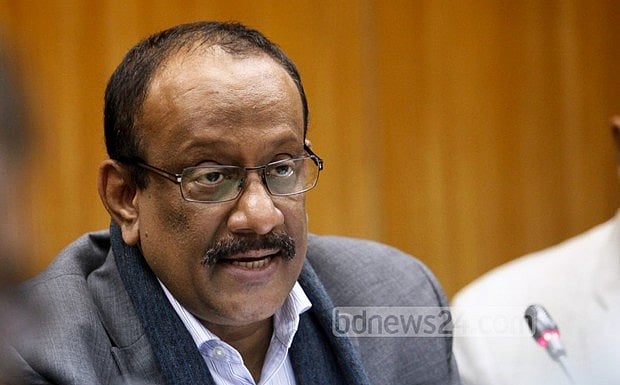
Published : 03 Apr 2018, 01:03 AM
Updated : 05 Aug 2022, 06:37 PM


“It's an issue between Myanmar and its own nationals. We happened to be entangled in it,” he said, speaking at a seminar in Dhaka on Monday.
Referring to the decades-old crisis in which Rohingyas come and go back to Rakhine State and again come back facing violence, he said it had become a cycle. “We want to cut that cycle”.
He highlighted the measures the Bangladesh government has taken by opening up bilateral windows. “We have put in place quite a bit of mechanism for their safe, dignified return,” he said.
According to Haque, this time during negotiations on deals with Myanmar, Bangladesh also wanted to get involved with them to see what Rohingyas do when they return to Rakhine State.
“It was difficult [to convince Myanmar], but after things went out of control following international pressure, Myanmar accepted certain conditions.”
One of those was about the future of the children born out of the conflict.
Haque said Bangladesh also made the commitment that nobody would be forced out of the country and in return, Bangladesh suggested involving UNHCR and ensure that those who return cannot be criminalised.
“Within the framework, we have tried to bring in some human rights component which we have not included in the past,” he said.
“There will be a regular visit by the task force of Bangladesh to the northern Rakhine State to see how these people are getting settled,” he said, adding that some mechanisms have been included to make the return “sustainable”.
He again stressed that the Kofi Annan commission's recommendations need to be implemented and said he “felt” that the report was the cause of the recent expulsion.
“If you go to the northern Rakhine, you will see that the area is very fertile, it’s a huge land, and the Rohingya people have been cultivating that. They were contributing to the fishing industry of Myanmar. They were part and parcel of Myanmar’s economy.
“Now there is no more fishing, no more cultivation in that part of Myanmar,” he said, calling for a change in mindset and considering the Rohingyas as part of the solutions, not problems.
“The International community has to continue to increase its pressure." Somebody has to be “accountable” for what has happened, he added.













