Bangladesh jumps 3 places in CPI 2008
Bangladesh is perceived to be less corrupt than last year, according to Transparency International's Corruption Perception Index (CPI) report 2008, jumping three places to come in 10th from last with a score of 2.1. In 2007, Bangladesh scored 2 to come in 7th from last. Updates
bdnews24.com News Service
bdnews24.com
Published :
23 Sep 2008, 07:40 AM
Updated :
24 Apr 2022, 08:47 PM
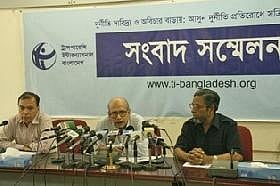
Dhaka, Sept 23 (bdnews24.com)—Bangladesh is perceived to be less corrupt than last year, according to Transparency International's Corruption Perception Index (CPI) report 2008, jumping up three places to come in 10th from last with a score of 2.1.
The annual Corruption Perceptions Index, first released in 1995, is the most well-known of TI's tools. The CPI ranks 180 countries by their perceived levels of corruption, as determined by expert assessments and opinion surveys.
Last year, Bangladesh came 7th from last with a score of 2. In 2006, it was 3rd up with the same score. From 2001- 2005 Bangladesh had consecutively been in the bottom spot for 5 years.
In 1996, Bangladesh scored 1.2. It took 10 years for Bangladesh to score 2 where a country that scores 3 is considered to be against corruption.
Somalia, this year as last year, has remained at the bottom of the list meaning corruption in the country is perceived to be the highest, followed by Myanmar and Iraq in joint second.
Haiti is in third position while Afghanistan is fourth from last.
On the other hand, Denmark, New Zealand and Sweden have been perceived least corrupt, each scoring 9.3, closely followed by Singapore with 9.2, the only Asian country that has consistently been in the group of the top 10.
The only other Asian country to be among the top 20 countries is Hong Kong ranked at number 12 performing better than such highly developed countries as Germany, Norway, UK, Japan and USA.
The Corruption Perceptions Index, prepared under the auspices of the Berlin-based watchdog, ranks countries in terms of the degree to which corruption is perceived to exist among public officials and politicians.
It focuses on corruption in the public sector and defines corruption as the abuse of public office for private gain. The surveys used in compiling the CPI ask questions that relate to the misuse of public power for private benefit, with a focus, for example, on bribe-taking by public officials in public procurement. The sources do not distinguish between administrative and political corruption or between petty and grand corruption.
It is a composite index, a poll of polls, drawing on corruption-related data in surveys carried out by a variety of institutions, and reflects the views of businesspeople and analysts in the countries evaluated.
bdnews24.com/mrf/rah/1316hours