Published : 10 Mar 2021, 01:33 AM
Updated : 14 Oct 2022, 06:29 PM


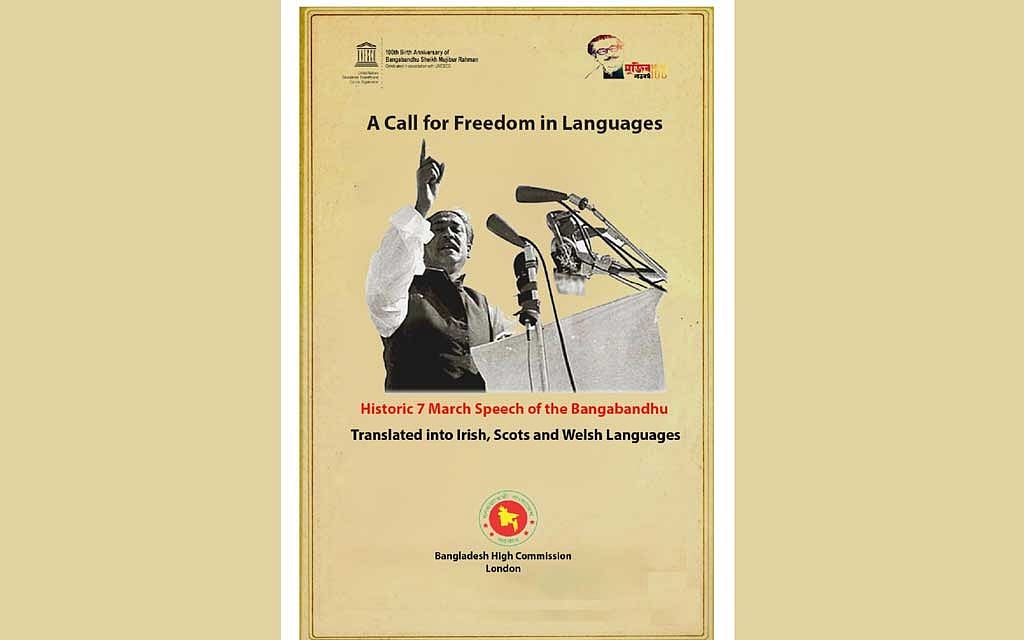
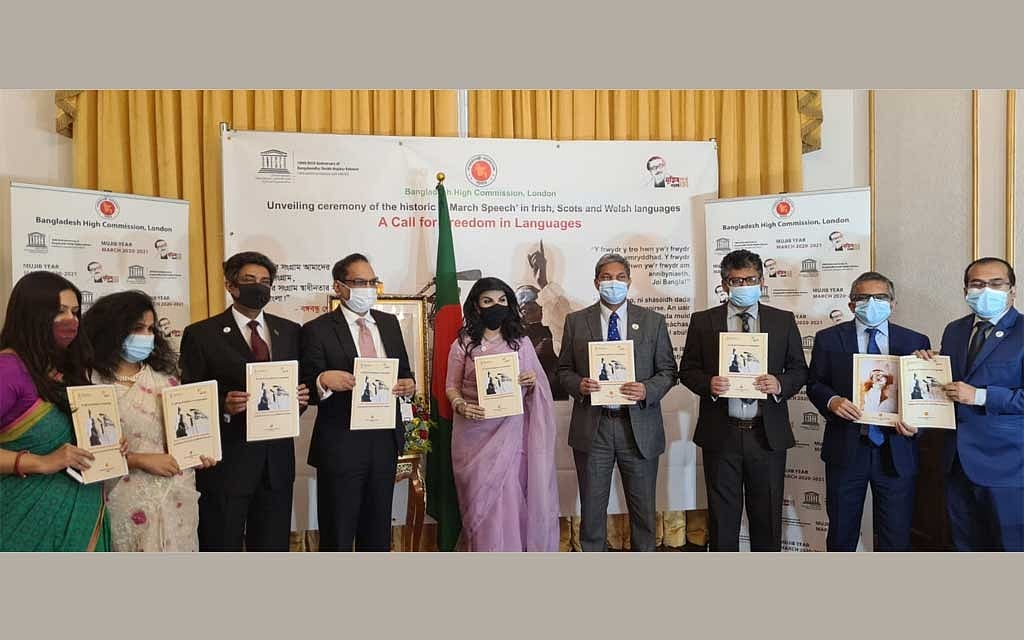
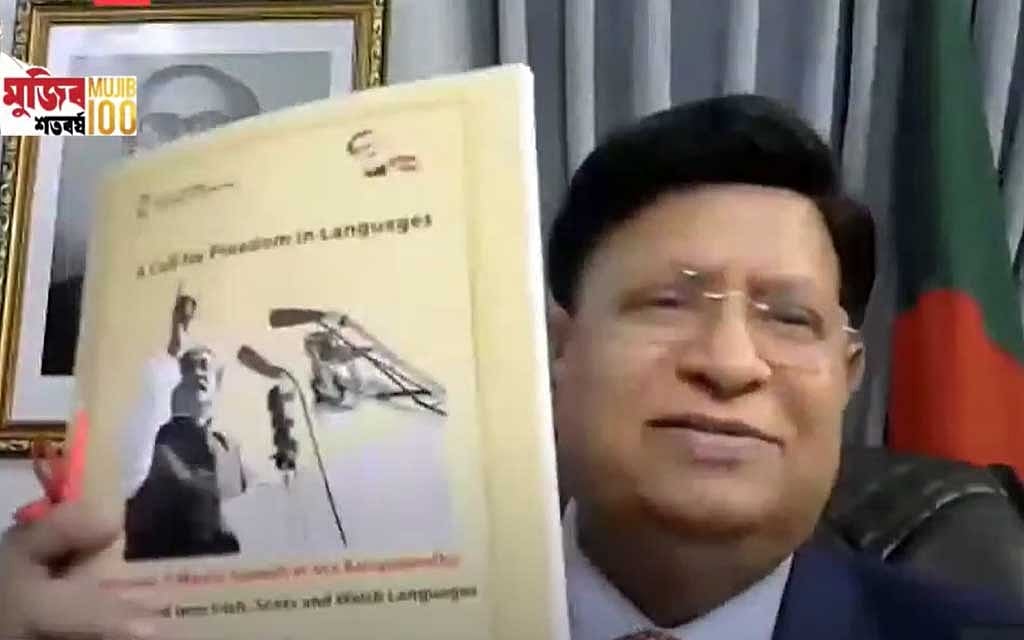
Foreign Minister AK Abdul Momen and other guests unveiled the special publication -- ‘A call for freedom in languages’ -- containing the translations in a virtual event on Monday, the high commission said in a statement.
Language experts of Trinity College, Dublin, Herriot-Watt University, Scotland and University of Wales Trinity Saint David did the translations in their languages in the initiative taken by High Commissioner to the UK and Ireland Saida Muna Tasneem.
Ministers, MPs, academics, language experts and eminent community members from England, Wales, Scotland and Republic of Ireland joined the event to pay tributes to Bangladesh’s founding father and his historic speech.
The speech does not only tell the story of struggles for freedom of the oppressed Bengali but it is also a UNESCO documentary heritage of humanity, the minister said.
“It remains an everlasting inspiration for all the oppressed and freedom-loving people around the world, wherever their homeland is and whatever language they speak,” he said.
“The precious words of this historic speech would bring the Irish people closer to the spirit of Bangladesh as mentioned by Bangabandhu,” said Thomas Byrne, minister for Europe and Prime Minister’s Office of the Irish foreign ministry.
Mark Drakeford, first minister of Wales, said: “The translation of the historic 7 March speech of Bangabandhu in Welsh will help people of Wales learn more about the history of Bangladesh’s independence while it will continue to motivate all freedom-loving people across the globe.”
The other guests included Joanna Cherry QC and Sarah Boyack, Dr Sanjukta Ghosh, artistic director at SOAS South Asia Institute; Professor Medwin Hughes, vice-chancellor, and Prof Menna Elfyn of University of Wales Trinity Saint David; Prof Sir Geoff Palmer of Heriot-Watt University, Scotland; Dr Eoin Mac Cárthaigh, head of the Department of Irish, Celtic Studies, and Prof Juliette Hussey, vice president for Global Relations of Trinity College Dublin; Dr Duncan Stewart Sneddon, an expert in Scottish language and history, Sultan Mahmud Shariff, a senior member of the British-Bangladeshi community, and Noim Uddin Riaz.
State Minister for Cultural Affairs KM Khalid said the translation of Bangabandhu’s 7 March speech in three European languages is a commendable initiative by the Bangladesh High Commission in London, which will encourage further research and studies on Bangabandhu and Bangladesh at the European universities.
“We take great pride (in the fact) that the historic 7 March speech of Bangabandhu Sheikh Mujibur Rahman is the first Bengali language document translated in Scottish, Irish and Welsh, which will take Bangabandhu’s epic speech closer to the people of Scotland, Ireland and Welsh,” Muna Tasneem said.
The 7 March speech has now been translated into 17 foreign languages, she added.
The high commissioner reaffirmed that the London mission will work closely with the universities in the UK and Ireland for commissioning further research on the political significance of this speech.