Published : 21 Aug 2020, 01:59 AM
Updated : 17 Oct 2022, 11:11 AM


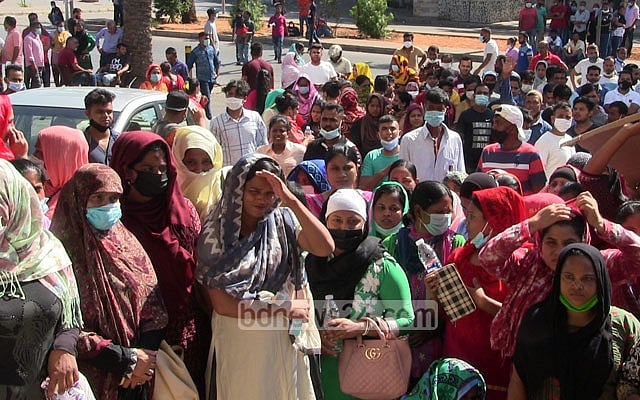
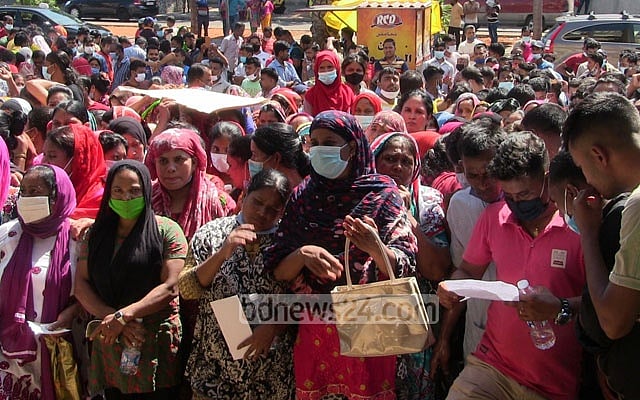
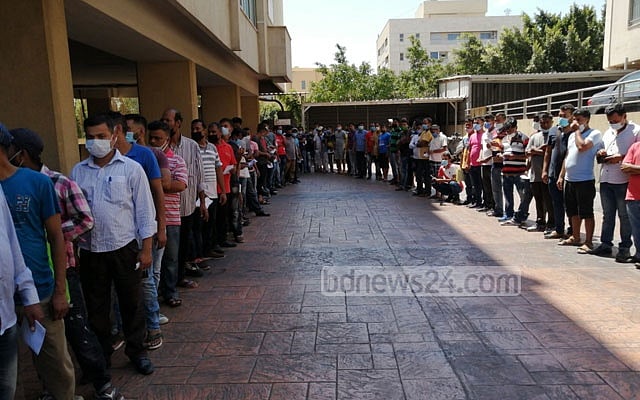
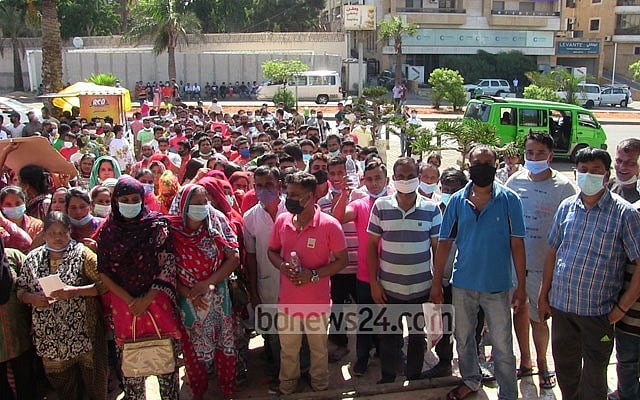
Neela Shikder from Gazipur travelled to Lebanon, where her parents reside, in search of a job after a divorce with her husband in 2016.
They were spending the days well there. Neela was working as a housemaid and sending money to her parents in Bangladesh when they returned home in 2018.
But an economic slowdown coupled with unbridled inflation that began devaluing Lebanese lira in September 2019 put her in a fix.
Joblessness added to her woes when the country imposed a lockdown over the coronavirus pandemic earlier this year. She was on her savings at the time.
Finally, the massive blast at Beirut port earlier in August triggered huge protests leading the government of the country to resign, plunging it into a political crisis.
“My woes began when my parents left. Now I am in huge trouble. It is difficult for me to get three meals a day. I am passing my days in agony,” a sobbing Neela told bdnews24.com.
Most of the Bangladeshi migrant workers in Lebanon are in the same condition as Neela’s.
Nearly 7,500 Bangladeshis have registered their names at the Embassy of Bangladesh in Beirut to return home, which they consider the only option now, but no flight is in sight as some travel restrictions over the pandemic continue.
Most of the male Bangladeshis in Lebanon are cleaning workers while the women work as domestic help.
Neela said she had no worries even though she was not familiar with the streets in Lebanon when her parents were there.
Due to the inflation, it now takes at least 20,000 Lebanese liras to travel to the embassy from where Neela stays now. “Where will I get the money?” she asked.
“Bangladeshi uncles [countrymen] here help me now,” she said.
Neela now stays six days of a week in a Bangladeshi man’s place in Jbeil, but has to go to another man’s home when the first man returns after six days of work.
Everyone is in peril, she said. They are paying 150,000 Lebanese liras for a sack of 25kg rice. The price had been 22,000 Lebanese liras earlier.
She had earned up to $5 per hour when she had a job. “The picture has changed. Now I have only one wish – to return home, but I am unable to find a way back.”
Rana Ahmed from Bhairab went to Lebanon in 2016 and started working as a welding expert. When the company was closed after two years, he took a job at a hotel as a cleaner when the company was closed.
After his income shrank for months in 2019, he lost the hotel job in March amid the pandemic.
Rana had to bring Tk 150,000 from his family in Bangladesh to pay for his expenses. Now he has applied for travel back home.
Akter Hossain lives in a house with his wife and a one and a half months old child just an eight to 10 minutes’ walk from the blast site.
He and the baby were injured when window glasses shattered in the impact of the blast. His wife was unharmed as she was in the kitchen.
He described the explosion as the last straw on their woes. “We returned home after receiving first aid following the blast. We couldn’t even bear the expense for good treatment,” he said.
He is trying to get their names registered for return.
A total of 167,565 Bangladeshi migrant workers have travelled to Lebanon since 1991, when the first batch of 25 Bangladeshis left, according to the Bureau of Manpower Employment and Training.
There is no official data how many Bangladeshis are still in Lebanon. The government estimates the number is more than 150,000, many of whom have become undocumented.
Ahmed Munirus Salehin, the expatriates welfare and overseas employment secretary, said the government would bring back the migrant workers, who are in trouble, gradually after flight operations normalise.
He urged the expatriates to try their best to stay where they are “because they have already suffered a lot to go abroad and stay there”.
But Oni Amir Hossain, who has been working in Lebanon for over five years as a housemaid, said she can longer bear the pain. Her husband had migrated to Greece after some years of stay in Lebanon.
Oni is now waiting for her serial to come on the list of returnees.
“The Beirut blast has broken our hearts,” she said.
[With assistance from Babu Saha, a journalist in Lebanon]