Published : 10 Dec 2025, 08:10 AM
Updated : 28 Aug 2026, 01:30 AM


After two years, the Election Commission (EC) stands on the brink of declaring the schedule for Bangladesh’s next parliamentary polls.
The timetable for the 13th national election, coupled with the nation’s first simultaneous referendum, has reached near-finalisation, officials say.
The commission, headed by Chief Election Commissioner AMM Nasir Uddin, faces a historic challenge: managing a referendum alongside the general election in a single day.
This comes as part of efforts to erase the electoral stigma of past Awami League administrations and to advance key state reforms -- a test the EC insists it is ready to confront.
Election authorities indicate the commission, now nearly a year old, has finalised arrangements to announce its first election schedule on Wednesday evening or at any time on Thursday.
Chief Election Commissioner Nasir will communicate the timetable in a televised and radio address.
On Tuesday, Election Commissioner Md Anwarul Islam told bdnews24.com that preparations for the election are well advanced, adding: “We are only awaiting the announcement of the schedule.”
Political parties have pressed the interim government led by Muhammad Yunus for multiple guarantees, prominently demanding a “level playing field” for all contenders.
Even before the formal campaigning green light is signalled by the schedule, candidates have begun campaigning in their localities.
While the electoral atmosphere has developed, reports of skirmishes between rival party aspirants are already filtering through.
Amid this, the EC is continuing preparations for its first electoral exercise.

Analysts keeping a close watch on the election say that if the environment remains favourable, many of the challenges facing the commission will become easier to manage.
One such analyst, Jamine Tuly, posits that the EC’s difficulties will mount if parties and candidates disregard the code of conduct.
The focal point, she suggests, remains the trajectory of the situation following the schedule's release.
ANNOUNCEMENT
The request for television and radio stations to record the CEC's address on Wednesday was communicated the previous day, Monday.
The recording is scheduled for the afternoon, following the CEC’s meeting with President Mohammed Shahabuddin at noon that day.
The commission has already briefed Chief Adviser Yunus on overall preparations.
On Tuesday, the CEC met with Chief Justice Syed Refaat Ahmed. Prior internal meetings have ensured that decisions on the schedule are ready for implementation.
The voting itself is scheduled for the first half of February. For the first time, parliamentary polls and a referendum will be held on the same day—a new experience for the EC. Postal voting has been incorporated, allowing registered overseas Bangladeshis to participate in the referendum.
The election, already known to be slated for the first half of February, will now be accompanied by a referendum.
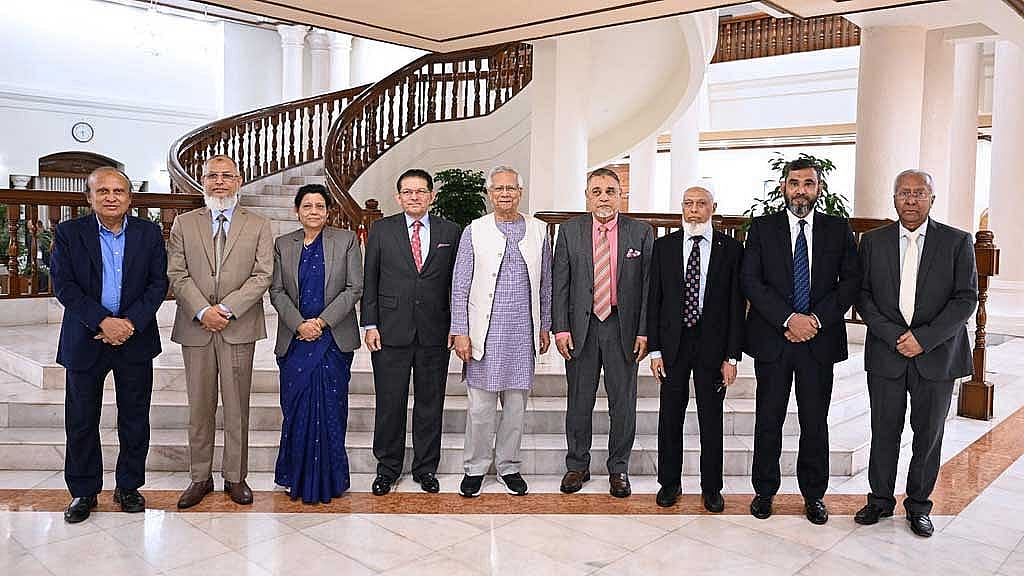
This concurrent exercise will be a novel experience for the EC, necessitated by the addition of postal voting and the inclusion of registered non-resident Bangladeshis in the referendum vote.
GAP BETWEEN SCHEDULE AND POLLS
Over 50 parties, including the BNP, Jamaat-e-Islami and the National Citizens Party (NCP) formed by leaders of the Uprising, will participate in this election.
The participation of the Jatiya Party remains uncertain; while no formal barrier exists, the party will decide based on prevailing political conditions.
The Awami League, ousted through the Uprising, remains excluded from the polls due to suspension of its registration.
Historically, the party boycotted the fourth parliamentary election in 1988 and the sixth in 1996.
The EC has set a roughly two-month or 60-day gap between the announcement of the schedule and polling day.
Nomination deadlines, scrutiny, and withdrawal periods are expected to be extended to accommodate the dual polls.
To manage the simultaneous voting, polling hours have been extended by an hour, from 7:30am to 4:30pm.
Election Commissioner Abdur Rahmanel Masud stressed that sufficient time will be provided for all electoral formalities.

WHAT PARTIES WANT
In the week leading up to the schedule announcement, the BNP, NCP, and Jamaat held separate meetings with the EC.
While all parties endorsed the timetable in principle, the Jamaat and NCP voiced concerns over law and order and ensuring a level playing field.
Despite BNP Chairperson Khaleda Zia’s illness, the party has clarified its stance.
Standing Committee member Nazrul Islam Khan said, “We remain committed to the electoral process. Barring unavoidable circumstances, we do not intend to step outside it.
“Any delay in announcing the schedule could imply a postponement of the election, and no such decision has been made by our party.”
NCP Convener Nahid Islam, however, called on the EC to factor in Khaleda’s health when finalising the schedule.”
PREPARATIONS
The commission is finalising the CEC's address script.
Immediately after the schedule is released, around 20 directives will be issued for all election officials, including constituency-based returning officers and assistant returning officers.
Election Commissioner Anwarul said executive magistrates, the electoral inquiry committee, judicial magistrates, monitoring and law and order cells -- everything is ready.
Orders will be issued in phases, and all details will be publicised via the EC website, YouTube, and other channels.
The EC sees no further complications regarding the boundary determination writ petition.
Emphasising strict adherence to the code of conduct, Anwarul said all pre-campaign materials must be removed by candidates within 48 hours of the schedule announcement.
Law enforcers and responsible officials have been instructed to ensure compliance, with maximum action ready for violations.
Election Commissioner Rahmanel Masud confirmed that interim government advisors cannot vote or contest while holding office.
Anyone wishing to participate must resign first. Participation in election campaigning is also prohibited while in post.
EC ‘CONFIDENT’ IN MANAGING DUAL POLLS
Despite differing political views on the referendum, Election Commissioner Masud says the EC sees no major hurdles in conducting both votes on the same day.
Officials in districts and sub-districts are working diligently, IT experts are operational, and mock voting has informed decisions for the new experience, he noted.
“Our directive is clear: all must follow the law. Responsible officials will act firmly against any violation,” the commissioner said.
“No one has indicated pressure or interference. The commission is working with focus and energy. Voters are eager, and we are fully prepared,” he added.
ANALYSTS SEE SMOOTH PATH
Election analyst Tuly notes that, amid political debates, the EC faces no immediate challenges.
Once the schedule is announced, clearer insights will emerge on alliances, nomination submissions, and compliance with EC orders.
If the electoral environment remains favourable, many challenges will be easier to manage.
“Aside from the Awami League, other parties face no barriers to voting. Political parties are ready and have long demanded elections,” said the member of the Electoral Reform Commission.