



Published : 30 Oct 2024, 08:50 AM
Updated : 28 Aug 2026, 01:13 AM


On Jul 19, Mohammad Shohan Shah was shot in Rampura and died 41 days later on Aug 28. He worked as a mechanical engineer at a garment factory in Rampura.
His father, Shah Sekandar, a farmer from Chandikhali village in Shreepur Upazila, told bdnews24.com: “We do not want to see police who open fire like this. We want to see them as true friends of the people.”
Allegations of excessive force by police are undoubtedly one of the reasons cited for the quota reform movement turning into an anti-government movement.
Everyone agrees there was no justification for using rubber bullets against Abu Sayed, a student from Begum Rokeya University in Rangpur. His shooting and subsequent death sparked massive protests across the country.
Official figures indicate that at least 863 people have died during the unrest, prompting discussions on police reforms, among other issues, following the fall of the Awami League government.
The contribution of this force to the country’s law and order situation and the safety of the general public is undeniable; however, there are also numerous allegations against them.
Allegations of ties to criminals, being used as a tool for political purposes under government control, excessive use of force, unlawful detentions, and instances of torture have persisted for years.

The initiative for reform is not new; efforts made in 2007 were halted midway, and discussions on this issue have resurfaced once again.
Citizens have demands regarding what kind of police they want after reform, while numerous complaints and grievances also exist within the police force itself.
The lack of adequate benefits for lower-ranking officers often drives them towards unethical practices. The 'web of temptation' spread for senior officers is hard to ignore.
There are discussions about making fundamental changes in laws, recruitment, promotions, and transfer systems to transition from being 'the government's police' to 'the people's police.'
A Police Reform Commission has been formed, headed by former secretary Safar Raj Hossain.
Former Dhaka Metropolitan Police commissioner Naim Ahmed told bdnews24.com, "A draft policy for reform was prepared in 2007, but no further action was taken on it. The commission's main task now will be to gain a comprehensive understanding of what the public expects, what kind of police they want, and what type of services they require."
"It is crucial to understand what kind of services different stakeholders in society want. In addition, there is a need to gather information on the expectations of police personnel who will be delivering those services," he added.
Former inspector general of police Md Nurul Huda told bdnews24.com, “There are numerous areas within the police force that require reform. However, it is essential to amend the Police Act first, ensure that complaints against police are investigated by an independent commission, and make the recruitment process impartial and free from political influence. These three changes are crucial.”

Police Reform Commission chief Safar said, "There has been little change to many old laws, including the Police Act of 1861. Police law needs to be modernised. We will work with all stakeholders to determine what kind of police is needed in a democratic country and ensure that the police become people-friendly."
A sub-inspector believes the commission will not be able to uncover all the issues.
When asked why, he said: "To access police services, people have to go through us, the sub-inspectors. Senior officers do not interact directly with the public and often lack a clear understanding of the situation. Therefore, someone from the ground level should have been included in the commission.”
In response, former DMP commissioner Naim said: "It is not a major issue if every level of member is not included. The commission can learn about everyone's needs through interviews."
‘WE DON’T WANT EXTORTIONIST POLICE’
Touhid Bhuiyan, a Bangladeshi living in Portugal, believes that if police in Bangladesh behaved like police in Portugal, things would be much better.
“Whenever you call for urgent assistance, police arrive immediately and take action to resolve the issue,” he said.
Touhid continued, "Here [Portugal], the law is the same for everyone. It does not matter who violated it; what matters is which law was broken. Even minor traffic violations result in hefty fines. Furthermore, if the fine is not paid, access to certain civic services may be restricted."
Md Monir, the managing director of United Paribahan in Bangladesh, told bdnews24: “I have not noticed any police demanding bribes recently. We want this system to be permanent.”
“My vehicle will be fit and will run on the roads. We want to bring our transport system into complete order,” he added.
The practice of occupying footpaths for business in Dhaka is not new. Despite regular eviction drives, these spaces are often reoccupied shortly after.
It has never been a secret that police and local political leaders have been involved in extorting ‘daily bribes’ for allowing businesses to operate on the footpaths.
However, if those who are supposed to take action are the ones involved, then the situation will continue as it has been.
Azizul Haque Bhuiyan, a tea vendor in Dhaka’s Mohakhali, said: “Every day, I had to pay Tk 100 as extortion. Different people would come to collect the money, saying it was for police and local leaders. We do not want to see such extortionist police.”

Is it only extortion? There have also been numerous reports of money being extorted through threats of false drug cases.
According to a report, in September 2022, a pedestrian named Khalilur Rahman was apprehended in Dhaka’s Khilkhet, where Assistant Sub-Inspector Mahbubul Alam of Pallabi Police Station planted yaba pills in his pocket and filed a case against him.
When the widely discussed incident was broadcast in the media, ASI Mahbubul was removed from his post and arrested. His informants, Md Rubel and Sohel Rana, were also arrested for their involvement.
‘HOW CAN YOU EXPECT SERVICE IN THIS ENVIRONMENT’
The police force faces numerous internal issues that often remain unaddressed, as discussions around the benefits and grievances of senior officers overshadow those of lower-ranking personnel.
An SI from the Detective Branch, who requested anonymity, said: “Most police stations lack facilities for an SI to sit and work. Therefore, I am often forced to purchase my own chair and table to find a place to complete tasks. Besides the operational work outside, an investigation officer has many tasks to complete while sitting in the station, but there is no provision for that.”
A constable said, “The barracks where we constables live are so overcrowded that they’re unfit for anyone. In the Police Lines, those with families are given only a single room. How can an entire family, including a wife and children, live in just one room? Many have to rent houses outside.”
He added, “How can you expect top-notch service from a police member when there are no proper living arrangements or set duty hours?”
Another issue within the police force is the lack of designated weekly holidays.
Another constable said, “If a person works every day of the week, how can you expect the best service from them? It is impossible to expect humane service when policemen are kept in unhealthy barracks and forced to work long hours.”
An SI, demanding overtime for working more than the designated eight hours, said, “Police regulations require us to respond whenever called, but this is not permitted under international labour laws.
An additional deputy inspector general of police told bdnews24.com, “There must be proper evaluation and grievance redress mechanisms in place. Senior officers' poor behaviour leads to frustration. I tolerate many injustices because they control my evaluation, which in turn degrades the quality of my service.”
INVESTIGATION COSTS FALL ON PERSONAL BUDGETS
Most cases investigated by police fall under the responsibility of SIs. Funding for these investigations is only received after the submission of the charge sheet, meaning that expenses related to site visits, witness interrogations, suspect arrests, and operational costs must be paid out of their own pockets.
While some investigators have the advantage of using government vehicles in certain cases, this is not the norm.
In addition, the costs associated with preparing case files, sending viscera samples for analysis, collecting reports, obtaining post-mortem reports, and transporting victims to court or hospitals also fall on the investigating officer.
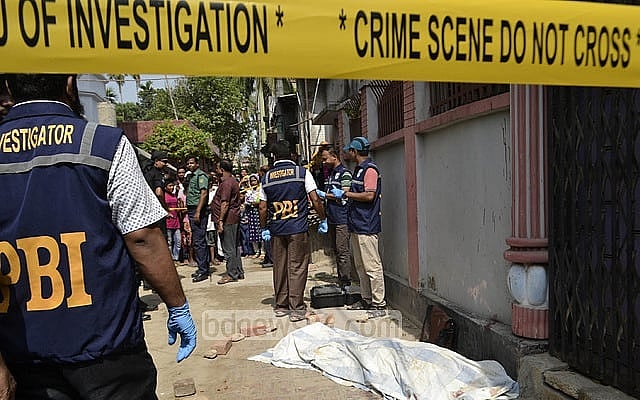
An SI said, "Suppose we arrest someone with drugs. The sample needs to be sent for testing, and I have to go back to collect the report. The drugs must also be sent for destruction. All these expenses must come from my pocket.
He continued, “The amount I receive for investigation expenses is fixed, but the actual cost of investigating each case can vary. Sometimes, it requires several operational trips with the force to catch a suspect. If I only receive reimbursement after the investigation, I end up covering these expenses from my salary. Why should that be the case? My salary is just for me.”
“They could give me the investigation funds upfront, allowing me to submit my expense reports. At least monthly expenses could be deposited into a bank account. This would motivate everyone to show more interest in investigations and help complete them more quickly, which could also eliminate the tendency for police to engage in corrupt financial practices,” he added.
According to Police Headquarters, investigation fees are set at Tk 6,000 for robbery and murder cases, Tk 5,000 for kidnapping and human trafficking cases, Tk 4,000 for piracy and unnatural death cases, and Tk 2,000 for cases related to violence against women and children, rape, and drugs.
For cases involving acid attacks, expedited trial laws, anti-terrorism laws, arms and explosives, and money laundering, the investigation officers receive Tk 3,000.
"Without resolving these fundamental issues, talk of police reform and community-focused policing will remain in discussions only; they will never become a reality," the SI said.
CHALLENGES IN RECRUITMENT, POSTING, PROMOTION
An SI said, "Police recruitment should be streamlined to one or two ranks, ideally constable and ASP or constable and SI, with promotions allowing officers to move upward. This could help reduce the tension between BCS [Bangladesh Civil Service] cadre members and other police personnel."
An additional DIG emphasised the importance of targeted recruitment.
“If you require 10 IT experts, 10 operational personnel, and 10 skilled investigators, recruit accordingly. You cannot conduct mass recruitment and then complain about misalignment in needs,” he said.
After recruitment, the issue of placement arises. The police force has 18 units, with certain roles, such as those in Dhaka Metropolitan Police, Detective Branch, and Criminal Investigation Department, seen as ‘prestigious postings’. This creates unhealthy competition within the force. Conversely, positions in units like APBn, Tourist Police, and Railway Police are often avoided, and labelled as ‘dumping posts’.
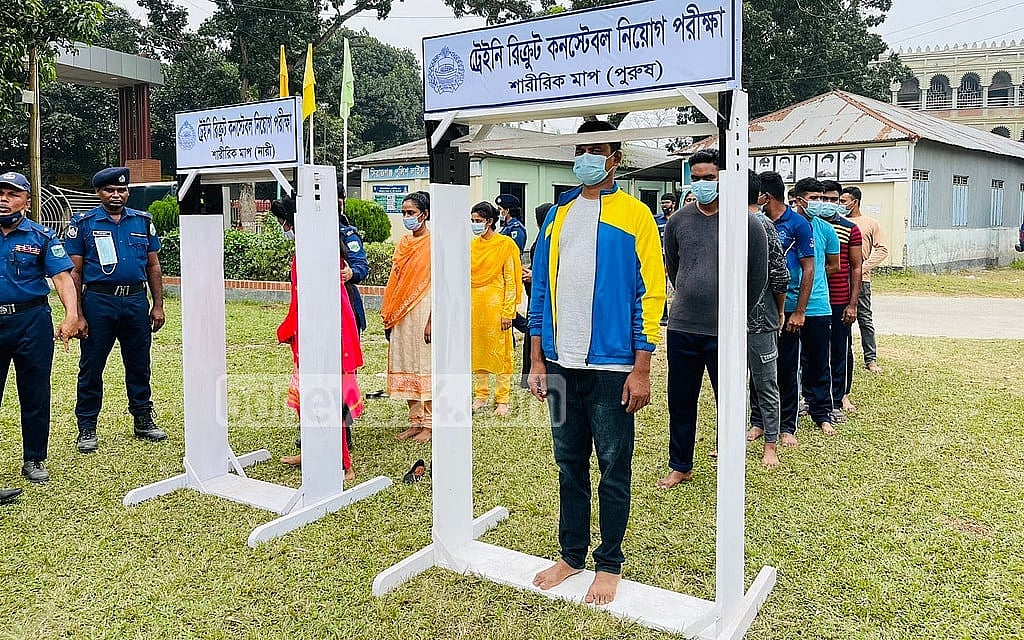
A lack of placement criteria allows appointments to be made at will, fostering a culture where officers feel the need to stay close to the government for favourable positions. Financial transactions around coveted postings have also been alleged.
An additional police superintendent insisted on the need for transparent policies regarding postings. “There should be merit-based assignments rather than arbitrary decisions. If accountability for designated duties is ensured, all positions will gain significance,” he said.
Another additional DIG pointed out that postings can be used as a means of harassment.
“Senior officials can pressure juniors to follow unfair orders by threatening transfers. We need to move beyond the fear and lure of transfers and establish a standardised structure," he said.
He suggested that officers with investigation experience should take on senior roles in investigations.
"An SI with 10–15 years of investigation experience should not be supervised by a new BCS recruit. Those entering the force should first gain experience in other departments before being placed in investigation roles," said the additional DIG.
An SP stressed the need for transparent promotion policies. "Getting recruited through BCS once should not set my career trajectory for life. If my PSC [Public Service Commission] ranking remains the sole promotion metric, I will always be behind those ranked above me, no matter my efforts. Similarly, the person above me might feel unmotivated, knowing they cannot be overtaken."
The officer supports implementing an examination system before promotions.
He believes that promotions based on merit rankings from these exams would be shielded from any outside influence, ensuring a fair and impartial advancement process.
WILL THE COMMISSION SUCCEED?
Md Omar Faruk, the head of the Criminology and police science department at Mawlana Bhashani Science and Technology University, believes that the reform commission will fail.
Faruk said, “A secretary should never be the head of such a commission. This commission will ultimately make the police either bureaucrat-dependent or politically influenced due to the flawed process of its formation.”
“This commission lacks researchers. Without the inclusion of researchers or human rights activists, how can it make recommendations for a people-friendly police force?”
He believes that a former judge or a widely respected figure should have been appointed as the commission's head to better meet public expectations.
“If a bureaucrat or minister heads the commission, the police will remain a subordinate force to the government. Only by being free from political and bureaucratic control can we establish a people-friendly force. Therefore, given the current structure of the commission, we cannot expect much from the proposed reforms,” said Faruk.
The commission's chairman Safar told journalists, “Over the past few days, we have collected legal data related to police. We have law professors on board, and we will collectively develop a work plan. The primary objective of police should be to serve the public.”
“We will draw inspiration from how police operate in various democratic countries before making our recommendations for reform,” he added.
[Writing in English by Sheikh Fariha Bristy]







