


Published : 19 Jun 2022, 08:49 AM
Updated : 25 Oct 2022, 09:54 AM


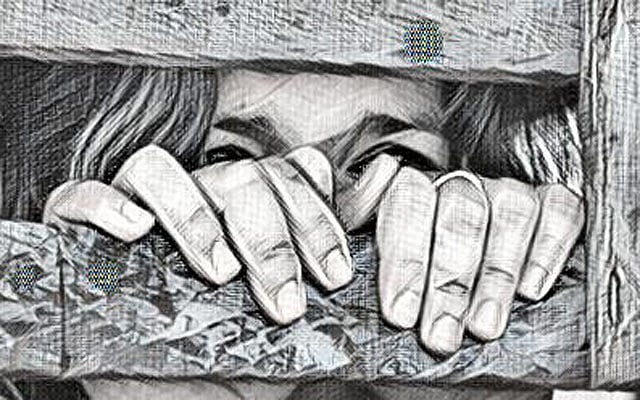
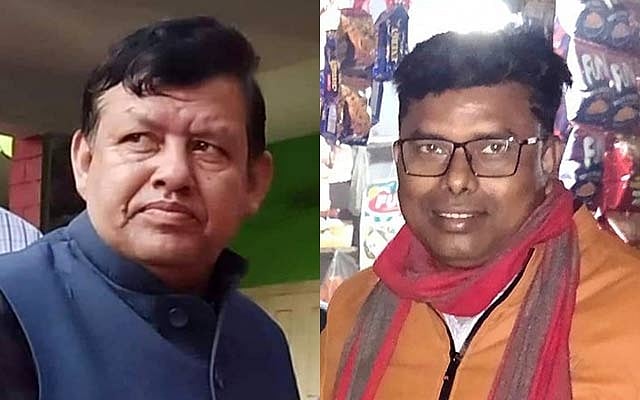
Smuggled people are locally known as ‘Dhur’, human trafficking routes are known as ‘Ghats’ and those running the illegal rings are called ‘Ghat Malik’. Public representatives, including MPs, are aware of organised crime, locals said.
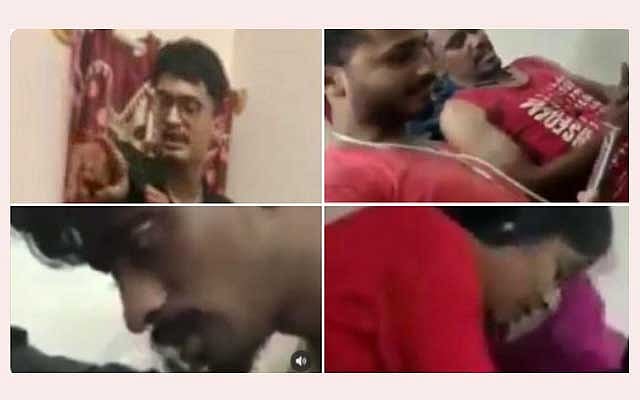
The trafficking of women and girls came under the spotlight after a video of a sexual assault on a Bangladeshi woman in India went viral in May 2021. At least six cases of human trafficking were filed with Hatirjheel Police Station in Dhaka over the incident and police arrested 26 people.
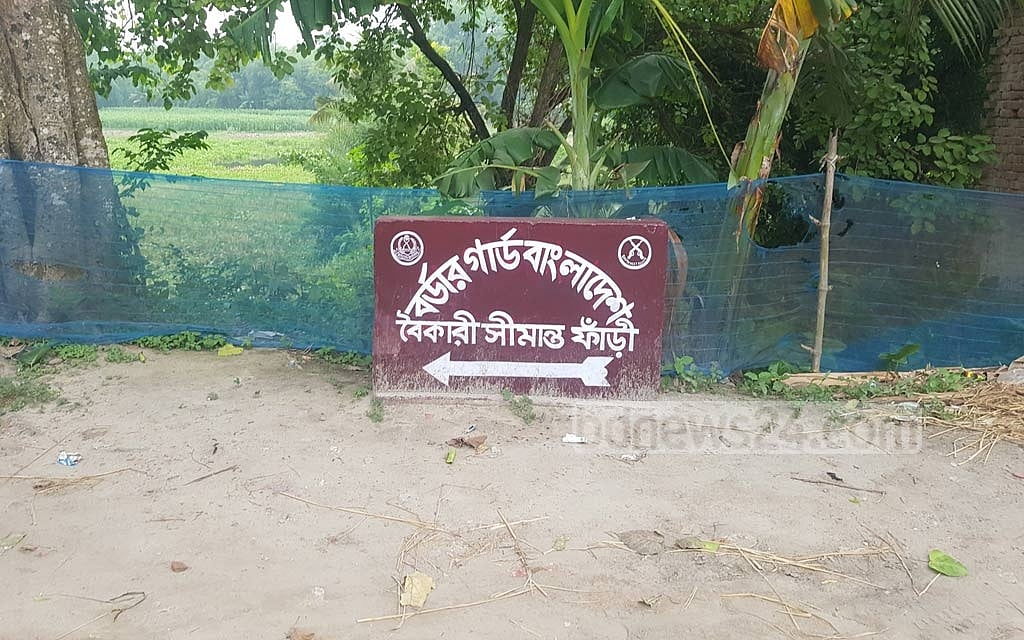
Among the arrestees, 12 confessed to their part in organised crime: they smuggled women and girls through Baikari in Satkhira, a border district. Police said last year that around 1,000 women were likely trafficked to India, most of them through Baikari. The victims are often forced into the illegal sex trade.
Following an investigation, police said that the traffickers use villages near the Indian border to provide temporary ‘safe homes’ for women brought from Dhaka or other districts, before sending them to Indian cities.
The involvement of local representatives also emerged during the police investigation but none of them was arrested. The local MPs have requested police not to take any action against the representatives in the local government, said police.
BAIKARI BORDER
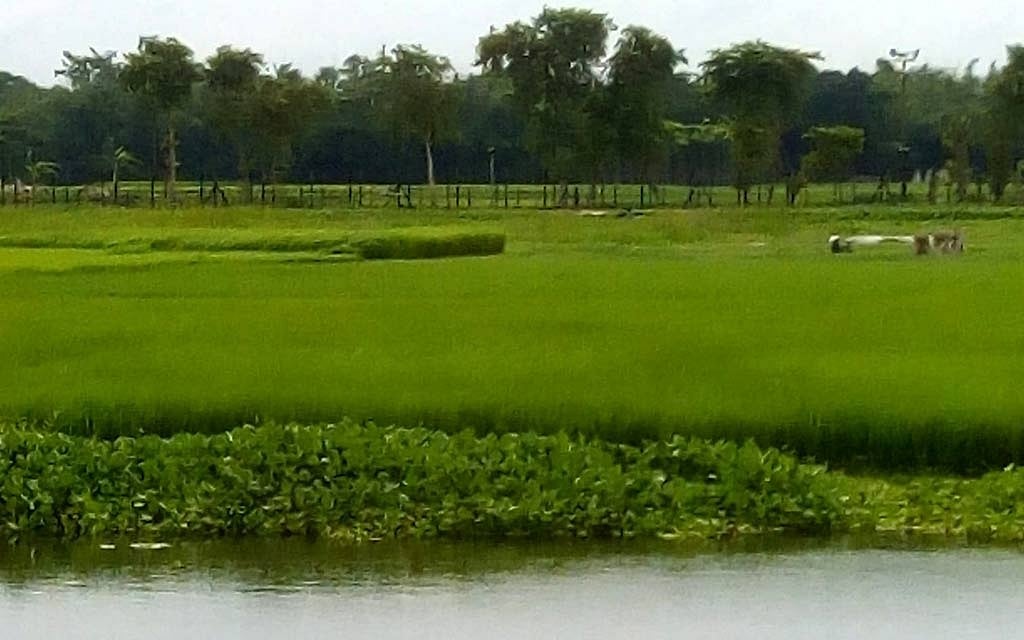
On Tuesday last week, not many people were seen near the dried-up Sonai river on the west side of Baikari. A thin footpath along the riverbank links the two sides of the border. People did not seem to be interested in speaking to strangers.
One of them, Mizanur Rahman, said the residents of the border area are either directly involved in smuggling, or they just help the smugglers. He declined to comment further and left, only saying he was ‘busy’.
Some other people spoke to bdnews24.com but none of them agreed to share their names. They said they have been witnessing people crossing the border without a passport or visa for a long time. Now some people took it as a ‘profession’ under the patronisation of local representatives, they alleged.
SYNDICATE
The arrestees in the human trafficking cases named Isharul Islam, a member of Baikari Union Council, in their confessional statements.
Speaking to bdnews24.com, Isharul said influential people are involved in the trafficking business. “But I can’t give their names because I’ll be in trouble.”
A trader at Kathandi Bazar in Kathandi village said people from different parts of Bangladesh come to the villages situated near the Indian border to cross it illegally. The middlemen are always on standby, offering to help with the border crossings in return for cash, he said.
“The rate for crossing the border to India fluctuates depending on the party and their needs. Generally, the rate ranges from Tk 2,000 to Tk 20,000. Some people travel to India to get medical treatment, while some go in search of jobs. Some people cross the border to meet their relatives.”
Members of these syndicates are quite aware of the fact why the human traffickers take some women to the other side of the border. But they never raise their voice as they get paid a big amount for the task.
Villagers are accustomed to outsiders coming to their village frequently.
The motorcycles carrying people through the villages to the border never have a licence plate on them. Police in Dhaka arrested a suspect, Amirul Islam, who used to offer such motorbike rides.
Human traffickers have been using this route for a long time, said the villagers in Kathanda. “We have always seen women coming. Other people come too. Families come with all their mundane belongings to stay in the village to cross the border,” said a native from Kathanda who works in a garment factory in Dhaka.
On the Indian side, the traffickers take photos of the smuggled women and make Indian identity cards, such as ration cards.
Before crossing the border, people are kept in the houses of syndicate members where they undergo training on how to speak and behave after going to India. Women are asked to wear conch bangles and apply vermillion like Indian women.
They are guided to discard Bangladeshi branded shoes and clothes and men are asked not to carry Bangladeshi cigarettes and lighters. The traffickers teach them not to speak much in public places unless they master the Indian dialect. There were cases where people got caught because of their Bangladeshi accent and landed in jail.
HOW ONE WOMAN WAS TRAFFICKED
The case filed in Bangladesh gave a vivid description of the route through which the perpetrators took the victim to India. It also described the severe torture she faced.
Ridoy met the victim in Hatirjheel in 2019. He attempted to lure the teenager at different times, including promising to make her a TikTok star and offering her a ‘well-paid’ job. Ridoy and his accomplices in the transnational racket trafficked the girl to India in 2021.
On Feb 19, 2021, Ridoy cajoled her to take part in a hangout party in Kushtia and took her to Satkhira instead.
The woman said a motorcyclist came and took both of them to a tin-roofed house where another three men and as many women came.
To ensnare her, the criminals lied to her that police were about to raid the place and then took her to the other side of the border, she said. Ridoy and his associate Abdul Kader convinced her to cross the border saying they would make TikTok videos after crossing the border as the natural scenery is better there.
The woman walked almost for an hour with Ridoy, Kader’s son Mehdi Hasan Babu and waited near the border, according to the case dossier. It also described how the woman walked and took motorcycle rides after crossing the border and was kept in several houses. Ridoy and his accomplice Bokul raped her twice.
She was threatened with arrest for entering India without a passport which would lead her to jail for 20 years. Later, the woman was taken to Bengaluru.
HUMAN TRAFFICKING CASES
Amirul Islam, a native of Kathanda village in Baikari, was arrested for carrying women on his motorbike for trafficking. Police seized his motorcycle as well. Amirul gave his statement to a Dhaka court.
Amirul claimed he used to take the women to Mehdi Hasan Babu at the border following Salam’s order and used to get Tk 200 per woman.
Mehdi Hasan Babu and another man, Alam, used to bring women from across the country and kept them in a house near the border. They used to take the women on motorbikes at a convenient time and hand them to one Anisur Rahman at the border to cross it.
Amirul also told police that a man named Akbar Ali worked as a lineman at the border and controlled three smuggling routes. Anyone crossing the border through those routes needs to pay Akbar.
Mehdi Hasan Babu and his father Abdul Kader were also arrested in human trafficking cases filed with Hatirjheel police.
In his statement, Babu said the women trafficking gang that he was a part of, was patronised by Asaduzzaman.
Following the former chairman’s order, his son Inzamamul Haque Inza, adopted son Abdus Salam, union council member Isharul and Harun managed the entire business and divide the income among everyone, he said.
Babu got involved with the gang through a man named Anisur. All of the gang members used to keep the women brought for trafficking at their homes. They knew Ridoy as the ‘chairman’s guest’.
ALLEGATION, COUNTER-ALLEGATION
Asaduzzaman denied all the allegations against him, saying Mehdi Hasan Babu brought the allegations due to political enmity.
He said he had no connection with them. Former MP Khalek Mondal, who was convicted in a case of crime against humanity committed during the 1971 Liberation War, hails from the same union, he said.
“Those arrested are members of the Jamaat-e-Islami. A former chairman of this union named in 25 cases stays in Dhaka and hatches conspiracy against me,” he said. He also denied having Salam as his adopted son.
Isharul said he had a hostile relationship with Asaduzzaman, who was “trying to drag him into the case”. Asaduzzaman denied the allegation, saying Isharul and his supporters were trying to remove him from the political arena for a long time. “In a bid to win the election, Isharul has been lobbying against me for the last three years,” he said.
Isharul also claimed three of the arrestees were Asaduzzaman’s men.
Police officers in Dhaka said some MPs from Satkhira requested them not to arrest Asaduzzaman. The officers requested anonymity.
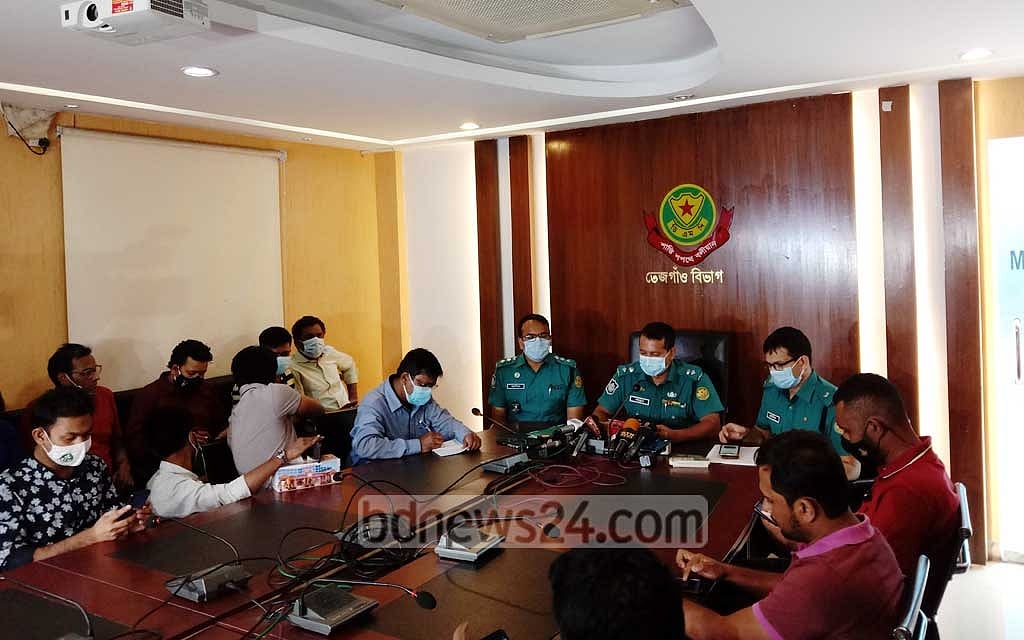
“We’ve arrested the key suspects and others in those cases but some of the key suspects are still in India. We can’t complete the investigation without interrogating them,” said Additional Deputy Police Commissioner Hafiz Al Farook.
The Police Headquarters requested the Indian authorities to allow them to go and interrogate those suspects but has yet to get any response.
[Additional reporting by Shahidullah Kaiser Sumon from Satkhira. Written in English by Sabrina Karim Murshed and edited by Osham-ul-Sufian Talukder]













