Published : 04 Apr 2023, 04:05 AM
Updated : 05 Apr 2023, 11:37 AM


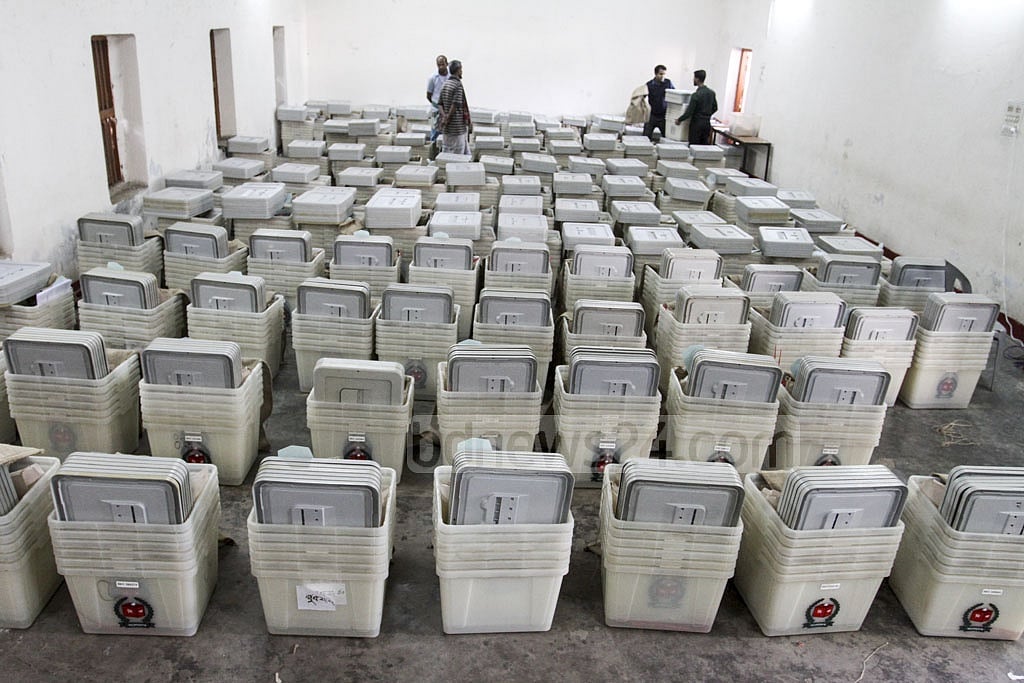
Amid objections by the BNP and its allies to the plans to use electronic voting machines, the Election Commission has decided to use only paper ballots in the next parliamentary polls, apparently due to a fund crunch.
It faces a bigger challenge now – bringing all the parties to the election. The BNP says the decision on EVMs in parliamentary polls makes no difference as long as the Awami League remains in power during the polls.
The ruling party has several times stated it will not allow any unconstitutional caretaker government during the election, even if the BNP stages a boycott of the polls again over the issue.
As the political arena has heated up with the latest development, Jatiya Party Secretary General Mujibul Haque has said the Election Commission must now focus on creating a condition suitable for all the parties to contest the election.
Analysts believe the decision to scrap the plan to use EVMs will help somewhat settle the dispute over elections.
The Awami League, which called for using the machines in elections, appears to have accepted the EC’s decision. Information Minister Hasan Mahmud, a joint general secretary of the party, said the commission holds the right to determine the voting method.
Facing questions about the issue on Monday evening, hours after the EC announced its decision on Monday, BNP Secretary General Mirza Fakhrul Islam Alamgir said they had no interest in the matter.
“We’ve made it clear that the biggest crisis is about the election-time government,” he said, reiterating the demand for the resignation of the Sheikh Hasina administration and the installation of a caretaker government.
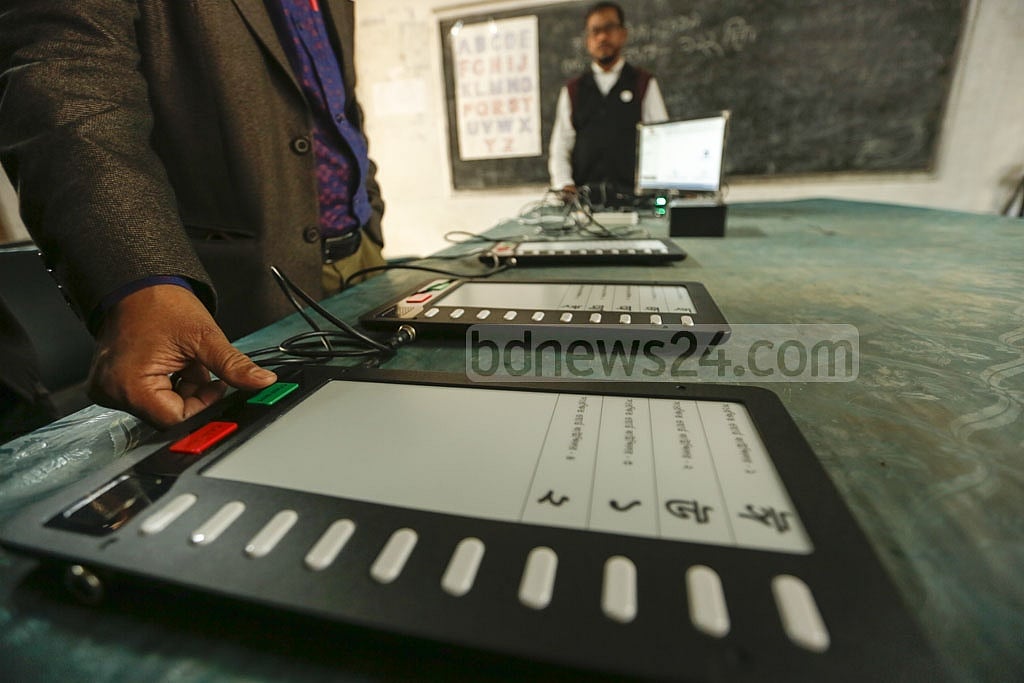
After the EC announced its plan to use EVMs in at least half of the 300 seats last year, Fakhrul rejected it and called for paper ballots.
The EC held talks with the political parties afterwards, but the BNP and nine other parties refused to sit with the commission as Fakhrul alleged the EC was not an independent unit and was unable to hold a neutral and proper election despite showing the intent to.
The EC said 17 of the 29 parties that participated in the talks agreed to use EVMs.
It called the BNP and some other parties to talks again, but they refused to sit with the EC.
The commission led by Kazi Habibul Awal had pushed ahead with the plan to employ EVMs and sent a Tk 80 billion proposal to the Planning Commission in October 2022. But it was met with no response amid the global financial headwinds.
In January, the EC scrapped the proposal and came up with a fresh one for Tk 12.59 billion to maintain the existing machines.
EC Secretary Md Jahangir Alam on Monday said: “The finance ministry declined to deliver the funds but said it might be available in the next fiscal year. Right now, the EC simply doesn’t have the funds to carry out EVM operations.”
Some political parties’ objection to the use of the machines also factored in the decision to scrap the plan, he added.
EVMs were used in six seats in the last general election. The current EC has been using the machines in local government polls. By-elections to two parliamentary seats were also held through EVMs. But the seats vacated by the BNP saw voting with paper ballots.
EC DECISION WILL HAVE EFFECTS: OBSERVER
Election analyst Abdul Alim said the commission was right to step away from using EVMs.
“That’s because the important thing is that such operations require political understanding and consensus among participants, which we lacked due to EVMs. Some had objections, while others were in complete disagreement. So the decision to scrap the EVMs, considering everything, is the right one.”
“I think this move will help the political parties take the right decision to some extent,” he said, emphasising the need for steps by the ruling party for a consensus to hold free and fair polls.
He said political parties sharing Iftar with others during Ramadan was a good sign in the country’s politics. “The problems will go away if they talk. I hope we will get an election full of competition.”
Alim advised the EC to gain trust through the upcoming polls to five city corporations.
Munira Khan, president of the Fair Election Monitoring Alliance, hailed the decision to stay away from EVMs. “It’s praiseworthy. Now the Election Commission will want to move strongly for a free and fair election.
[Writing in English by Syed Mahmud Onindo; Editing by Osham-ul-Sufian Talukder]