Published : 31 Dec 2022, 01:39 AM
Updated : 31 Dec 2022, 01:53 AM


Bangladesh introduced two major projects – the elevated expressway in 2011 and the bus rapid transit or BRT – to improve the overall commuting experience in Dhaka city to a standard befitting of a nation seeking to bolster its economic prospects.
A decade on, initiatives that are meant to ultimately solve the city's longstanding traffic woes have had the opposite effect.
Marred by a myriad of issues like financing, safety concerns and deadly accidents, the projects have yet to be completed.
Although the construction of the elevated expressway has caused comparatively less suffering for the people, the BRT project has been an unmitigated nightmare for commuters and the authorities alike.
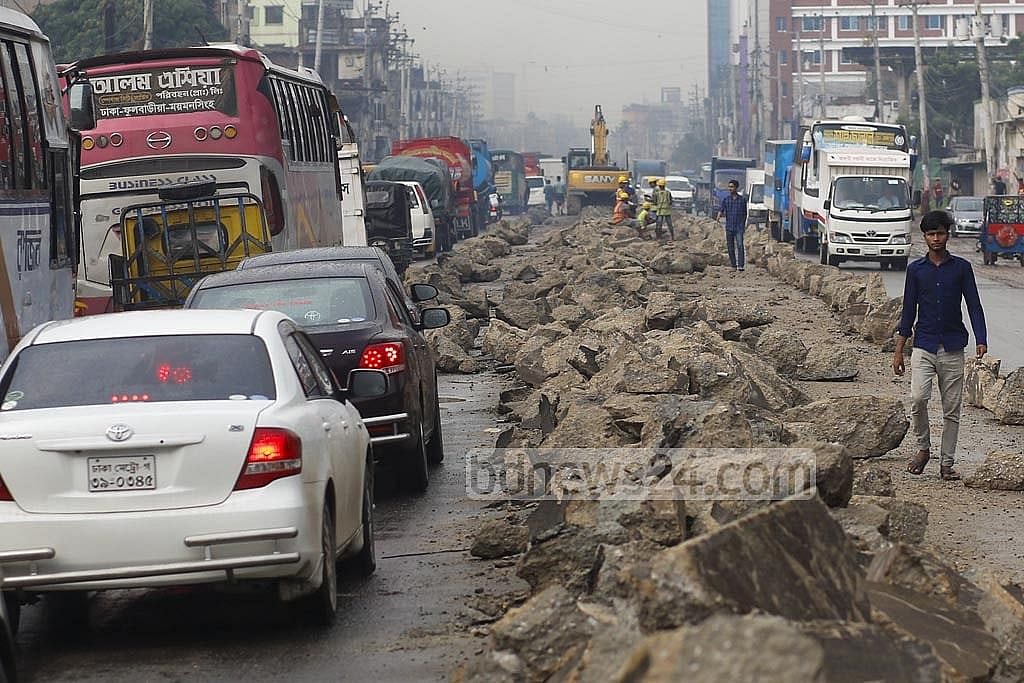
Since the project -- initially scheduled for completion in 2016 -- got underway, people living in the northern part of Dhaka, Gazipur and Mymensingh have endured unimaginable hassles stemming from the traffic congestion created by the bottlenecks at different construction sites.
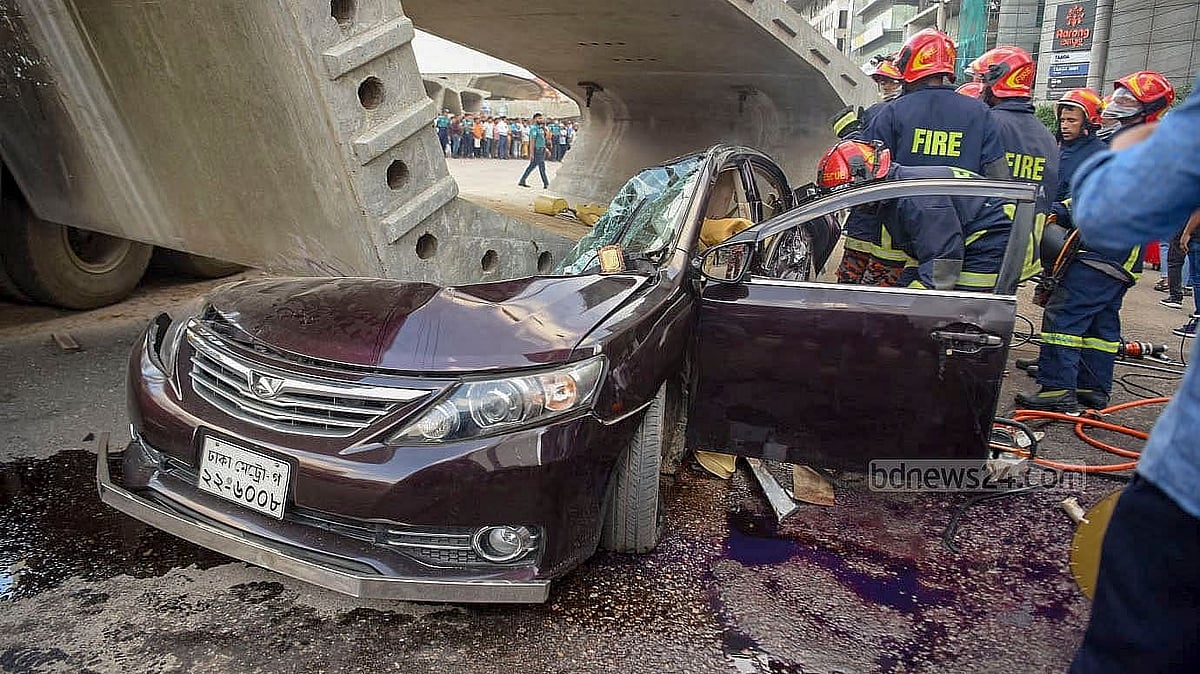
Furthermore, the tragic deaths of five people of a family when their car was crushed under an 80-tonne girder in Dhaka’s Uttara back in August also called into question the issue of public safety centring the BRT project.
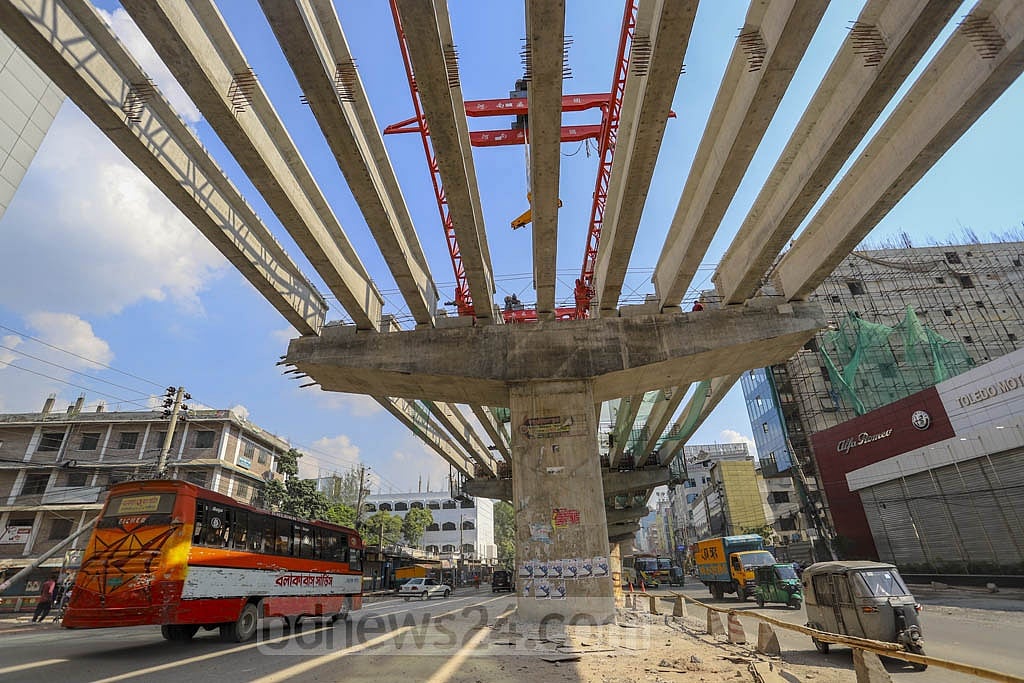
The 20.5km BRT was partially opened to facilitate vehicular movement in November with much fanfare, while the first phase of the elevated expressway project up to Banani is set to be completed soon, according to officials.
DELAYS, ACCIDENTS AND DEATHS: BRT’S PITFALLS
After extending the completion deadline multiple times, the construction of the Tk 42.68 billion project was finally set to be finished by December this year. But officials related to the project confirmed to bdnews24.com that they will be unable to meet the deadline yet again.
Patience is increasingly wearing thin among people commuting through the streets surrounding the project sites regularly.
Journalist Mahbubul Alam Kabir is one such commuter who travels from his place in Tongi’s Duttapara neighbourhood to central Dhaka for work.
“The minibus from my office carpool drops me at Uttara’s Azampur every evening. It shouldn't take a public bus more than 15 minutes to arrive at Tongi’s College Gate area, the nearest stop to my place. But I'd prefer walking rather than taking the bus, as the traffic congestion, even at the dead of night, is unbelievable. If I wait in a bus stuck in traffic, I may end up sleeping through the night inside the bus,” he said.
The delay in the completion of the project and the public inconvenience resulting from it is just one side of the coin.
The other side entails death and despair.
The investigation into the girder collapse in Uttara that killed five family members revealed that the China Gezhouba Group Corporation, a contractor of the Dhaka BRT project, cut corners at the expense of safety.
Ten suspects arrested by the police in connection with the incident are currently out on bail and the investigative authorities have yet to submit their report.
Asked when the full report would be handed in to court, Md Mohsin, chief of Uttara West Police Station, said, “This is a state prosecution. I am not sure when the investigation will be completed.”
On the day of the partial opening of the BRT, Road Transport and Bridges Minister Obaidul Quader announced that the project will be fully completed by June 2023.
Shafiqul Islam, managing director of the Greater Dhaka Sustainable Urban Project (BRT, Gazipur-Airport), said the authorities are going full steam ahead to open the project to the public by July next year.
“So far, 82.25 percent of the work has been completed,” he confirmed.

LAND ACQUISITION A STUMBLING BLOCK FOR ELEVATED EXPRESSWAY
The blueprint of the Dhaka Elevated Expressway shows that it will start from the Hazrat Shahjalal International Airport and end in Qutubkhali to merge with the Dhaka-Chattogram Highway via Kuril, Banani, Mohakhali, Tejgaon, Moghbazar, Kamalapur, Syedabad and Jatrabari.
The Italian-Thai Development PLC is in charge of implementing the Tk 89.40 billion project under a public-private partnership.
The length of the road from the airport to Qutubkhali is 19.73 km. In totality, the expressway will span 46.73 km with 31 ramps.
The project is being implemented in three phases.
The first phase, the 7.45km path from Shahjalal airport to Banani Railway Station is nearly finished. In the second phase, a 5.85km expressway from Banani Railway Station to Moghbazar Rail Crossing is being built.
The final phase will see the construction of a 6.43km expressway from Moghbazar Rail Crossing to Qutubkhali.
The work had stalled for two years after Prime Minister Sheikh Hasina officially broke the ground on Apr 30, 2011, due to complications relating to land acquisition.
As a result, the original project design was modified and the costs shot up substantially.
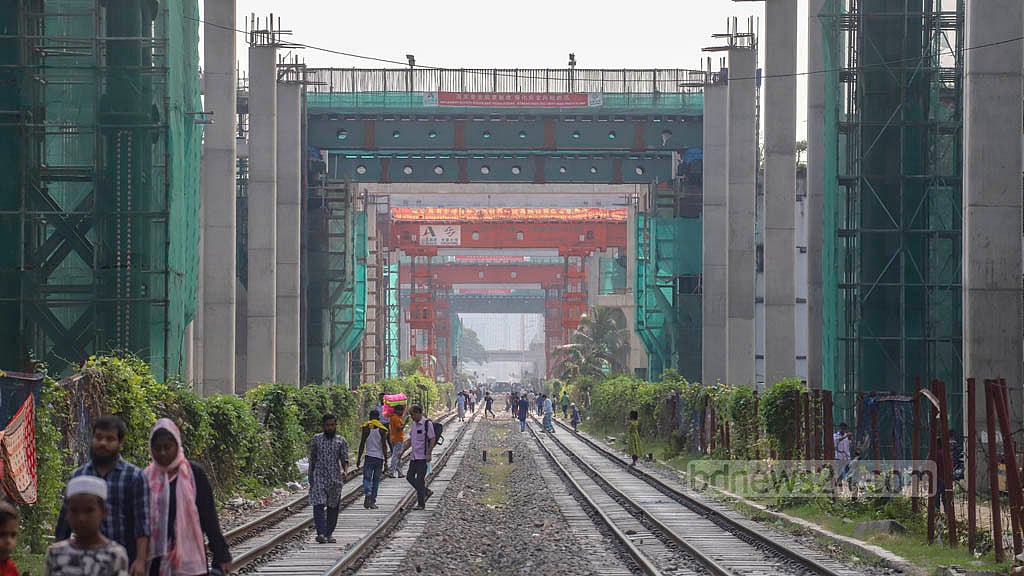
Project Director AHM Shakhawat Akhtar said 92 percent of the first phase, 45 percent of the second phase and 2 percent of the third phase have already been completed.
“All in all, the progress of the whole project is at 56 percent. We are hoping to complete the work by June 2024,” he said.
As the first phase is almost complete, the traffic congestion from the airport to Banani has lessened significantly, he added.
[Writing in English by Adil Mahmood]