Published : 15 Oct 2023, 12:47 PM
Updated : 15 Oct 2023, 04:18 PM


A US pre-election monitoring panel has expressed concerns about the current political environment in Bangladesh and has put forth several recommendations to ensure credible, inclusive, and participatory elections.
The challenges identified include “uncompromising and zero-sum” politics, highly charged rhetoric, political violence and a widespread climate of uncertainty and fear, according to the delegation.
The International Republican Institute and the National Democratic Institute, both based in Washington, deployed a bipartisan, international delegation in Bangladesh from Oct 8 to Oct 11 to provide an “independent and impartial” assessment of electoral preparations ahead of the 12th parliamentary elections expected in January.
Despite Bangladesh's notable economic growth and its commitment to democratic values, the delegation noted that women, youth, and marginalised groups continue to encounter 'significant barriers' to participation in the electoral process.
"Bangladesh is at a crossroads and the upcoming elections provide a litmus test of the country’s commitment to a democratic, participatory, and competitive political process."
Recommendations
Moderate rhetoric and engage in open and substantive dialogue on key election issues.
Protect freedom of expression and ensure an open civic space where dissent is respected.
Commit to nonviolence and hold perpetrators of political violence accountable.
Create conditions to allow all parties to engage in meaningful political competition, including bolstering independent election management.
Promote a culture of inclusive and active electoral participation among citizens.
In order to improve the prospects of transparent and peaceful elections, and bolster public confidence in the process, the delegation called for a more moderate tone in political discourse and encouraged open and substantive dialogue on key electoral issues.
The team stressed the importance of safeguarding freedom of expression and maintaining an open civic space where dissent is respected, while also holding those responsible for political violence accountable.
The delegation further recommended fostering a culture of inclusive and active electoral engagement among citizens, along with creating conditions that allow all political parties to engage in meaningful competition. They highlighted the need to strengthen independent election management.
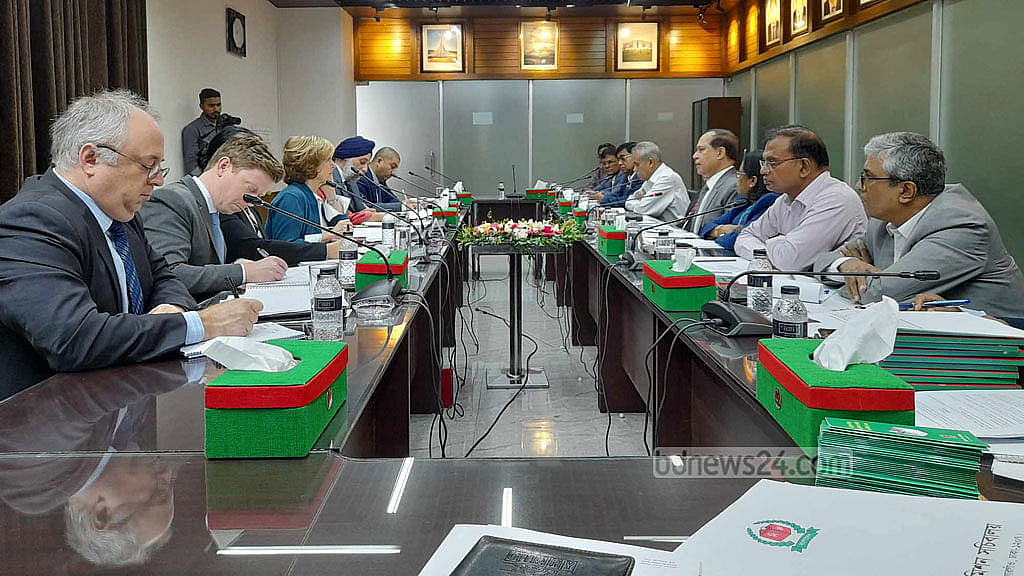
During their visit to Bangladesh, the delegation engaged with government officials, the Election Commission, political party leaders from various backgrounds, and civil society representatives in a bid to establish a roadmap for conducting free and fair elections.
“We appreciate all those who shared their views freely about the challenges and opportunities that exist in Bangladesh for holding inclusive, participatory, and nonviolent elections,” said Bonnie Glick, a member of the delegation.
“We came away from these conversations with concerns about the election environment, but hopeful that our recommendations can help to improve the process.”
One of the primary challenges facing Bangladesh is a "lack of constructive engagement among key political actors”, according to Karl Inderfurth, a member of the delegation.
“The best way to end the stalemate is through good faith dialogue, in the run-up to the January 2024 elections and beyond.”