Published : 05 Aug 2026, 10:10 PM
Updated : 08 Sep 2026, 09:30 AM


The newly inaugurated July Mass Uprising Memorial Museum, being the seminal point of a new pathway, will serve as a guide for everyone, helping the nation "find its way" whenever it feels lost, says former interim government chief Muhammad Yunus.
Speaking at the inauguration ceremony at Sher-e-Bangla Nagar in Dhaka, Yunus said the museum marked the beginning of a new national journey.
"This is where a new journey will begin. If we ever lose our way, we will return here to find it again," he said. "If our thinking falters, we will come here to rediscover our direction and begin our journey afresh."
The museum, built at the former official residence of ousted prime minister Sheikh Hasina, was inaugurated on the second anniversary of the 2024 July Uprising that led to the collapse of her government.
Yunus said the museum differed from conventional museums because it documented recent events as they unfolded rather than preserving distant history.
"Museums around the world usually collect artifacts from the past. But this museum is different. It has preserved events that happened only recently, collecting their evidence and history almost immediately," he said.
He said the museum connected the past with the future by preserving the aspirations and sacrifices of those involved in the uprising.
Referring to a letter written by one of those killed during the protests, identified as Anas, Yunus said it reflected the spirit of the movement.
"The message was: ‘We are gone, but we have gone to build a new Bangladesh’. That is what makes this museum unique," he said.
Prime Minister Tarique Rahman officially inaugurated the museum earlier in the day by unveiling a commemorative plaque, with Yunus among those attending the ceremony.
Yunus hoped that people from across Bangladesh, particularly students, would visit the museum and record their own aspirations for the country's future.
"I want every young person and every citizen of Bangladesh to have the opportunity to visit this museum at least once," he said. "They should write down their thoughts, their emotions and their vision for the future, leaving them here as part of the nation's continuing story."
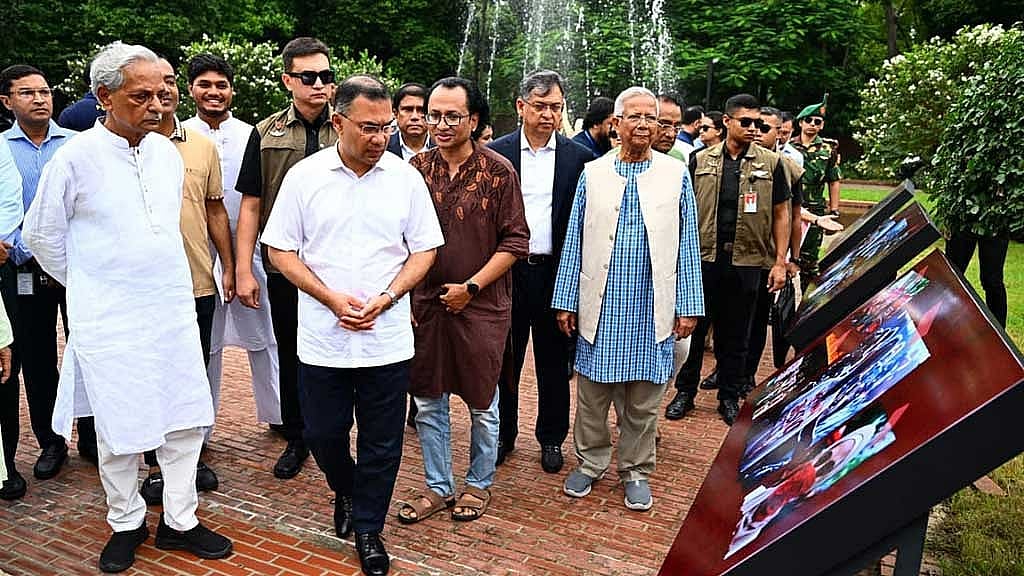
He said the museum would also preserve the stories of those who died during the Uprising, with each memorial bearing the name and history of an individual.
Following the overthrow of Hasina government on Aug 5, 2024, Yunus led Bangladesh's interim administration, which took office three days later.
Recalling the protests, he said the demonstrators were ordinary citizens rather than members of any particular political group.
"They were our friends, our sons and daughters, our neighbours. They were ordinary young people who came to the streets because they believed Bangladesh needed a new beginning," he said.
Yunus also thanked those involved in planning and building the museum, saying the collection of artifacts had required extensive effort to preserve the historical record.
The ceremony was presided over by Culture Minister Nitai Ray Chowdhury and attended by several cabinet ministers, senior government officials, diplomats, members of parliament, military chiefs, academics and representatives of families of those killed during the July Uprising.
Prime Minister Tarique's daughter Zaima Rahman was also present.