Home
+
Published : 16 Aug 2025, 02:02 AM
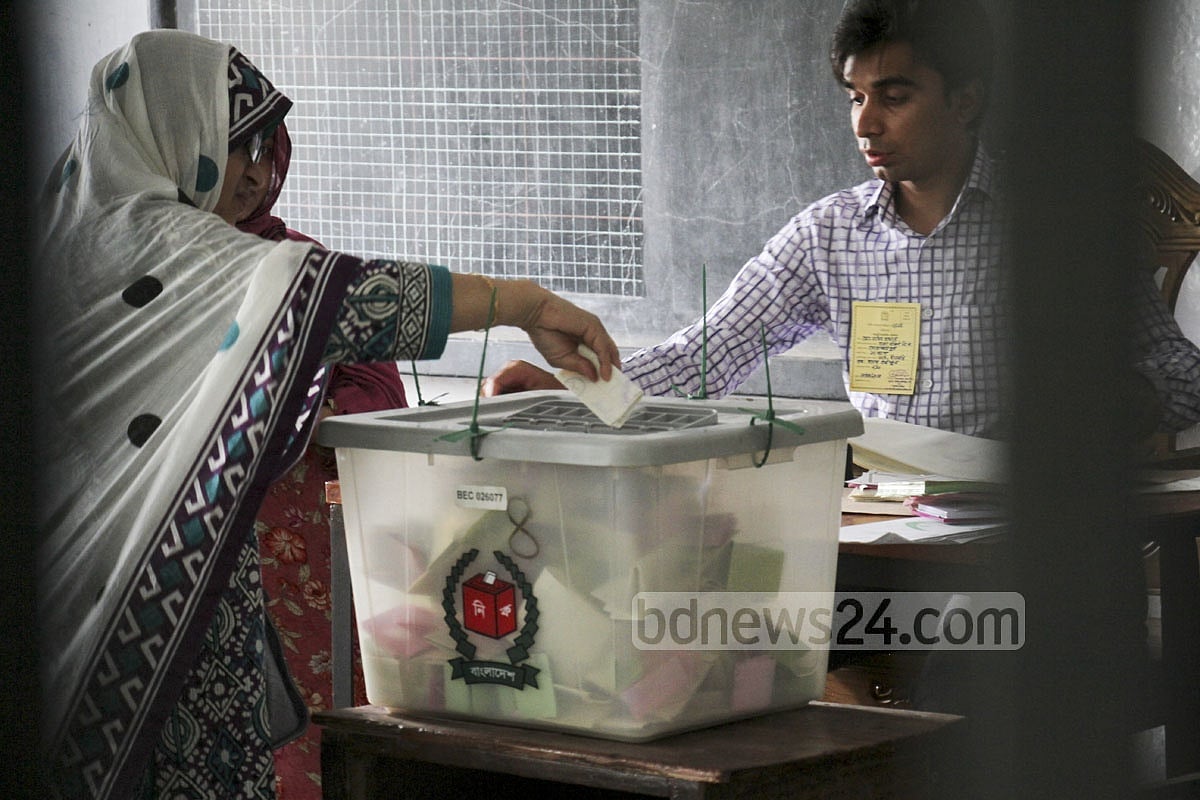
The Election Commission’s move to revive the “no” vote option in the Representation of the People Order (RPO) -- but only in constituencies with a single candidate -- has set off a sharp divide among political analysts and reform advocates.
The measure, designed to prevent candidates from winning unopposed, has been framed as a safeguard for electoral credibility.
Critics argue that the right to reject all contenders should be a universal electoral tool, available in every constituency, not just where one name is on the ballot.
Electoral law should be consistent across the board, say reform advocates, stressing that piecemeal rules undermine voter equality.
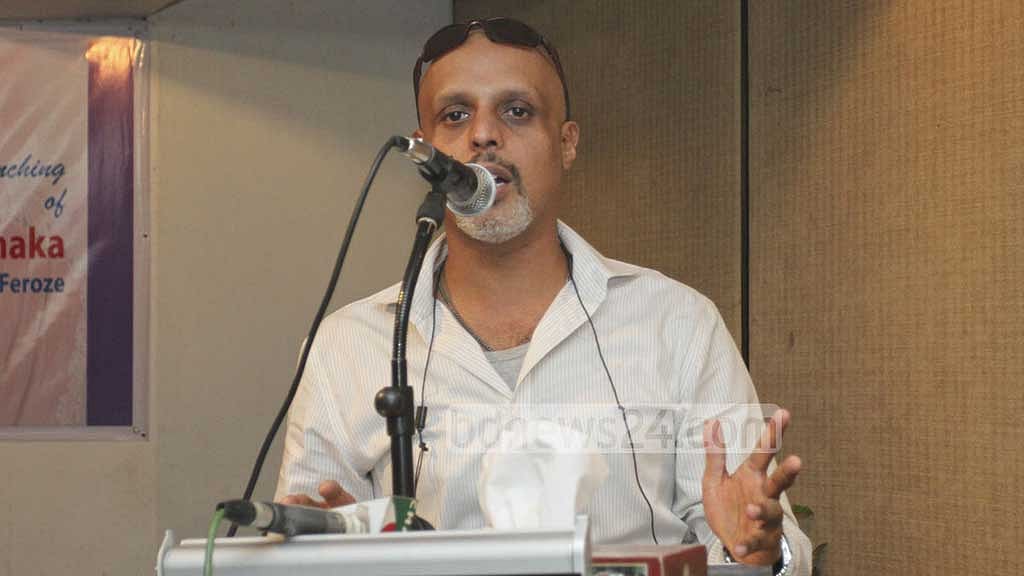
Electoral Reform Commission members Jasmine Tuli and Md Abdul Alim believe limiting the provision to lone-candidate races could increase the risk of “dummy” candidates being fielded, whose only purpose is to sidestep the provision.
Prof Kazi Mahbobor Rahman, who teaches Political Science at Dhaka University, said any potential drawbacks of extending the “no” vote to all seats should be discussed with stakeholders and resolved.
‘NO’ VOTE IN BANGLADESH
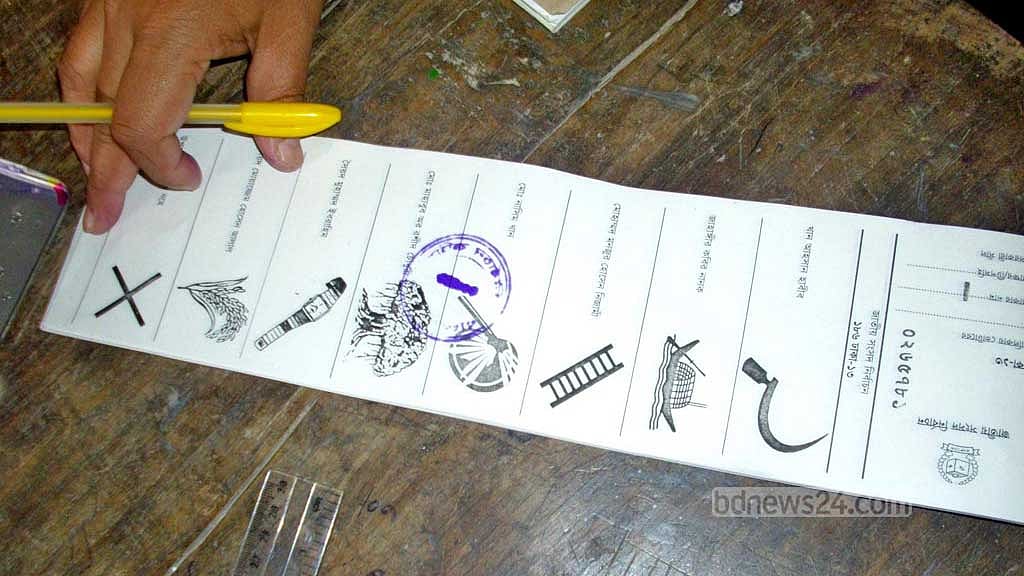
The option was first introduced in the ninth parliamentary election under the army-installed caretaker government of Fakhruddin Ahmed. The amended electoral law allowed voters who disliked all candidates to stamp a box on the ballot paper marked “none of the above”.
If ‘no’ votes accounted for half or more of ballots cast in a constituency, a fresh election would be held. At the time, the electoral commission argued the move would encourage turnout from those who would otherwise abstain.
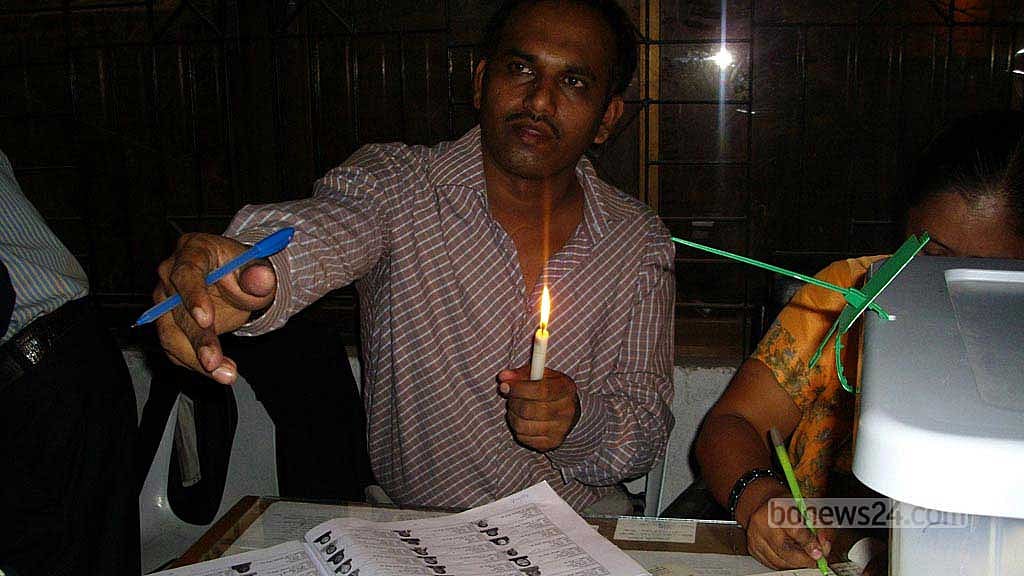
In that election, 381,924 people, or 0.55 percent of votes cast, opted for ‘no’.
The highest tally, 32,064, came in the hill district seat of Rangamati, but nowhere did the figure trigger a re-run.
The Awami League, which won that election, later removed the provision by amending the RPO.
Since then, there have been repeated calls to reinstate it, including court petitions, statements from political parties, and press conferences by civic group Shushashoner Jonno Nagorik (SUJAN). In 2015, when field officials were asked for views on RPO amendments, the idea was raised again, but never advanced under 15 years of Awami League rule.

SO, WHAT’S NEW THIS TIME?
Last Monday, election commissioners finalised a proposal to amend the RPO. The key change would be the reintroduction of the ‘no’ vote in seats with only one candidate. If ‘no’ votes outnumber those for the candidate, a fresh poll would be held.
Unlike in 2008, however, the provision will not apply across all constituencies.
The move is intended to avoid a repeat of the 2014 general election, when, following a boycott by the BNP and its allies, more than 150 Awami League candidates were elected unopposed, triggering widespread criticism.
Other changes agreed that day by the commission, led by AMM Nasir Uddin, include:

Cancelling results for an entire constituency in cases of serious irregularities;
Scrapping the lottery system for tied votes and holding a re-election instead;


Adding the armed forces to the definition of law enforcement; and
Cancelling a candidate’s victory even after polling if they are found to have submitted false information in their affidavit.

Commissioner Abul Fazal Md Sanaullah said: “We hope to finalise the draft this week and may send it to the law ministry next week.”
If the ministry consents, the proposal will be placed before the interim cabinet for approval, after which the RPO amendments would be issued as an ordinance.
‘NO’ VOTE SHOULD BE A RIGHT FOR ALL
Jasmine, a former additional secretary of the EC, told bdnews24.com the ‘no’ vote should be available in all constituencies, not just where there is a single candidate.
“Electoral law should be the same for everyone. If there are four candidates and a voter likes none, without a ‘no’ vote their ballot is wasted. That’s why our commission recommended it for all seats.”
Former secretary Abdul Awal Mazumder agreed, calling the restriction “wrong” and “unequal”, while election expert Md Abdul Alim described it as “inconsistent” and a curtailment of voter rights.
“Whether there is one candidate or four, voters should always have the option to reject them all,” Alim said.
THE ‘DUMMY’ CANDIDATE TRAP
When the BNP and allies boycotted the 2024 general election, as in 2014, many constituencies were set for unopposed Awami League victories.
The then ruling party adopted a new tactic: it removed the ban on party leaders running as independents against the party’s nominated candidate.
In most constituencies, Awami League leaders entered the race as independents against the official “boat” symbol candidate. In some cases, nominees encouraged relatives to run as independents —these became known as “dummy” candidates.
Analysts warn the EC’s lone-candidate ‘no’ vote rule could be sidestepped in the same way.
“A candidate seeing they are alone could install a dummy rival to avoid competing with the ‘no’ vote,” Jasmine said.
Mazumder echoed the warning, and Alim urged the commission to rethink, saying such a loophole “invites manipulation”.
CALL FOR UNIVERSAL APPLICATION
Prof Mahbobor Rahman of Dhaka University said the only safeguard was to apply the “no” vote nationwide.
“One candidate can buy a dummy rival for Tk 200,000–500,000 to block the ‘no’ vote. This is dangerous. If it’s introduced, it must be in every constituency,” he said.
He criticised the EC for finalising the measure without proper consultation:
“They should have engaged with experts, political parties and stakeholders over recent months, but they have not.”
INCLUSION OF MILITARY
Alim has praised the proposal to include the armed forces in the definition of law-enforcing agencies under the RPO amendment.
He said the presence of the military at polling stations will restore an atmosphere of trust.
“This inclusion was one of our key recommendations,” he said. “Surveys and research consistently show that the military is the most trusted institution in the country. The Army has always played a positive role. Their presence during elections can create a reassuring atmosphere for voters.”
Jasmine said armed forces were included in the definition under the RPO from 2001 but removed in 2009.
“People trust the military,” she said. “Both voters and political parties are likely to feel safer with their deployment.
“If the Army is seen patrolling roads and polling centres during and around election day, it could reduce violence and enable voters to cast their ballots peacefully.”
Awal Mazumder, who served in multiple national polls, believes military deployment on the ground will help “deter violence”.
“I was involved in the 1991, 1996, and 2001 elections,” he said. “When the army is deployed, those with disruptive intentions tend to think twice.”
Prof Mahbobor called for clarity on the nature of this deployment, stressing that the commission must consult political parties before finalising the decision.
“Political parties themselves have demanded Army presence in elections,” he said. “But whether they still want it under the current circumstances needs to be discussed. The Bangladesh Police are not seen as neutral. So, if the commission wants military support again, it must explain in what format.
“Will they be stationed inside polling centres? Or only monitor from outside? These points remain unclear.”
Criticising the commission for finalising the RPO amendment without broader political dialogue, he added: “This commission already appears weak to me. The way they’re pushing the amendment reflects that weakness.”
RUNOFF FOR TIED VOTE ‘WILL INCREASE COST’
Analysts say the EC’s proposal to scrap the lottery system in tied races and instead hold a re-election will significantly raise government expenditure.
Former secretary Awal said, “Re-elections will increase costs. But it could also increase competitiveness among candidates.”
He supported other reform proposals as well, such as cancelling polls in the event of serious irregularities and annulling victories if candidates submit false information.
“These will make candidates more cautious and improve electoral credibility.”
Mahbobor echoed the concerns over cost and logistics.
“When two candidates receive the same number of votes, no one else will be allowed to run in the repeat poll,” he said. “They could have set a vote margin threshold -- say 50 percent -- to trigger a re-election.
“But under this amendment, will the commission really announce a fresh schedule just because of a 5 or 10 vote difference?”
POLL ANNULEMENT RULE PRAISED
The commission’s new proposal to annul not just polling results but the entire election process in a constituency in case of force or external interference has drawn praise from analysts.
Jasmine said, “The previous commission limited annulment to voting alone. But force or interference can happen during nomination filing or the campaign as well.
“It’s good that the current commission is reverting to a broader scope.”
She also welcomed the inclusion of social media in the code of conduct. “These are strong measures on paper -- but what really matters is their implementation.”
Alim said the problem often starts well before polling day. “When a candidate isn’t even allowed to submit their nomination, that’s a serious violation.
“If we only act on election day itself, that’s too late. The process must be protected from the very beginning.”
MP DISQUALIFICATION
The amendment allowing the annulment of an MP’s victory due to inaccurate information in their affidavit risks making lawmakers “hostage” to the EC, said Prof Mahbobor.
“This is problematic,” he said. “Elections are like an exam. The party selects a candidate, the candidate wins, and then suddenly they’re told the affidavit was flawed. That shouldn’t happen.”
He argued the burden of verification lies with the commission itself. “If the EC certifies a candidate as valid, then that decision should stand. A person shouldn’t be scrutinised twice.
“If the commission lacks capacity to verify affidavits, it should hire more staff -- not leave MPs living under constant threat.”