


Published : 23 Jan 2014, 11:36 PM
Updated : 23 Apr 2022, 02:11 PM


Yanukovich was due to hold talks with opposition leaders, including heavyweight boxer-turned-politician Vitaly Klitschko, and anti-government demonstrators in the capital agreed to a truce with police until 8 p.m., pending the outcome.
The parliamentary website said the special session would be held on Tuesday.
Underlining the level of mistrust between the government and opposition, Prime Minister Mykola Azarov accused protesters of trying to stage a coup d'etat, and dismissed the possibility of an early presidential election to resolve the standoff.
"All those who support this coup should say clearly, 'Yes, we are for the overthrow of the legitimate authorities in Ukraine', and not hide behind peaceful protesters," Azarov said at the World Economic Forum in Davos, Switzerland.
"A genuine attempt at a coup d'etat is being carried out," Russian news agency Interfax quoted him as saying.
The protests against Yanukovich began in November, when he pulled out of signing a free trade deal with the European Union in favour of closer economic ties with former Soviet overlord Russia.
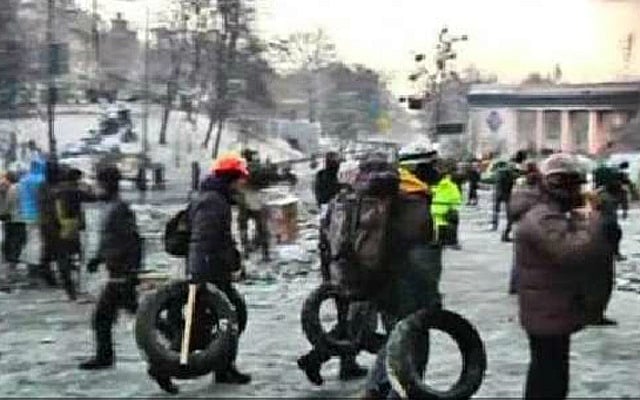
The unrest has swelled in scale in recent weeks, and turned violent on Sunday when hard-core radicals broke away from the main protest area in the capital Kiev and clashed violently with riot police.
Three people have been killed on the side of protesters - two of them from gunshot wounds - and more than 150 police have been injured in the worst street violence in post-war Kiev.
Outside the capital, thousands stormed the regional administration headquarters in Rivne in western Ukraine on Thursday, breaking down doors and demanding the release of people detained in recent unrest there, UNIAN news agency reported.
ALARM ABROAD
The unrest has caused alarm abroad, and on Thursday German Chancellor Angela Merkel expressed anger over the Ukraine government's crackdown on protesters.
"We are greatly worried, and not only worried, but also outraged at the way laws have been pushed through that call these freedoms into question," she told a news conference.
But Merkel added that it would be wrong for Europe to respond to the violence with sanctions at this stage.
A European Commission spokesman said Yanukovich had spoken to President Jose Manuel Barroso on Thursday and assured him he was ready to maintain political dialogue and saw no need to impose a state of emergency in Ukraine.
Former Soviet leader Mikhail Gorbachev urged the presidents of Russia and the United States to help broker negotiations, and said Ukraine was facing a possible "catastrophe".
In what could constitute the first signs of a willingness to compromise, Yanukovich told parliamentary speaker Volodymyr Rybak that the "situation must be settled immediately."
Rybak said the proposed emergency session of parliament could consider the opposition's call for Azarov's government to step down.
Rybak added that "questions linked to laws passed by parliament" could be discussed - apparently a reference to sweeping anti-protest laws rammed through parliament last week by Yanukovich loyalists.
Those laws served to boost mass demonstrations on the streets of Kiev at the weekend, and the opposition is demanding they be repealed.
The new round of talks between Yanukovich and Klitschko, former economy minister Arseny Yatsenyuk and far-right nationalist Oleh Tyahnibok had been due to begin at 3 p.m., but were delayed at the last minute.
In an initial round of talks on Wednesday, Yanukovich refused to make any real concessions to opposition leaders' demands for the dismissal of his government and repeal of the anti-protest laws.











