


Published : 11 Nov 2021, 11:36 PM
Updated : 14 Oct 2022, 07:02 PM


Stubble burning in Punjab and Haryana states, part of the farm belt that borders the capital, New Delhi, accounts for 30percent to 40percent of air pollution in October and November, according to air-quality monitoring agency SAFAR.
In 2018, Prime Minister Narendra Modi's administration set out to tackle the problem by establishing a fund to help farmers get rid of rice paddy straw, left out in the field by mechanised harvesters, by using machines.
It has taken 22.49 billion rupees ($302 million) and four years but the plan aimed at stopping farmers torching their crop waste has failed to have any measurable impact on air quality, with New Delhi's again in the "very poor" category this month, as in previous years, SAFAR data showed.
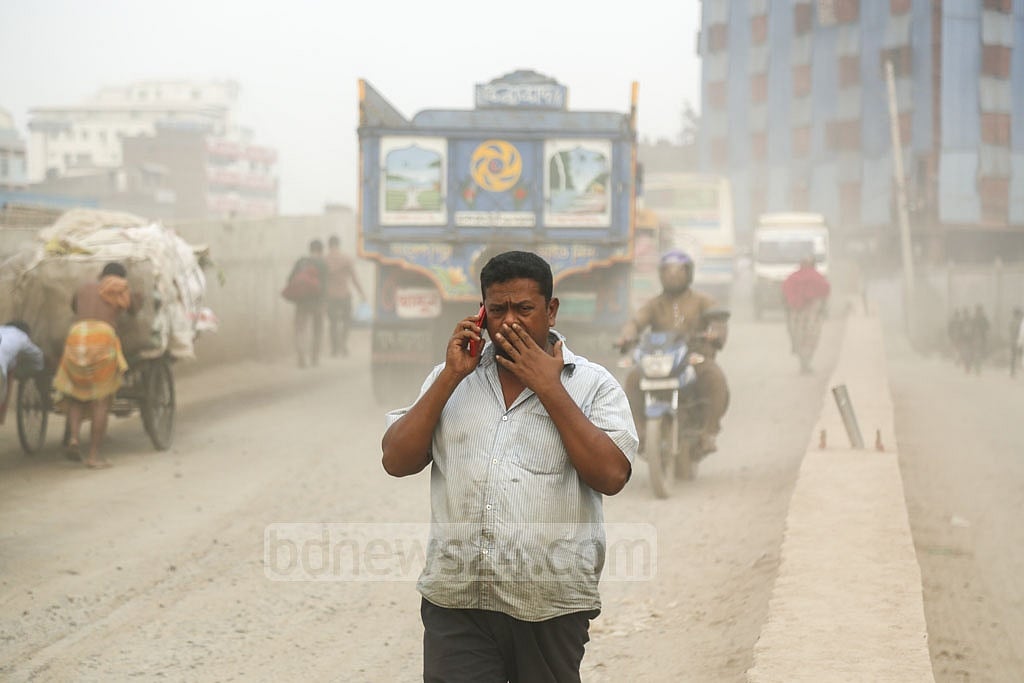
A layer of dust blankets a street at Postogola in Dhaka. Photo: Mahmud Zaman Ovi
"The subsidy plan looks good on paper but the officials have failed to address our practical problems," said Kishan Lal, a grain grower.
"Despite the subsidy, the machines are beyond our reach."
A government spokesman did not respond to a request for comment. Two government officials, who both declined to be identified, acknowledged that the plan has not put an end to stubble burning and said it would take time.
Under the plan, individual farmers can get a 50 percent subsidy and farm cooperatives an 80 percent subsidy to buy the machines for cutting, collecting and hauling away compressed paddy straw.
Other than the subsidy offered by the federal government, since 2018 Punjab state has spent 10.45 billion rupees on crop waste management.
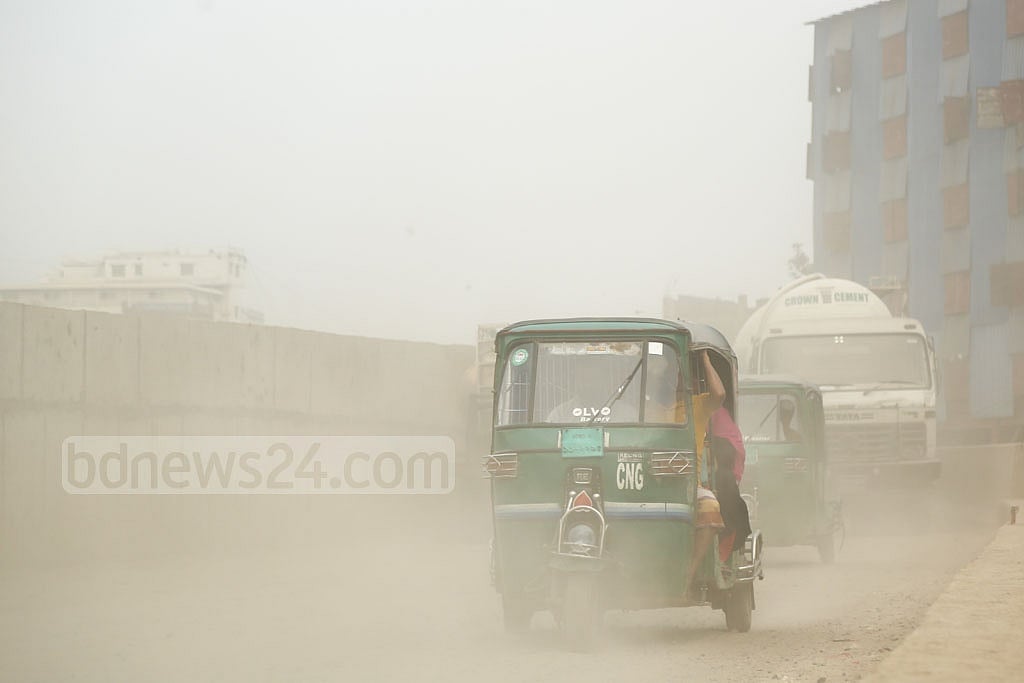
A thick layer of dust covers the air of Road No. 27 in Dhaka’s Dhanmondi as sewerage repair work drags on. Photo: Mahmud Zaman Ovi
Also, farmers need to first pay upfront and then claim the subsidy, which take up to 10 months, said farmer Jagdish Singh.
To be eligible for the subsidy, farmers need to buy the machines only from select government-approved shops, which often sell the equipment at a premium, farmers said.
'RACE AGAINST TIME'
"The machines can barely cover 200 to 300 acres in 20 days," said farmer Rakesh Singh. "Forget about three villages, this machine is not sufficient even for one. We burn the residue as we race against time to plant wheat."
After harvesting rice, farmers have a short window of about 20 days to plant wheat, and late sowing means lower yields.
A sharp rise in rice production and yields in India, the world's biggest exporter of the grain, has exacerbated the problem of crop waste, with Punjab and Haryana generating more than 27 million tonnes of rice straw a year.
"The plan has failed to address the problem because most farmers can't buy such expensive machines," said Sunil Dahiya, an analyst at the Centre for Research on Energy and Clean Air.
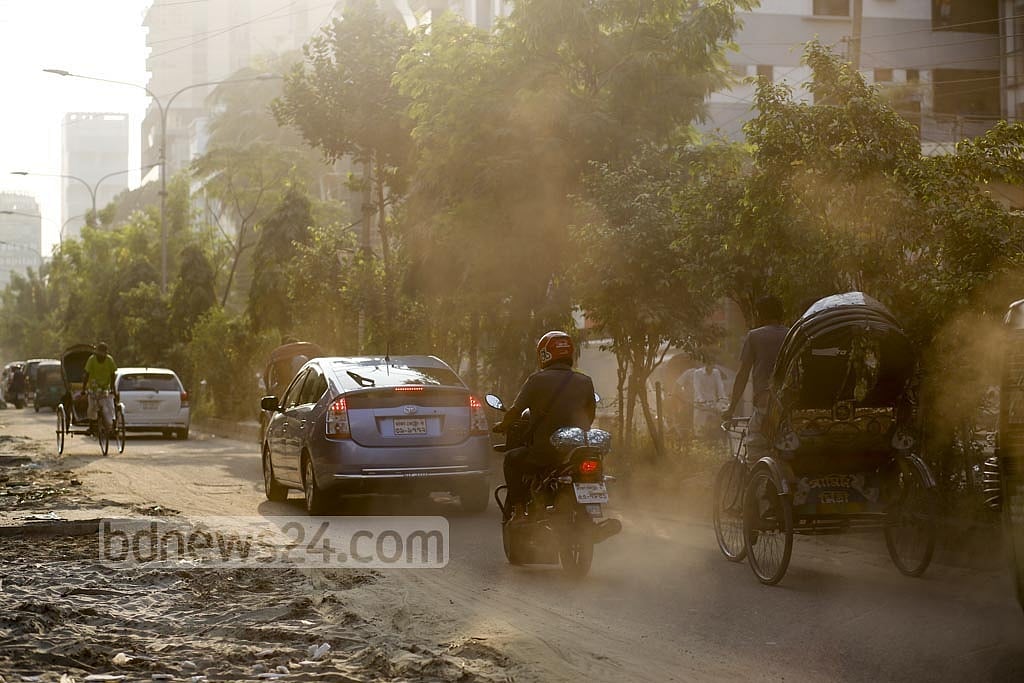
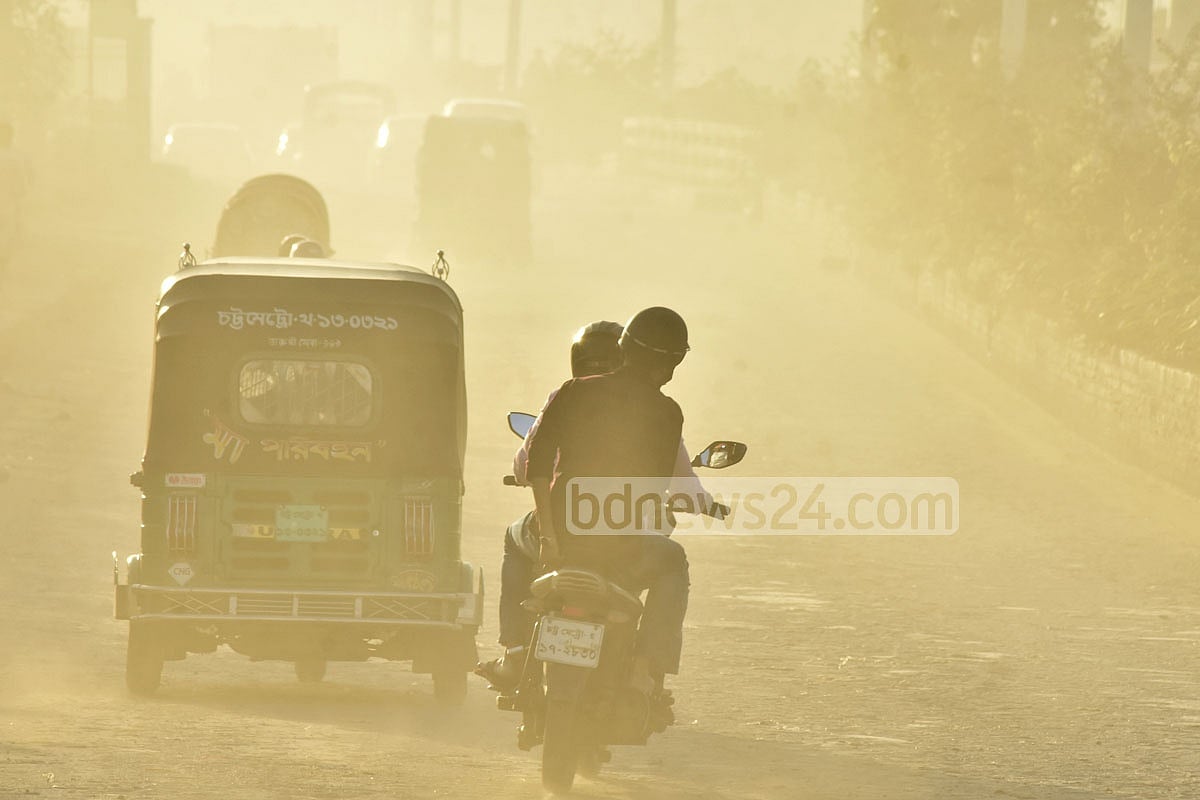
Severe dust pollution adds to commuters' woes on the ruptured Mariner's Road in Chattogram's Firingi Bazar area. Dust pollution increases in winter. Photo: Suman Babu
"Instead of turning Punjab and Haryana into a junkyard of these machines, the government should pay farmers 200 rupees for every 100 kg of rice straw which can be used as a feed stock for many industries," said agriculture economist Devinder Sharma.













