


Published : 30 Aug 2021, 10:46 PM
Updated : 14 Oct 2022, 06:57 PM


As the US military raced toward a Tuesday deadline to withdraw from America’s longest war, sporadic violence has been reported in recent days in the Afghan capital, underlining the perils ahead for a country already buffeted by insecurity, a humanitarian crisis and a terrorist threat.
While scenes of chaos had played out at the airport for days, as thousands scrambled for a way out of the country, by Monday evening a sense of calm and resignation had descended.
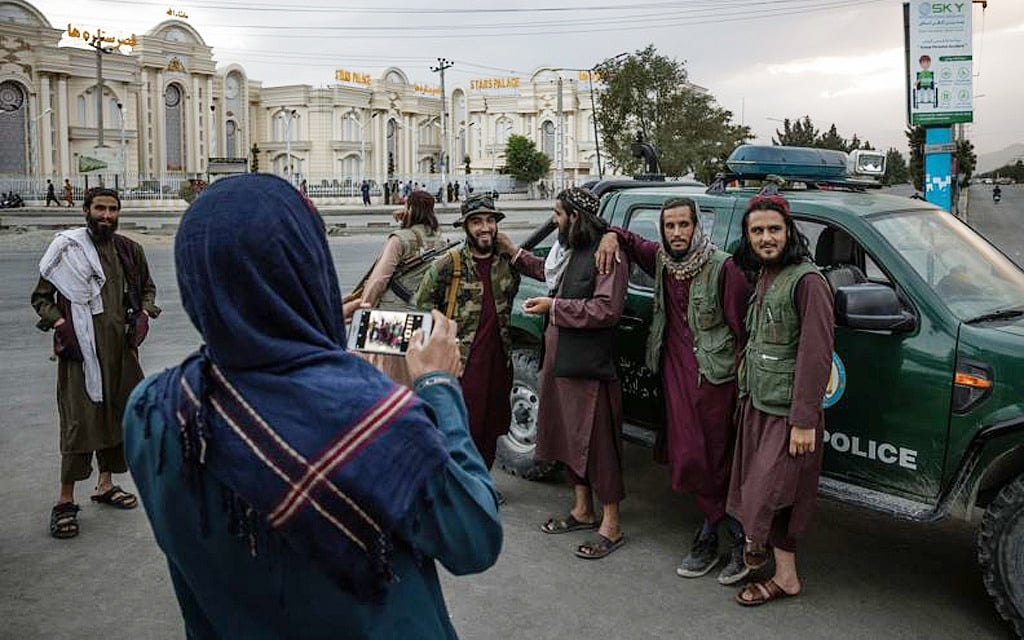
Taliban fighters pose for a group photo at their position outside the international airport in Kabul, Afghanistan, on Monday, Aug 30, 2021. (Jim Huylebroek/The New York Times)
US fighter jets and drones could be seen circling overhead. Taliban fighters said they were preparing for the possibility that the American troops could be gone by day’s end, hours ahead of the deadline.
Earlier Monday, the US military shot down rockets aimed at the Kabul airport, a day after it said that one of its drones struck a vehicle full of explosives. The United States has warned that more attacks, like the one last week outside the airport that killed nearly 200 people, are possible before its withdrawal is over.
The Islamic State Khorasan, an ISIS affiliate known as ISIS-K, claimed responsibility for that bombing, which also killed US troops. The group also claimed responsibility for Monday’s rocket fire, according to The Associated Press.
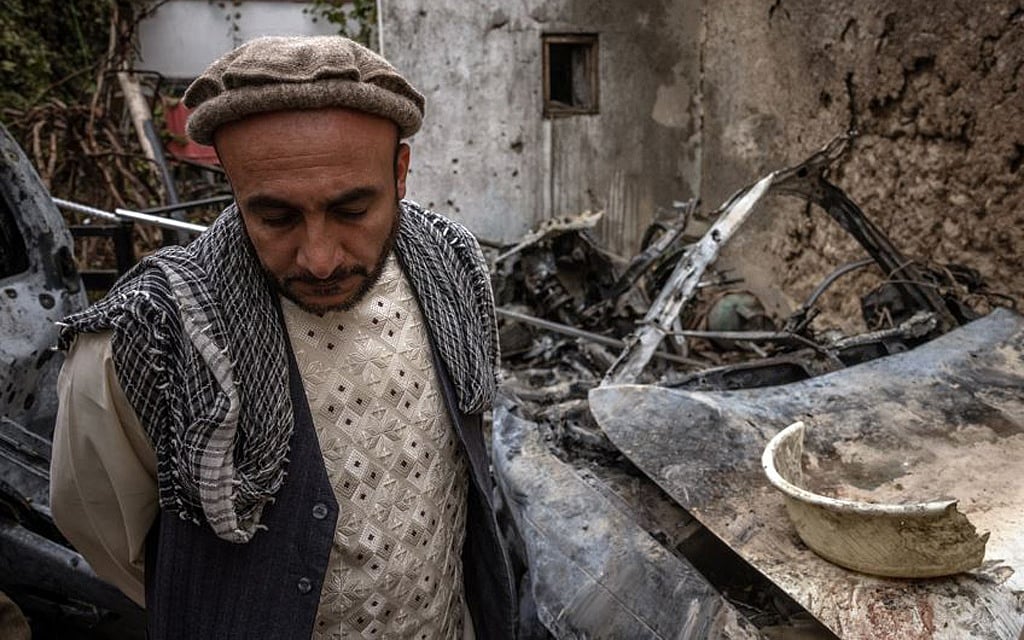
A man in Kabul turns away on Monday, Aug 30, 2021, after surveying the wreckage of the home of a relative that was destroyed in a US drone strike on Sunday. (Jim Huylebroek/The New York Times)
The visa program was created to offer a quick way to bring Afghan interpreters and contractors to safety in the United States, but many will be unable to fly out as part of the current evacuation.
“I’m still in Kabul and I don’t know what to do,” Mike said in a phone interview. “Of course we are disappointed that we’re left behind. We have sacrificed a lot.”
He described the frustration of knowing that many others had left without the same documentation, and his fears of returning home to a village where everyone knows he worked for the Americans.
“We wake up in the middle of the night and think about what’s going to happen to our lives and to our children,” he said.
© 2021 The New York Times Company













