


Published : 05 Jan 2020, 12:31 AM
Updated : 17 Oct 2022, 10:59 AM


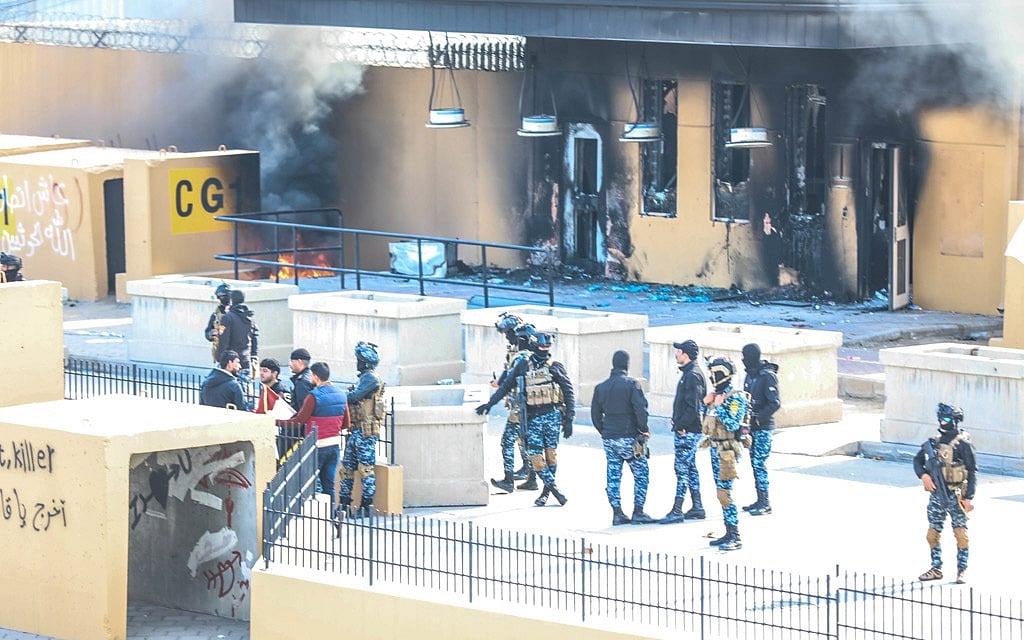
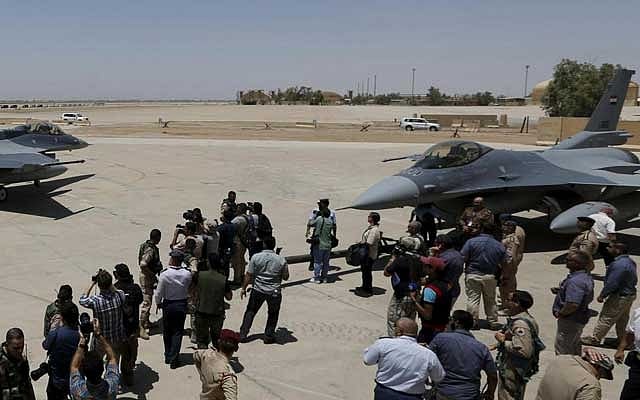
On Saturday evening, a rocket fell inside Baghdad's heavily-fortified Green Zone near the US Embassy, another hit the nearby Jadriya neighbourhood and two more rockets were fired at the Balad air base north of the city, but no one was killed, the Iraqi military said in a statement. There was no immediate claim of responsibility.
With security worries rising after Friday's strike, the NATO alliance and a separate US-led mission suspended their programmes to train Iraqi security and armed forces, officials said.
"The safety of our personnel in Iraq is paramount. We continue to take all precautions necessary," acting NATO spokesman Dylan White said in a statement.
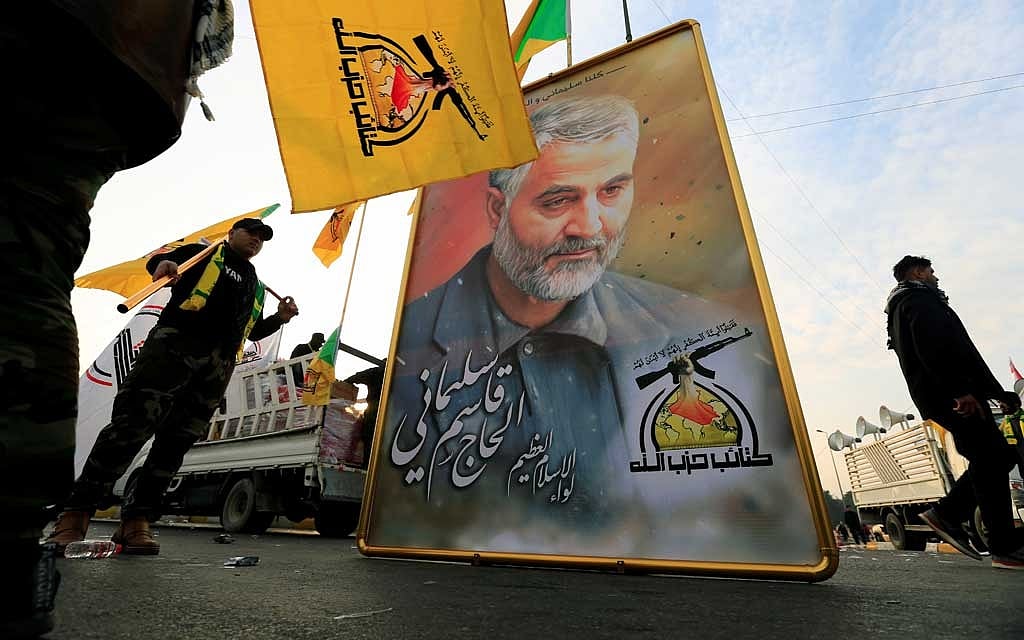
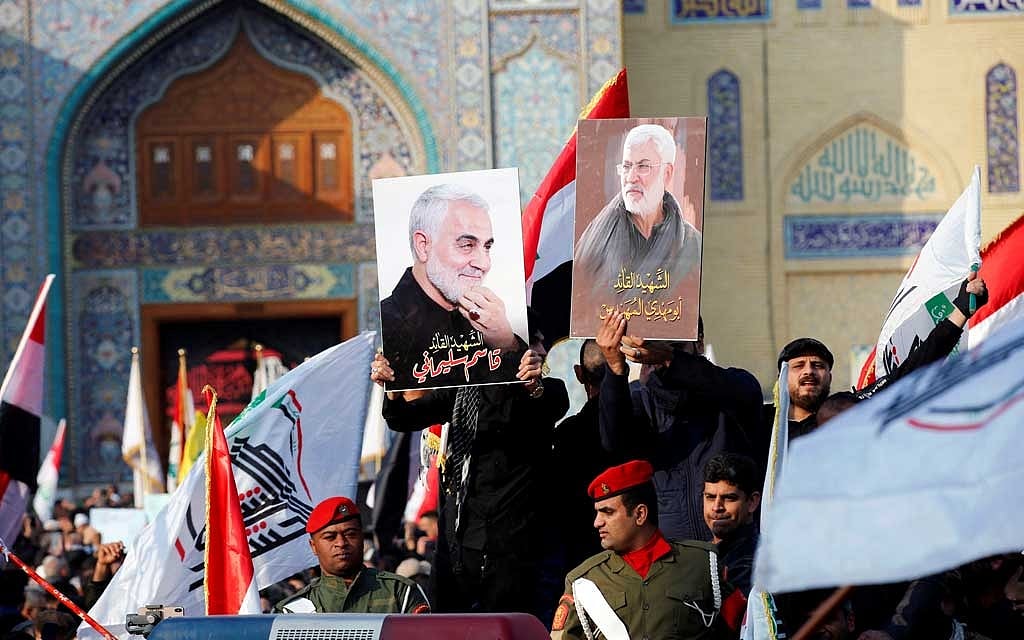
Kataib Hezbollah Iraqi militia hold the picture of the Iranian Major-General Qassem Soleimani, as they gather ahead of the funeral of the Iraqi militia commander Abu Mahdi al-Muhandis, who was killed in an air strike at Baghdad airport, in Baghdad, Iraq, Jan 4, 2020. REUTERS
France stepped up diplomatic initiatives on Saturday to ease tensions. French President Emmanuel Macron talked with Iraq President Barham Salih, Macron's office said.
"The two presidents agreed to remain in close contact to avoid any further escalation in tensions and in order to act to ensure stability in Iraq and the broader region," a statement from Macron's office said.
Macron also spoke with the de facto ruler of the United Arab Emirates, Abu Dhabi Crown Prince Sheikh Mohammed bin Zayed al-Nahyan.
Gholamali Abuhamzeh, a senior commander of the Revolutionary Guards, said Tehran would punish Americans "wherever they are in reach", and raised the prospect of possible attacks on ships in the Gulf.
The US Embassy in Baghdad urged American citizens to leave Iraq. Dozens of American employees of foreign oil companies left the southern Iraqi city of Basra on Friday.
Iraq's Kataib Hezbollah militia warned Iraqi security forces to stay away from US bases in Iraq, "by a distance not less than a thousand metres starting Sunday evening," reported Lebanese al-Mayadeen TV, which is close to Lebanon's Hezbollah.
The United States has been an ally of the Iraqi government since the 2003 US invasion to oust dictator Saddam Hussein, but Iraq has become more closely allied with Iran.
The top candidate to succeed Muhandis, Hadi al-Amiri, spoke over the dead militia commander's coffin: "The price for your noble blood is American forces leaving Iraq forever and achieving total national sovereignty."
The Iraqi parliament is convening an extraordinary session during which a vote to expel US troops could be taken as soon as Sunday.
Soleimani, 62, was Iran's pre-eminent military leader - head of the Revolutionary Guards' overseas Quds Force and the architect of Iran's spreading influence in the Middle East.
Muhandis was the deputy commander of Iraq's Popular Mobilisation Forces (PMF) umbrella body of paramilitary groups.
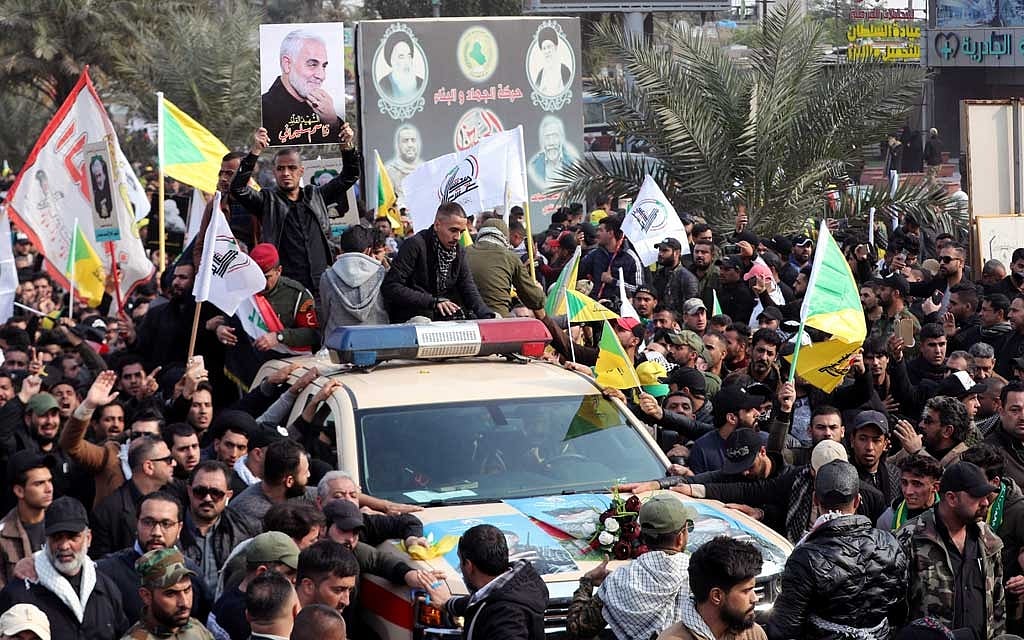
A PMF-organised procession carried the bodies of Soleimani and Muhandis, and those of others killed in the US strike, through Baghdad's Green Zone.
Mourners attend the funeral of the Iranian Major-General Qassem Soleimani, top commander of the elite Quds Force of the Revolutionary Guards, and the Iraqi militia commander Abu Mahdi al-Muhandis, who were killed in an air strike at Baghdad airport, in Baghdad, Iraq, Jan 4, 2020. REUTERS
Prime Minister Adel Abdul Mahdi also attended.
Mourners later brought the bodies by car to the Shia holy city of Kerbala, south of Baghdad, then to Najaf, another sacred Shia city, where they were met by the son of Iraq's top Shia cleric, Grand Ayatollah Ali al-Sistani, and where Muhandis and the other Iraqis killed will be laid to rest.
Soleimani's body will be transferred to the southwestern Iranian province of Khuzestan that borders Iraq. On Sunday it will be taken to the Shia holy city of Mashhad in Iran's northeast and from there to Tehran and his hometown Kerman in the southeast for burial on Tuesday, state media said.
US President Donald Trump said on Friday that Soleimani had been plotting imminent attacks on American diplomats and military personnel. Democratic critics said the Republican president's action was reckless and risked more bloodshed in a dangerous region.
The US strike followed a sharp increase in US-Iranian hostilities in Iraq since last week when pro-Iranian militia attacked the US embassy in Baghdad after a deadly US air raid on the Kataib Hezbollah militia, founded by Muhandis.
File Photo: US F-16 fighters jets are seen during an official ceremony to receive four of these aircrafts from the U.S. at the tarmac a military base in Balad, Iraq, July 20, 2015. Reuters
On Friday, Iranian Supreme Leader Ayatollah Ali Khamenei said Soleimani's death would intensify Tehran's resistance to the United States and Israel.
Abuhamzeh, the Revolutionary Guards commander in Kerman province, mentioned a series of possible targets for reprisals including the Gulf waterway through which about a third of the world's shipborne oil is exported to global markets.
"The Strait of Hormuz is a vital point for the West and a large number of American destroyers and warships cross there," Abuhamzeh was quoted as saying on Friday evening by the semi-official news agency Tasnim.
"Vital American targets in the region have long since been identified by Iran ... Some 35 US targets in the region as well as Tel Aviv are within our reach," he said, referring to Israel's largest city.
In Iran, some people worried that Soleimani's death might push the country into ruinous war with a superpower.
"I feel so sad for Soleimani's death but what if America and Iran start a war? I have children. What if they send my (university student) son to war?" said Monireh, a retired teacher.












