Published : 25 Dec 2015, 06:29 PM
Updated : 19 Oct 2022, 07:06 PM


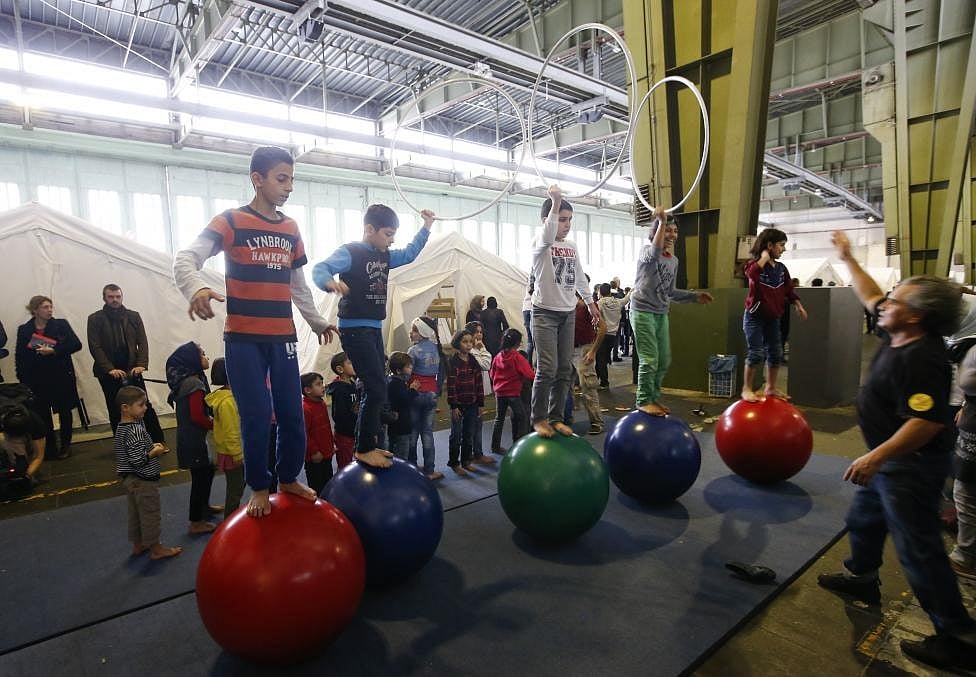
Children are playing in groups. The unrestrained laughter, the glee on their faces will not let you feel even for a moment what they have been through to get there.
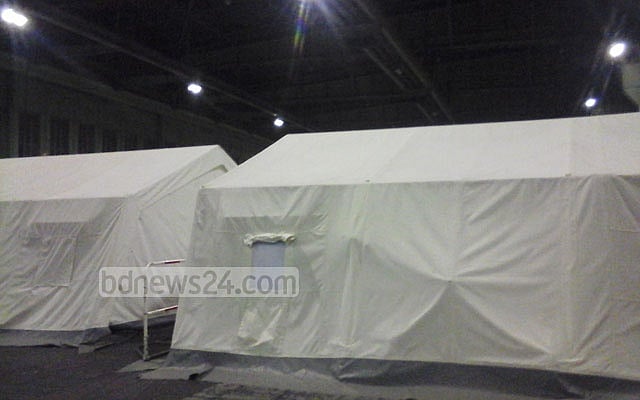
It’s Messe Berlin, a vast fairground in Berlin that has been turned into a refugee camp.
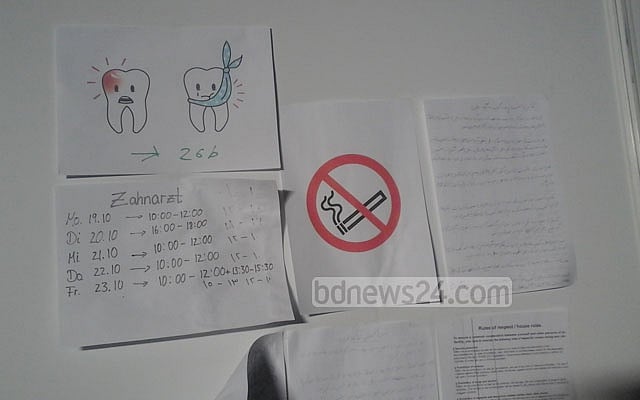
Sprawling across the ground are rows of tents with drawings hanging in front of each of them.
Asked what the drawings were for, camp coordinator Asia Afneh-Zureiki said, “The kids cannot read. These have been put up so that they can track which tent is theirs. They identify their tents through the drawings.”
This is just a glimpse of how sincere the Germans are about the wellbeing of the refugees.
Tempelhof. It was an airfield during the World War II but is now a refugee camp overseen by TAMAJA Soziale Dienstleistungen (Social Service).
Three of its aircraft hangers are now a temporary home to some 2,000 refugees, according to Maria Kipp, public relations officer of the NGO.
Some 3,000 refugees have found a shelter for them here.
Some refugees from different countries were found hanging out in a café, run by international NGO Karitas. A few Germans were found there, too. The city authorities were cooperative to the initiative to help them get along.
“Germany good,” said Ahmed, an Afghan youth from the refugee camp there.
This was the picture of the refugee camps in Germany two weeks back.
The German external affairs ministry invited nine journalists of nine media houses from as many countries of Asia to visit the refugee camps. bdnews24.com was chosen from Bangladesh.
A million refugees were added to the 80 million population of the country.
While most of the refugees are from war-torn Syria, there are many from Afghanistan, Iraq, Eritrea and some Balkan states.
Europe faced its worst humanitarian crisis since the World War II when the Syrians displaced by the civil war and the ISIS brutalities landed on Europe’s shores in droves. While many countries of the world’s richest continent refused to accept the refugees, German Chancellor Angela Merkel opened the doors to them.
While the helpless refugees were being let down in Bulgaria and Hungary, the Germans stood up with ‘Willkommen’ banners in solidarity with Merkel’s decision.
But this is nothing new; in fact, it’s part of the German culture, claims Deputy Professor Dr Vassilis Tsanios of Kiel University of Applied Sciences.
Asked why migrants prefer Germany as their destination, Dr Tsanios said, “Germany's integration system is forward-looking.”
When asked if Germany has any sort of reservations about the Muslim refugees following the Paris attacks, the professor replied in the negative.
Not only the displaced ones, many fortune seekers, too, are going to the country with the fourth largest economy in the world.
But Germany does not differentiate between them.
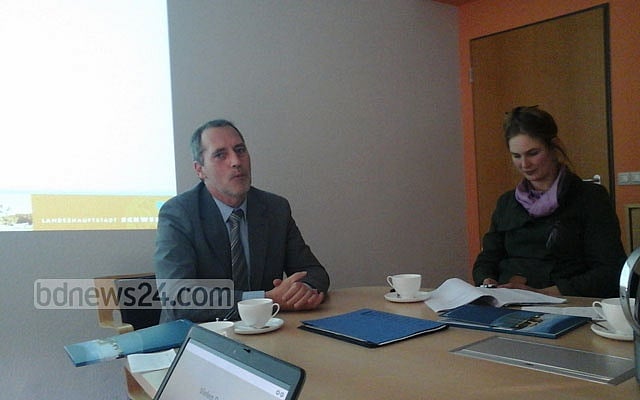
“Refugees are our asset. They give us profits,” says Andreas Ruhl, Deputy Mayor of Schwerin.
For a better life
Ataullah is an 18-year-old youth working with the organisers of the Messe Berlin.
Of the refugees in the camp, 30 percent are from Afghanistan and another 30 percent are Syrians, said Asia Afneh-Zureiki.
Language is a major communication carrier for the refugees. So those who speak English among them are assigned as interpreters.
A Pashtu speaker originally from Afghanistan’s Kunduz, Ataullah works as an interpreter.
From Afghanistan, he first went to Iran and then to Iraq, Jordan, Turkey, Bulgaria, Serbia, Hungary and Austria before finally arriving in Germany.
To come cover a huge distance, he sometimes had to walk for miles at a stretch or sometimes take a boat or a bus.
He paid brokers $8,000 to help him get there. He had to borrow the money from friends.
Asked why he left his family to be here, Ataullah said, “I hate Taliban. They are not good people.”
He said he was facing no problem in the refugee camps. A place to stay, warm clothes and good medical care -- everything was there.
“We are very happy. The discipline here is very good. The Germans behave very good,” he said in broken English.
There were many like Atuallah who had come to Germany to escape an uncertain life in their home countries. Many were found using smart-phones and browsing the internet.
But Mustapha was not like them. He had come from Baghdad in Iraq with his wife and three sons.
The eldest, a 12-year-old, was crippled. The second son, aged 6, too had a partially damaged hand. The brothers were victims of a roadside bomb explosion.
Mustapha found it better to be a refugee and live safely than to live in his country in fear and uncertainty. Some Syrian youths, too, talked about how unsafe their life was at home.
Some said they wanted to study. Some even want to become journalists.
But the curriculum they had studied at home does not comply with the education system of Germany. So, many of them were planning to pursue technical education.
After registering as refugees, they get 100 Euros a month. But they sometimes face hassles when drawing the allowance.
The Afghan refugees meanwhile allege that the Syrians are being given priorities.
Officials of the department of migration of the German internal affairs ministry said this was indeed being done because war is still raging in Syria.
German soldiers are working for stability in Afghanistan. To reduce the refugee influx from the country, Germany in association with the Afghan government is carrying out campaigns against illegal migration.
Though Afghan President Ashraf Ghani has urged the citizens of his country to return home and work to rebuild the nation, the Afghan refugees in Germany refuse to go back, for fear of the ‘bad people’ Taliban.