


Published : 25 Mar 2019, 02:34 AM
Updated : 17 Oct 2022, 11:37 AM


Barr also said that Mueller’s team drew no conclusions about whether Trump illegally obstructed justice. Barr and Deputy Attorney General Rod Rosenstein determined that the special counsel’s investigators lacked sufficient evidence to establish that Trump committed that offense, but added that Mueller’s team stopped short of exonerating Trump.
“While this report does not conclude that the president committed a crime, it also does not exonerate him,” Barr quoted Mueller as writing.
The findings delivered a significant political victory for the president, one he almost immediately began to trumpet. “No Collusion, No Obstruction, Complete and Total EXONERATION. KEEP AMERICA GREAT!,” Trump tweeted an hour after the release of the findings.
Barr delivered the summary of the special counsel’s finding to Congress on Sunday afternoon, just days after the conclusion of a sprawling investigation into Russia’s attempts to sabotage the 2016 election and whether Trump or any of his associates conspired with Moscow’s interference.
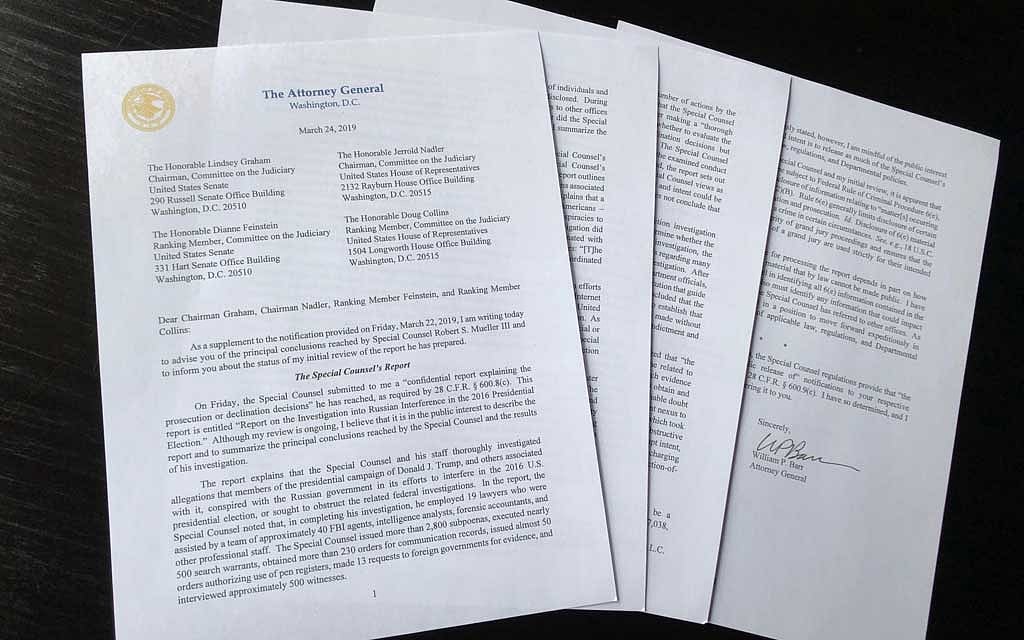
TEXT-Letter from US attorney general to Congress on Mueller report |
But congressional Democrats have demanded more, and the release of the key findings could be just the beginning of a lengthy constitutional battle between Congress and the Justice Department about whether Mueller’s full report will be made public. Democrats have also called for the attorney general to turn over all of the special counsel’s investigative files.
Shortly after the release of the Mueller findings, Rep. Jerrold Nadler, D-N.Y., chairman of the House Judiciary Committee, said on Twitter that he plans to call Barr to testify about what he said were “very concerning discrepancies and final decision making at the Justice Department,” seemingly referring to the attorney general’s conclusion that the president did not obstruct justice.
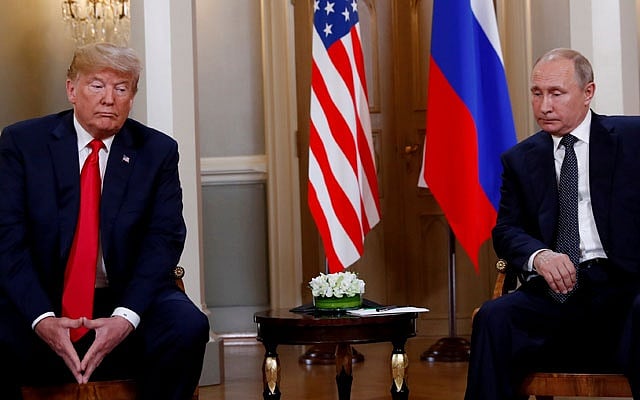
FILE PHOTO: US President Donald Trump meets with Russian President Vladimir Putin in Helsinki, Finland, Jul 16, 2018. Reuters
Ultimately, a half-dozen former Trump aides were indicted or convicted of crimes, most for conspiracy or lying to investigators. Twenty-five Russian intelligence operatives and experts in social media manipulation were charged in 2018 in two extraordinarily detailed indictments released by the special counsel. The inquiry concluded without charging any Americans for conspiring with the Russian campaign.
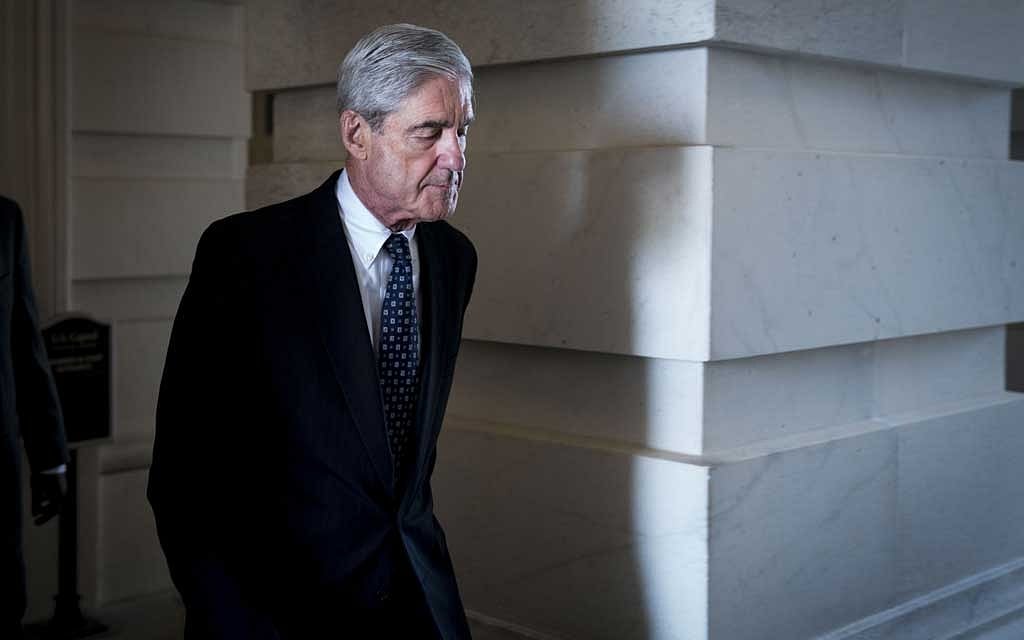
FILE — Robert Mueller, the special counsel in the Russia inquiry, leaves meetings on Capitol Hill in Washington, June 21, 2017. Mueller has delivered a report on his inquiry into Russian interference in the 2016 election to Attorney General William Barr, according to the Justice Department on March 22, 2019, bringing to an apparent close an investigation that has consumed the nation and cast a shadow over President Donald Trump for nearly two years. (Doug Mills/The New York Times)
How many minds it changes is another matter. Opinions have hardened over time, with many Americans already convinced they knew the answers before Mueller submitted his conclusions. Some believe that the special counsel’s previous indictments, twinned with voluminous news media reporting, have already shown a conspiracy between the Trump campaign and the Kremlin. Some believe that the investigation is, as Trump has long described it, a “witch hunt.”
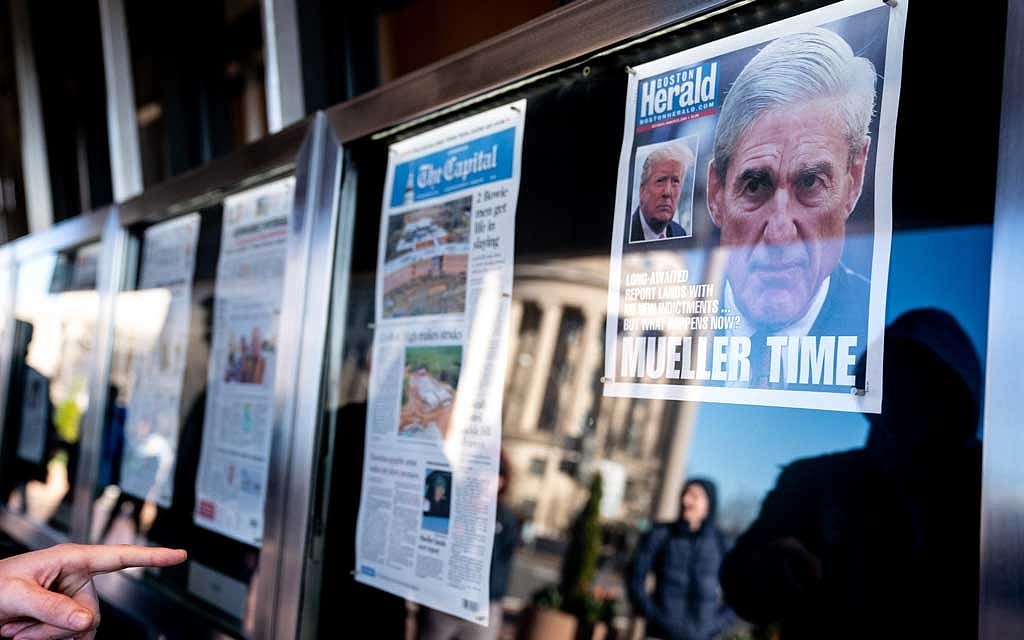
A person points at Saturday front pages of newspapers from across the country that announce Robert Mueller has finished his report, outside the Newseum in Washington, March 23, 2019. The special counsel’s work may be done, but prosecutors in Manhattan and elsewhere are pursuing investigations into the president’s family business and more. (Erin Schaff/The New York Times)
Still, the release of Mueller’s findings could force a decision by Democrats on a simmering issue they have said would wait until the investigation’s end: whether to begin impeachment proceedings against the president. House Speaker Nancy Pelosi, D-Calif., has said it would not be “worth it” to try to impeach Trump, but suggested she could change her mind if an overwhelming bipartisan consensus emerged.
For months, the president and his lawyers have waged as much of a public-relations campaign as a legal one — trying to discredit the Mueller investigation to keep public opinion from swaying lawmakers to move against Trump.
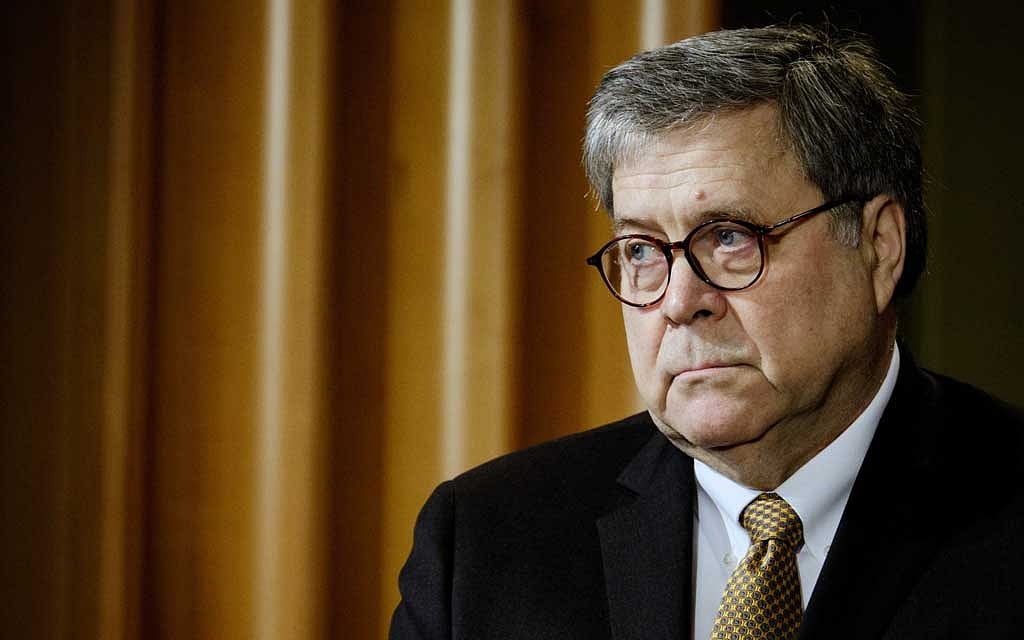
FILE -- Attorney General William Barr speaks about elder fraud at a news conference in Washington, March 7, 2019. Some information from Robert Mueller’s report into Russian election interference is expected to come out because Barr has to update Congress, but that does not mean the entire report will be public. (T.J. Kirkpatrick/The New York Times)
Mueller was still given a wide mandate — to investigate not only Russian election interference but “any matters that may arise directly from that investigation.” Mueller has farmed out numerous aspects of his inquiry to several US attorneys’ offices, and those investigations continue.
US Attorney General William Barr's four page letter to US congressional leaders on the conclusions of Special Counsel Robert Mueller's report on Russian meddling in the 2016 election is seen after being released by the House Judiciary Committee in Washington, US March 24, 2019. Reuters
“It’s important,” Rosenstein said, “for government officials to refrain from making allegations of wrongdoing when they’re not backed by charges that we are prepared to prove in court.”
© 2019 New York Times News Service













