Published : 05 Oct 2026, 11:39 AM
Updated : 05 Oct 2026, 11:39 AM


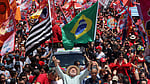
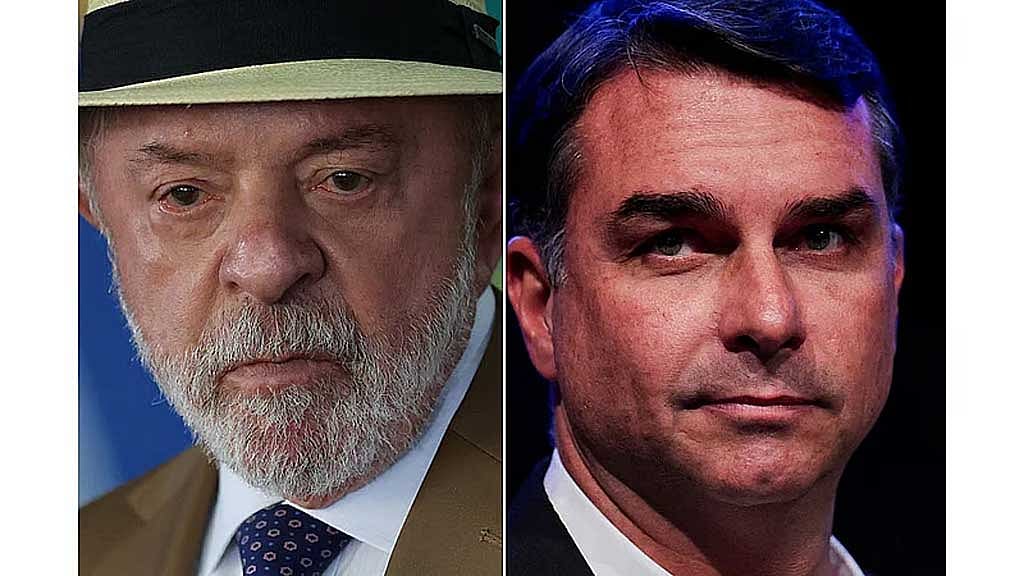
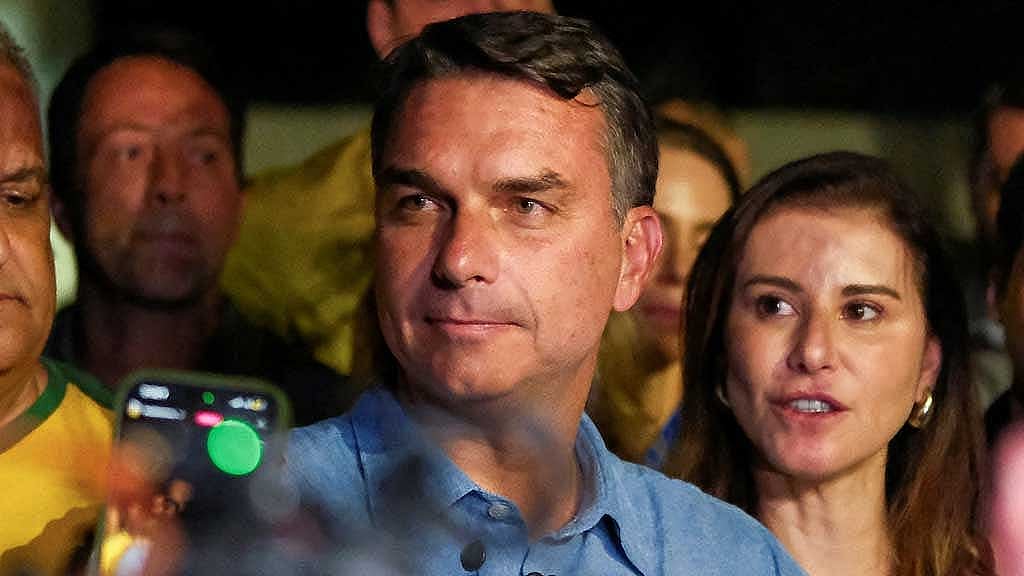
Flavio Bolsonaro's surprise first-round lead has turned Brazil's presidential runoff into something much bigger than a domestic contest between right and left.
Bolsonaro took about 47 percent of the vote on Sunday, ahead of President Luiz Inacio Lula da Silva on 45 percent, sending Latin America's largest economy to an Oct 25 runoff.
But outside Brazil, the contest is also being followed as a potentially consequential choice over the country's place between Washington and Beijing.
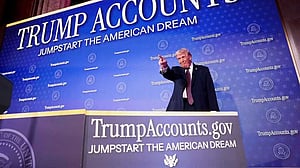
Bolsonaro has cultivated close ties with US President Donald Trump and called for stronger ties with Washington, including long-term cooperation over Brazil's vast reserves of rare earths and other critical minerals.
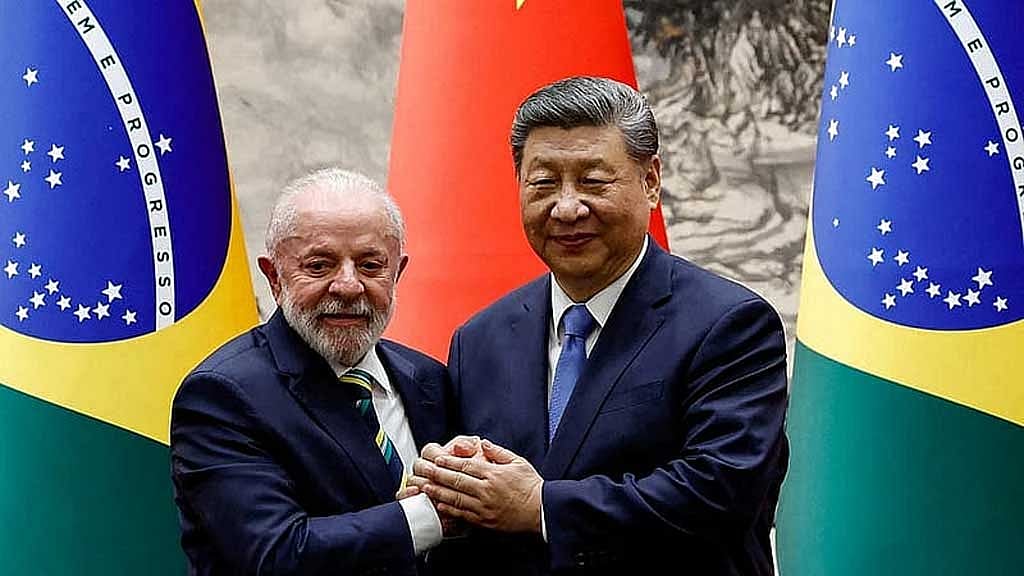
Lula has followed a markedly different course. He has strengthened relations with China, revived Brazil's leadership role within BRICS and made sovereignty and strategic autonomy central to his foreign policy, insisting that Brazil should not fall into any major power's sphere of influence.
A Bolsonaro victory would therefore raise a much wider question: could one of the most influential powers in the Global South tilt significantly closer to Trump's Washington — and what would that mean for China, BRICS and the wider contest for influence across the developing world?
Bolsonaro's Bet on Trump
The relationship with Trump is not merely ideological.
Bolsonaro met Trump in the Oval Office in May, in a closed-door meeting where the two discussed organised crime, tariffs and cooperation over rare earths and other critical minerals.
His campaign has also advocated closer economic ties with Washington, including long-term strategic partnerships on rare earths and other critical minerals, while arguing that Brazil could offer the US an alternative to Chinese supply.
That approach contrasts sharply with Lula's strained relationship with the Trump administration.
Washington imposed a new 25 percent tariff on thousands of Brazilian products in July, affecting about $7 billion of exports, while Lula accused the US of using economic pressure to interfere in Brazil's politics.
At the UN in September, he warned against renewed "hegemonic ambitions" in Latin America and said Brazil did not belong in anyone's "backyard".
Yet Lula has continued negotiating with Washington on trade and critical minerals, underscoring an important point: the choice facing Brazil is not simply between the US and China, but over how closely it should align with either.
Brazil Between Washington and Beijing
That balancing act is particularly difficult because China is already deeply embedded in Brazil's economy.
China remained Brazil's largest trading partner in 2025, taking about $100 billion of Brazilian exports — nearly 30 percent of the country's total overseas sales. Exports to the US, Brazil's second-largest destination, were worth about $37.7 billion.
Brazilian agriculture is especially tied to Chinese demand. China bought more than $55 billion of Brazilian farm products in 2025, including $34.5 billion of soybeans and almost $10 billion of meat.
That makes any clean break with Beijing highly improbable, regardless of who wins the election.
A Bolsonaro government could become much more politically and strategically aligned with Washington while continuing to sell enormous quantities of soybeans, iron ore, oil and other commodities to China.
The more realistic prospect is therefore a rebalancing rather than Brazil "switching sides".
The Prize Beneath the Politics
Nowhere is that competition clearer than in critical minerals.
Brazil is estimated to hold 21 million tonnes of rare-earth reserves, the world's second-largest total after China, according to US Geological Survey data.
Rare earths are vital to products ranging from smartphones and electric vehicles to wind turbines, jet engines and advanced defence systems.
China still accounts for roughly 70 percent of global rare-earth mining and about 85 percent of refining capacity, giving Beijing enormous leverage over industries dependent on the materials.
Western investment in Brazil has consequently accelerated.
USA Rare Earth acquired Brazilian miner Serra Verde for about $2.8 billion earlier this year, after receiving substantial US government backing. More recently, Australia's Lynas Rare Earths agreed a $672 million takeover of Meteoric Resources, gaining access to the Caldeira project in Minas Gerais.
Brazil has meanwhile created a National Policy on Critical and Strategic Minerals. Lula signed the law on Sept 16, with domestic processing and adding value inside Brazil among its central objectives.
That fits Lula's broader argument that Brazil should not simply export raw minerals. His government has sought foreign investment while insisting on greater domestic processing and resisting exclusive arrangements that would prevent Brazil from selling to other countries.
Bolsonaro's pitch is different: he has explicitly presented Brazil as a potential strategic alternative to China for the US and proposed a long-term minerals partnership with Washington.
That makes critical minerals one of the clearest areas where the runoff could have consequences well beyond Brazil.
What Could Change for BRICS?
The implications could be just as significant for BRICS.
Brazil was one of the four original BRIC countries, alongside Russia, India and China. The group formally came together in 2009. South Africa joined in 2011, creating BRICS, before it expanded further with Egypt, Ethiopia, Iran and the UAE in 2024 and Indonesia in 2025.
Under Lula, Brazil has again become an active advocate of the bloc and its push for greater influence for emerging economies in global institutions.
But BRICS itself contains competing visions.
Russia and China tend to see it more explicitly as a counterweight to Western influence, while Brazil and India have placed greater emphasis on economic cooperation and reforming existing international institutions.
The bloc is nevertheless pursuing deeper cooperation in areas including trade, finance, payment systems and artificial intelligence, while promoting greater use of local currencies and greater representation for emerging economies in global institutions.
A Bolsonaro government would not necessarily mean Brazil leaving BRICS. Bolsonaro has not campaigned on withdrawal.
But a government more closely aligned with Trump could be less enthusiastic about deeper BRICS coordination where it conflicts with closer US ties.
That could complicate the bloc's efforts to present a coherent position for the Global South, particularly at a time when Trump has called BRICS "anti-American" and threatened tariffs over moves aimed at reducing reliance on the dollar.
The Global South Stakes
The wider significance lies in Brazil's unusual position.
It is simultaneously a Western Hemisphere democracy, an agricultural and mineral power, a leading developing economy and one of the founding pillars of BRICS.
That has allowed Brazilian governments to maintain relationships with Washington, Beijing, Europe and developing nations without fully joining any geopolitical camp.
Lula has made that autonomy a central part of his international identity.
Bolsonaro offers a substantially more US-facing alternative at a time when several countries in Latin America have moved politically to the right. Reuters says recent conservative victories and Lula's confrontational relationship with Washington have left him increasingly isolated in the Western Hemisphere.
A Bolsonaro victory could therefore give Trump a much friendlier partner in the region's dominant economy, create opportunities for deeper US involvement in strategic mineral supply chains and reduce some of China's diplomatic room in Brasilia.
But the constraints would be substantial.
China's importance to Brazilian exporters, billions of dollars in existing investment, Brazil's established BRICS relationships and its longstanding preference for diplomatic autonomy would all make wholesale realignment difficult.
The Oct 25 runoff is therefore unlikely to determine whether Brazil simply chooses Washington or Beijing.
What it could determine is how one of the Global South's most important powers balances between them, and whether Brazil continues using its weight to strengthen BRICS and strategic autonomy, or begins leaning much more decisively towards Trump's United States.