Libyan PM dismissed
Libya's PM-elect Mustafa Abu Shagur fails for a second time to win parliamentary approval for a new government.
bdnews24.com News Service
bdnews24.com
Published :
08 Oct 2012, 05:14 AM
Updated :
09 Aug 2022, 04:20 PM
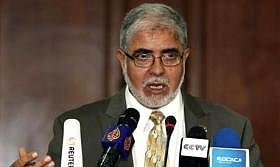
Tripoli, Oct 8 (bdnews24.com)—The Libyan General National Congress (GNC) on Sunday dismissed Prime Minister Mustafa Abu Shagur, who failed twice to win its approval for a new cabinet.
Shagur had called for the formation of an emergency government of just 10 ministries in his latest proposal, opposed to his previous call for the formation of 29 ministries.
BBC reported that the General National Congress had voted 125 to 44 against the proposal, while 17 members abstained from voting.
He was the first elected prime minister after Col Muammar Gaddafi's government toppled last year.
He had served as deputy prime minister for more than a year under interim leader Abdurrahim al-Keib.
The Libyan Parliament now has three-four weeks to elect a new Prime Minister.
Emergency government
Before the vote Shagur was quoted as telling the parliament that his proposal for 10 ministry-based emergency government was a proposal to lead Libya with no regionalism, and urged members to "assume its responsibilities at this historic time".
"In face of the dangers threatening the country, I present to you a crisis government restricted to 10 ministers, rejecting all geographical considerations," Shagur earlier told the GNC, BBC reported.
His first cabinet line-up was rejected late on Thursday on the basis that it was not representative of important regions and lacked qualified members.
Some cities like Zawiya, Benghazi, and Misrata, lost a lot of fighters during the battle to overthrow Gaddafi, and are demanding greater representation in the new government, according to the BBC report.
During the assembly debate, protesters - mostly from Zawiya - stormed the Congress building in the capital Tripoli, calling for the prime minister's resignation.
Shagur had initially aimed for a unity government and what he described as "people with merit" to work with him.
However, he said that when he consulted with political parties, some had pursued their own agendas. He said one party had demanded 11 seats, and another nine.
Shagur has said he would not give in to pressure and political games.
He studied at the University of Tripoli before moving to the US, where he earned a PhD and worked as an academic and optical engineer.
Shagur returned in 2011 to become an adviser to the National Transitional Council, which was formed during the revolt that ousted Gaddafi.
In September, he was elected by the national assembly to be the country's next prime minister, in a run-off vote in which he narrowly beat Mahmoud Jibril - who served as interim prime minister following the overthrow of the regime.
bdnews24.com/rn/1041h