


Published : 14 Apr 2015, 12:32 AM
Updated : 23 Apr 2022, 12:35 PM


Success, however, depends on whether the US Congress, which returns from recess this week, approves measures to ease passage of trade deals, or trade promotion authority (TPA), Japanese officials have said.
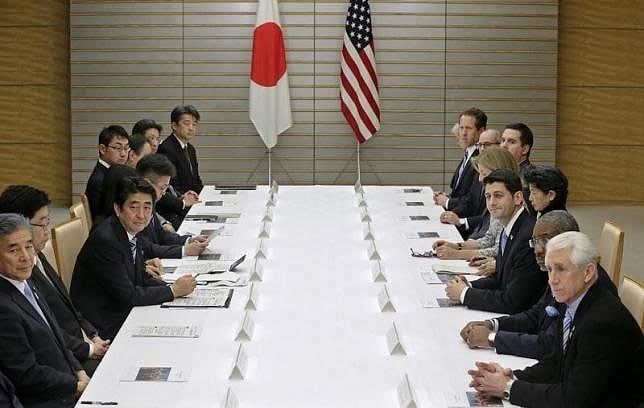
Prime Minister Shinzo Abe will meet US President Barack Obama on April 28 in Washington at a summit that will also focus on security issues.
Japan said US Acting Deputy Trade Representative Wendy Cutler and USTR Chief Agriculture negotiator Darci Vetter would travel to Tokyo for talks with Japan's deputy chief trade negotiator, Hiroshi Oe, and economic ambassador Takeo Mori.
Discussions are expected to tackle gaps remaining over agriculture and the auto industry.
"We think it would be good if the two leaders could announce something positive," a Japanese government source said recently. "We are hoping that the US-Japan can send a good message."
Japan wants to protect farm products such as rice, wheat, sugar, dairy, beef and pork, while the United States argues Japan has non-tariff barriers in its auto sector.
Both allies, however, are keen for a TPP deal they see as central to America's "rebalance" of its strategic focus to Asia, in response to China's growing clout.
"I don't know if they (Abe and Obama) will use the word 'agreement'," said another Japanese source.
"There are lots of possible expressions such as 'good discussions', 'significant progress', 'epoch-making progress' or 'steady progress'."
Japan's economy minister, Akira Amari, has urged Washington to push the TPA through Congress and expressed hope he can meet US Trade Representative Michael Froman to clinch a trade deal before the summit.
Abe has cited agricultural reform among the key structural changes needed.
Last Thursday, Akira Banzai, head of powerful farming lobby group JA-Zenchu, said he would resign in August after the cabinet approved a bill weakening the group's clout and freeing up cooperatives.
That resignation could strengthen Abe's hand in reaching a deal, some experts said.
Not all farmers oppose TPP, said Hidehiko Sogano, manager of the Bank of Japan branch in Sapporo, capital of the rural Hokkaido district.
"They are not unilaterally opposed and it is certain that farmers who think it is important to use TPP and create a strong agriculture sector are increasing," he told reporters.
A strong showing by Abe's ruling bloc in local elections could also help in reaching a deal.











