'Japan on maximum alert'
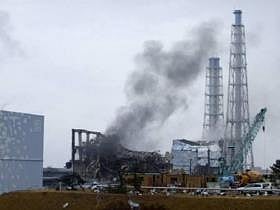
The Japanese government is in a state of maximum alert over the crippled Fukushima nuclear plant, says prime minister Naoto Kan.
bdnews24.com News Service
bdnews24.com
Published :
29 Mar 2011, 07:06 AM
Updated :
10 Aug 2022, 04:33 PM
Tokyo, Mar 29 (bdnews24.com) -- Japanese prime minister Naoto Kan has said his government is in a state of maximum alert over the crippled Fukushima nuclear plant, says a BBC report.
Plutonium has been detected in soil at the facility and highly radioactive water has leaked from a reactor building.
Officials say the priority continues to be injecting water to cool the fuel rods.
Kan told parliament the situation "continues to be unpredictable".
The government "will tackle the problem while in a state of maximum alert", he said, adding that he was seeking advice on whether to extend the evacuation zone around the plant.
Meanwhile, national strategy minister Koichiro Gemba said the government could consider temporarily nationalising Tepco, the company running the plant.
On Monday, shares in the company dropped to their lowest level in three decades.
'VERY GRAVE'
Chief cabinet secretary Yukio Edano, in another press briefing, described the situation at Fukushima as "very grave", the BBC report says.
Workers are battling to restore power and restart the cooling systems at the stricken nuclear plant, which was hit by a quake and tsunami over two weeks ago.
Continue reading the main story
FUKUSHIMA UPDATE (28 MAR)
* Reactor 1: Damage to the core from cooling problems. Building holed by gas explosion. Highly radioactive water detected in reactor
* Reactor 2: Damage to the core from cooling problems. Building holed by gas blast; containment damage suspected. Highly radioactive water detected in reactor and adjoining tunnel
* Reactor 3: Damage to the core from cooling problems. Building holed by gas blast; containment damage possible. Spent fuel pond partly refilled with water after running low. Highly radioactive water detected in reactor
* Reactor 4: Reactor shut down prior to quake. Fires and explosion in spent fuel pond; water level partly restored
* Reactors 5 & 6: Reactors shut down. Temperature of spent fuel pools now lowered after rising high
* Q&A: Fukushima radiation alert
* A new way to look at radiation
"We are doing our utmost efforts to contain the damage," he said.
"We need to avoid the fuel rods from heating up and drying up. Continuing the cooling is unavoidable... We need to prioritise injecting water."
But he said work to safely remove contaminated water was also a priority.
On Monday highly radioactive water was found for the first time outside one of the reactor buildings at Fukushima plant.
The leak in a tunnel linked to the No 2 reactor has raised fears of radioactive liquid seeping into the environment.
Plutonium - used in the fuel mix for one of the six reactors - has also been found in soil at the plant, but not at levels that threaten human health, officials say.
Correspondents say the government has been accused of indecision and delay in tackling the crisis.
Tepco, meanwhile, was criticised by the government after issuing incorrect radiation readings.
On Sunday it said radiation levels at reactor No 2 were 10 million times higher than normal, before correcting that figure to 100,000 - something the government called "absolutely unacceptable".
It has also been accused of a lack of transparency and failing to provide information more promptly.
Regional fallout
Officials in China, South Korea and the United States say they have recorded traces of radioactive material in the air.
The US Environmental Protection Agency said it had detected traces of radiation in rain water in the north-east of the country.
Continue reading the main story
A child holds bottled water in Tokyo, Japan (24 March 2011)
bdnews24.com/ah/mr/1300h