Published : 25 Aug 2023, 07:30 PM
Updated : 25 Aug 2023, 07:30 PM


Russian and US space authorities have agreed an additional flight for an American astronaut on board Russia's Soyuz MS spacecraft, Interfax news agency said on Friday, in a rare sign of bilateral cooperation at a time of high tension over Ukraine.
The flight is part of an agreement between Russia's space agency Roscosmos and NASA in the United States on cross-flights to the International Space Station (ISS).
"One of the Americans has been essentially left (on board the ISS) for two missions. We have added another flight to compensate for the time spent at the station," Sergei Krikalev, executive director of the state corporation for manned programmes, told Interfax.
"This is a mutually beneficial business, we interact with each other and look for the best option. In principle, a good story - the exchange of flights - adds a little reliability to our programme," he said.
Washington and Moscow have maintained cooperation in space despite relations hitting their lowest in decades over the Ukraine conflict, with astronauts stationed together at the ISS, and also ferried back and forth jointly.
Under an agreement signed last year as part of the ISS programme on cross flights, three Russian cosmonauts were to fly on the United States' Crew Dragon spacecraft and three US astronauts on Russia's Soyuz MS during 2022-2024.
Russia has said it will quit the ISS and launch its own independent space station at some time in the future, though plans for how and when remain under discussion.
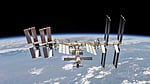
The ISS, a science laboratory spanning the size of a football field and orbiting some 250 miles (400 km) above Earth, has been occupied continuously for more than two decades under a US-Russian-led partnership that also includes Canada, Japan and 11 European countries.
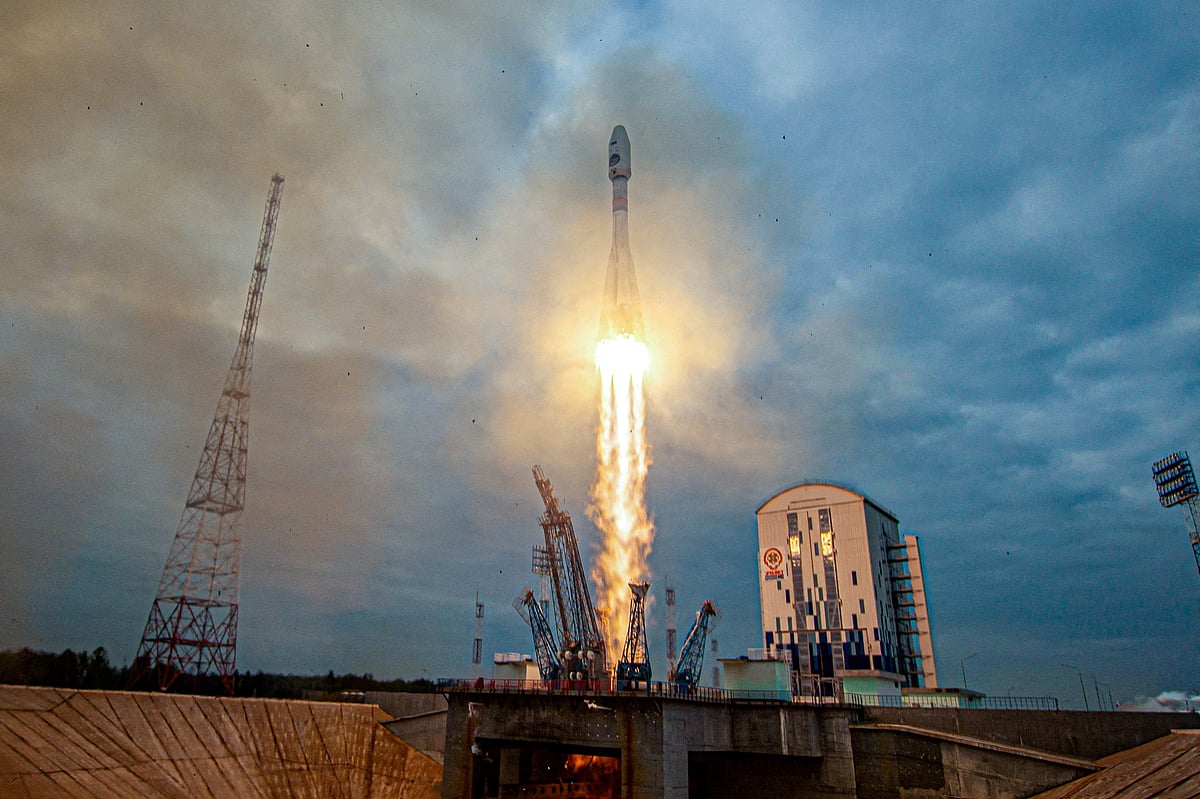
Russia's space programme suffered a big setback this week when its unmanned Luna-25 spacecraft crashed while attempting to land on the south pole of the moon, three days before India's Chandrayaan-3 successfully managed to do so,