


Published : 02 Aug 2019, 12:26 AM
Updated : 17 Oct 2022, 11:43 AM



But both he and his employer know that, despite their efforts, federal police officers could walk in any day and arrest and deport Barry, a 37-year-old who made his way from Gambia, because his refugee status has been rejected.
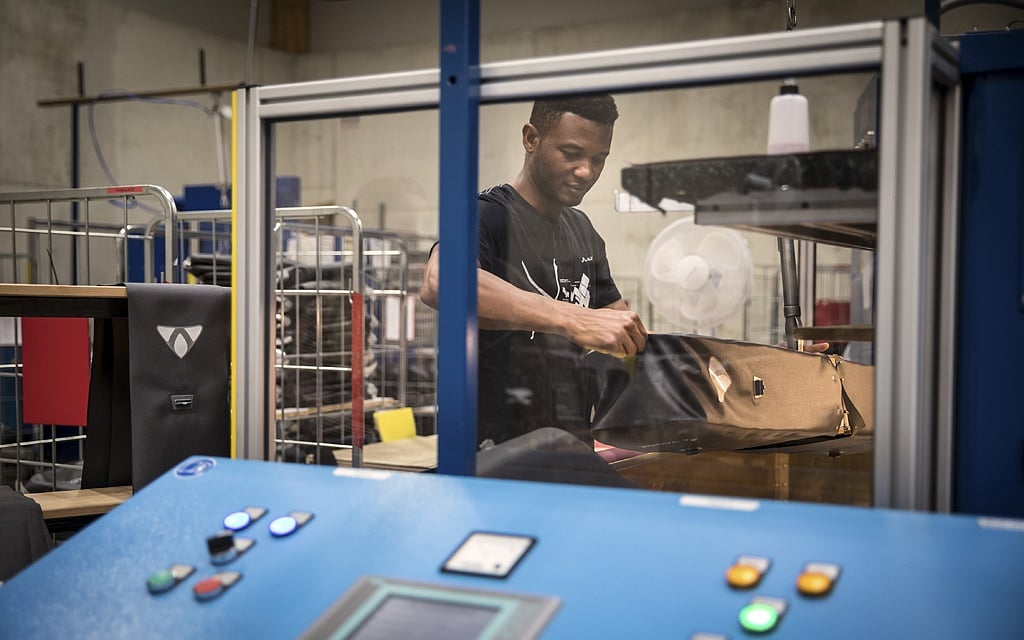
“I feel great doing my work,” Barry said, while taking a break from working a machine that makes waterproof bicycle bags. “I would like to stay in Germany, if given the chance.”
Barry could be held up as an emblem of what many experts say is a quiet success story of integration for a growing number of migrants in Germany. Instead, his situation reflects the conflicting impulses that have come to define the country’s immigration policies.
Germany has successfully integrated big numbers of asylum-seekers. Many businesses desperate for workers badly want them to stay, even as the country steps up deportations of those who do not qualify.
Those competing strands have come to define a two-pronged approach as the government of Chancellor Angela Merkel tries to address an urgent need for immigrants to sustain the workforce while holding off challenges from the nationalist far right.
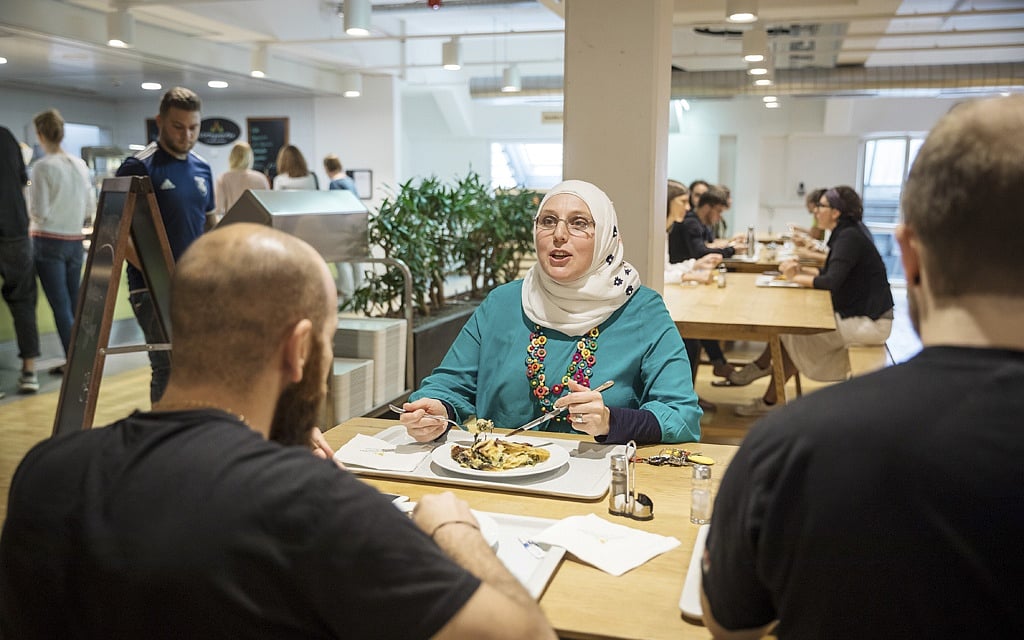
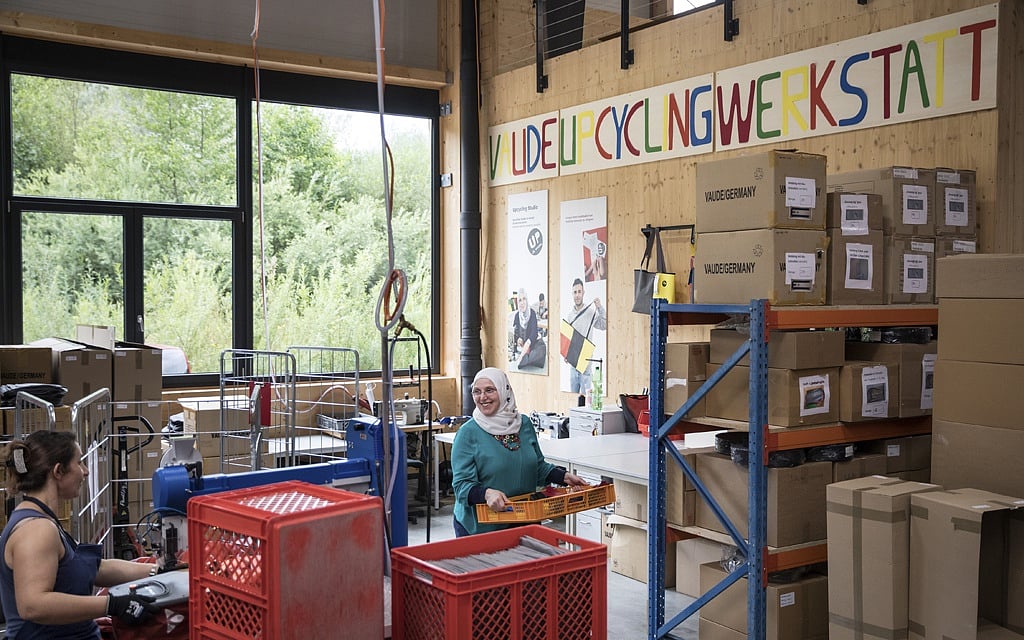
Noura Baterdouk, a 38-year-old mother of three from Syria, works at Vaude in Tettnang, Germany, July 11, 2019. More than a third of asylum seekers in the country work full-time. Yet many could still be forced to leave, to the frustration of many employers. (Gordon Welters/The New York Times)
Merkel accepted them, telling Germans, “We can do this.” That decision set off a wrenching debate about what it means to be German, fuelled a backlash on the far right, and will help define the chancellor’s legacy after 14 years in power.
But lost in the angst over Merkel’s decision is the fact that her country is largely doing what she asked of it. Employment statistics indicate that Germany is doing good on her pledge to get asylum-seekers into homes, language classes and jobs, experts say.
Of those who arrived in Germany in 2015, about 20% had found work by the end of 2017, according to government statistics. By the end of last year, the number had grown to 35%.
“The longer they are in the country, the more they are passing their language exams and entering the job market,” said Yuliya Kosyakova, one of the researchers who conducted the survey. “And in many circumstances, it is happening faster than we expected.”
The last time Germany experienced the arrival of hundreds of thousands of people seeking protection was in the 1990s from the wars that had torn apart the former Yugoslavia. They were given shelter and food, but little in the way of training or assistance in entering the job market.
Abdoulie Barry, a 37-year-old from Gambia whose asylum claim was rejected, working at Vaude in Tettnang, Germany, July 11, 2019. Barry has appealed his rejection. More than a third of asylum seekers in the country work full-time. Yet many could still be forced to leave, to the frustration of many employers. (Gordon Welters/The New York Times)
“There was a conscious effort to integrate people through language lessons, apprenticeships and employment, so that they weren’t damned to doing nothing and would take a skill back with them when it was time to return,” Terton said.
German law is clear: Although an asylum-seeker can be given the right to work while their application is pending, if a rejection is final, they are required to leave the country.
In the southwestern state of Baden-Württemberg, where Barry works, employers estimate that about 35,000 migrants with uncertain status are working full-time and paying taxes.
Not only would many of those applicants like to stay, but their employers, having already invested sometimes years in job training, say they would like to keep them.
Antje von Dewitz, Barry’s boss and the chief executive of the company where he works, Vaude, is one of them.
“Looking back, it’s obvious that they were still being checked as to whether they qualify for asylum,” von Dewitz said of the six employees who remain in limbo among the 11 refugees whom she employs.
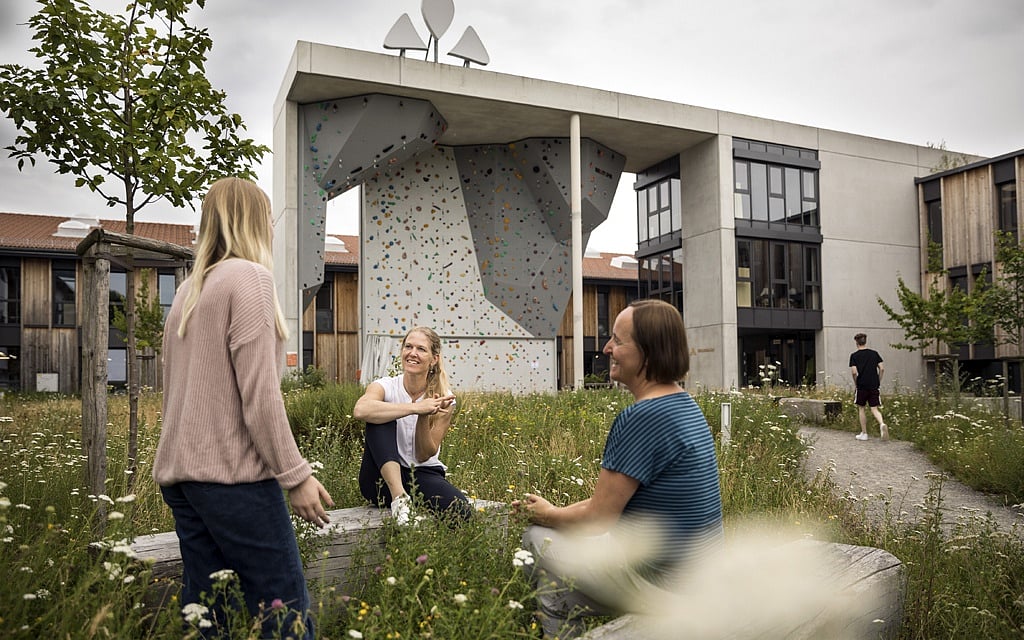
Antje von Dewitz, center, chief executive of Vaude, speaks with employees in Tettnang, Germany, July 11, 2019. More than a third of asylum seekers in the country work full-time. Yet many could still be forced to leave, to the frustration of many employers. (Gordon Welters/The New York Times)
Barry has challenged the rejection of his asylum status and is waiting for a decision. For now, he says he will work as long as he can, even though holding a job makes it easier for authorities to find him if they want to deport him one day.
Susanne Wegele knows that trauma firsthand. In early March, four federal police officers showed up and snapped handcuffs on Ebrima Gassama, also from Gambia, whom she and her husband had trained and employed at their book bindery in Neustadt, in western Germany.
Gassama, 25, had been working at the company since 2017, although his petition for asylum had also been rejected. He was marched off and driven directly to the airport, leaving behind his stunned colleagues and employers, Wegele said.
He was one of the more than 26,100 foreigners deported from Germany last year, up from 25,670 in 2017, part of a pledge by the country’s interior minister to ensure that immigrants in the country illegally did not remain.
Noura Baterdouk, a 38-year-old mother of three from Syria, plays soccer with two of her sons in Tettnang, Germany, July 11, 2019. More than a third of asylum seekers in the country work full-time. Yet many could still be forced to leave, to the frustration of many employers. (Gordon Welters/The New York Times)
But the law, which takes effect in January, is also laden with hurdles to prevent migrants from using the asylum system as a backdoor to enter the German labour market.
Those measures were intended to hold off challenges from opposition parties, including the nationalist Alternative for Germany, which has gained voters as it portrays migrants as a drain on German resources and prosperity.
“The law is very influenced by the underlying fear the system will be abused,” said Terton, who is responsible for helping businesses in Berlin integrate refugees into jobs. “There is always a fear that people want to come just to live off the German social welfare system.”
© 2019 New York Times News Service







