


Published : 07 Jan 2016, 01:00 AM
Updated : 19 Oct 2022, 05:03 PM


The test, the fourth time that North Korea has exploded a nuclear device, unnerved South Korea and Japan and drew world criticism, including from China and Russia, Pyongyang's two main allies.
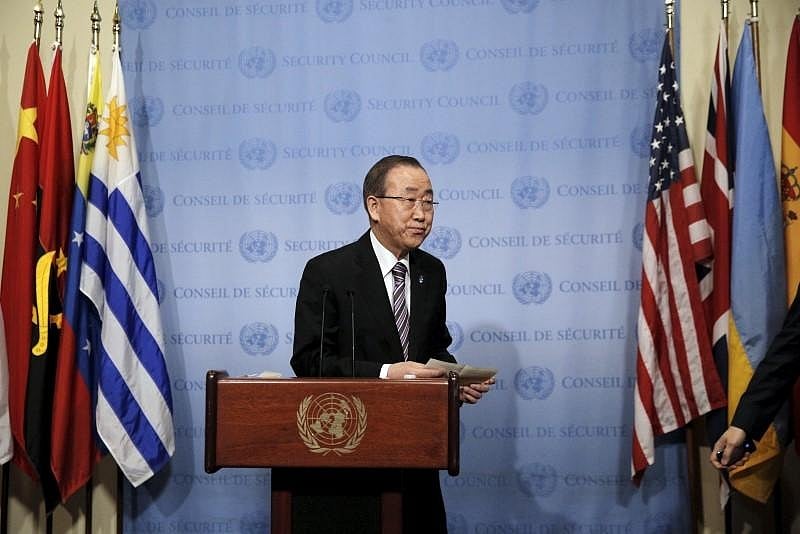
UN Secretary-General Ban Ki-moon condemned North Korea's action, calling it "profoundly destabilising for regional security", while US House Speaker Paul Ryan said it "looks like a provocation".
North Korea has been under UN Security Council sanctions since it first tested an atomic device in 2006 and could face additional measures.
The Security Council was holding an emergency meeting to weigh what steps it could take.
The explosion caused an earthquake that was measured by the United States Geological Survey.
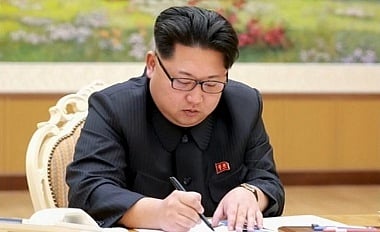
The nuclear test was ordered by leader Kim Jong Un and successfully conducted at 10am local time (0130 GMT), North Korea's official KCNA news agency said.
"Let the world look up to the strong, self-reliant nuclear-armed state," Kim wrote in what North Korean state TV displayed as a handwritten note.
US government experts do not believe the device was a hydrogen bomb, US government sources said.
It likely will take several days to determine more precisely what kind of nuclear device Pyongyang set off as a variety of sensors, including "sniffer planes", collect evidence.
South Korean intelligence officials and several analysts also questioned whether Wednesday's explosion was a test of a full-fledged hydrogen device, pointing to the fact that it was roughly as powerful as North Korea's last atomic test in 2013.
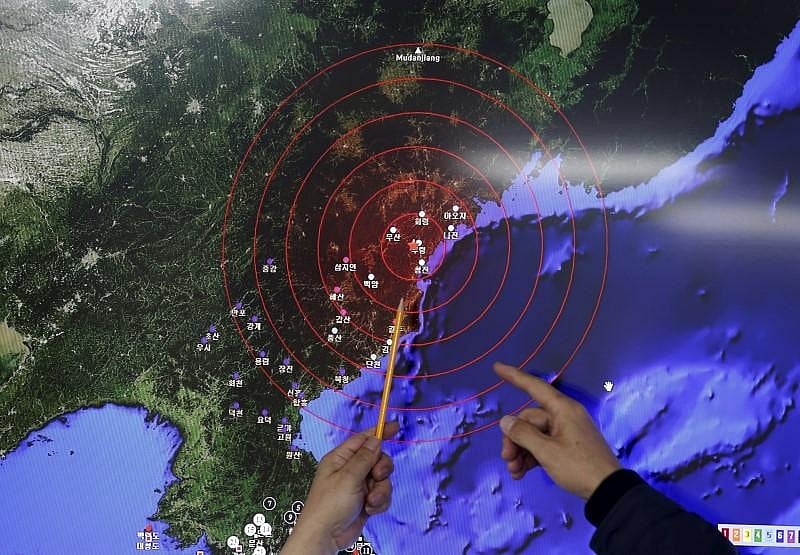
Ko Yun-hwa (L), Administrator of Korea Meteorological Administration, points at where seismic waves observed in South Korea came from, during a media briefing at Korea Meteorological Administration in Seoul, South Korea, January 6, 2016. Reuters
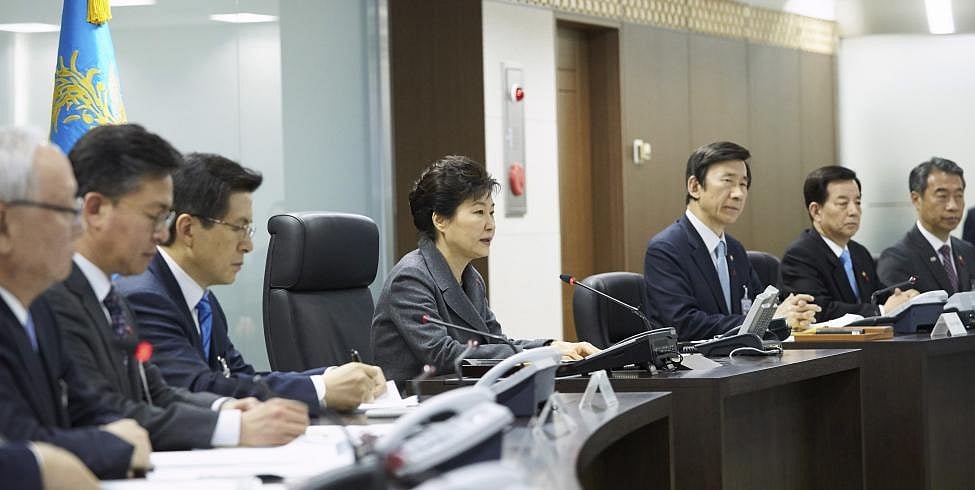
South Korean President Park Geun-hye (C) presides over the National Security Council at the Presidential Blue House in Seoul, South Korea, in this handout picture provided by the Presidential Blue House and released by Yonhap on January 6, 2016. Park said the country will take decisive measures against any additional provocations by North Korea and work with the international community to make sure the isolated country pays the price for its latest nuclear test. Reuters
No countries were given advance warning of a nuclear test, South Korea's intelligence service said, according to lawmakers briefed by intelligence officials.
In previous such tests, Pyongyang had notified China, Russia and the United States beforehand, they said.
US presidential candidates
While a fourth nuclear test had long been expected, the claim that it was a hydrogen device, much more powerful than an atomic bomb, came as a surprise, as did the timing.
It made North Korea a topic on the US presidential campaign with the first state nominating contests weeks away. The vote is in November.
Democratic front-runner Hillary Clinton condemned the test as a "provocative and dangerous act" that the United States should meet with sanctions and strengthened missile defences.
"North Korea must have no doubt that we will take whatever steps are necessary to defend ourselves and our treaty allies, South Korea and Japan," she said in a statement.
United Nations Secretary-General Ban Ki-moon exits after speaking at U.N. headquarters in New York, January 6, 2016. Reuters
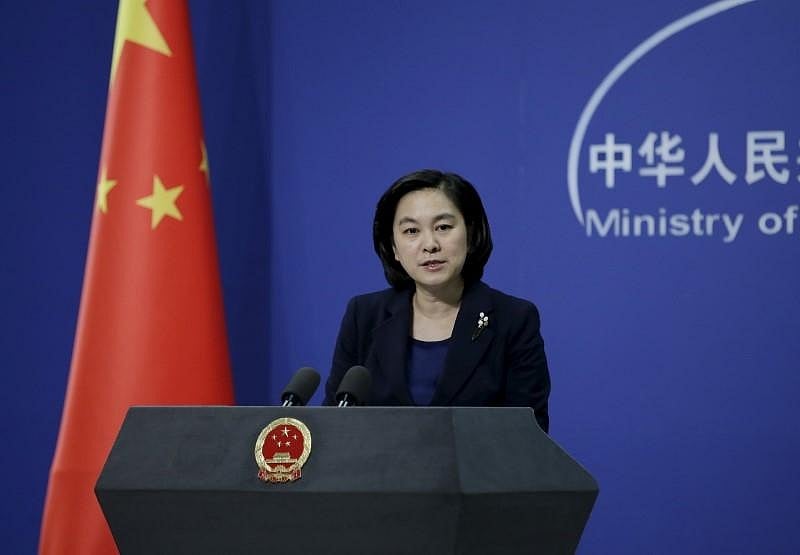
Hua Chunying, spokeswoman of China's Foreign Ministry, speaks at a regular news conference in Beijing, China, January 6, 2016. Reuters
North Korea has long coveted diplomatic recognition from Washington, but sees its nuclear deterrent as crucial to ensuring the survival of its third-generation dictatorship.
While the Kim government boasts of its military might to project strength globally, it also plays up the need to defend itself from external threats as a way to maintain control domestically.
The North's state news agency said Pyongyang would act as a responsible nuclear state and vowed not to use its nuclear weapons unless its sovereignty was infringed.
Michael Madden, an expert on North Korea's secretive leadership, said, "With Iran being off the table, the North Koreans have placed themselves at the top of the foreign policy agenda as far as nation-states who present a threat to the US."
Doubts raised
The device had a yield of about 6 kilo tonnes, according to the office of a South Korean lawmaker on the parliamentary intelligence committee - roughly the same size as the North's last test, which was equivalent to 6-7 kilo tonnes of TNT.
"Given the scale, it is hard to believe this is a real hydrogen bomb," said Yang Uk, a senior research fellow at the Korea Defence and Security Forum.
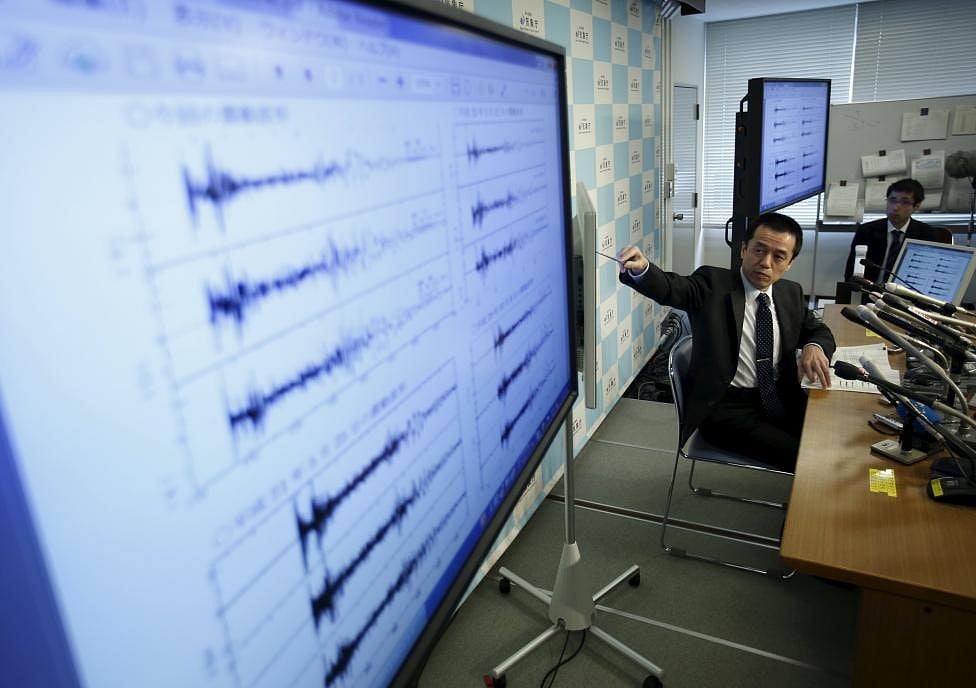
Japan Meteorological Agency's earthquake and tsunami observations division director Yohei Hasegawa points at a graph of ground motion waveform data observed in Japan during a news conference at the Japan Meteorological Agency in Tokyo on implications that an earthquake sourced around North Korea was triggered by an unnatural reason January 6, 2016. Reuters
"Because it is, in fact, hydrogen, they could claim it is a hydrogen bomb," he said. "But it is not a true fusion bomb capable of the massive multi-megaton yields these bombs produce".
The USGS reported a 5.1 magnitude quake that South Korea said was 49 km (30 miles) from the Punggye-ri site where the North has conducted nuclear tests in the past.
The test may mark an advance of North Korea's nuclear technology.
The claim of miniaturising, which would allow the device to be adapted as a weapon and placed on a missile, would pose a new threat to the United States and its regional allies, Japan and South Korea.
The North's previous miniaturisation claims have not been independently verified. Many experts also doubt whether the North possesses missile technology capable of reliably delivering a warhead to the continental United States.
South Korea said it would take all possible measures, including possible UN sanctions, to ensure Pyongyang paid the price.
"The government must now work closely with the international community to ensure that North Korea pays the commensurate price for the latest nuclear test," President Park Geun-hye said in a statement.
"We must respond decisively through measures such as strong international sanctions."
Conventional atomic bombs split atoms from heavier elements such as uranium or plutonium. They occur in one stage. The process is called fission. Hydrogen bombs have a second stage after fission. This fusion stage releases much more energy.












